Filter


95 %
rates
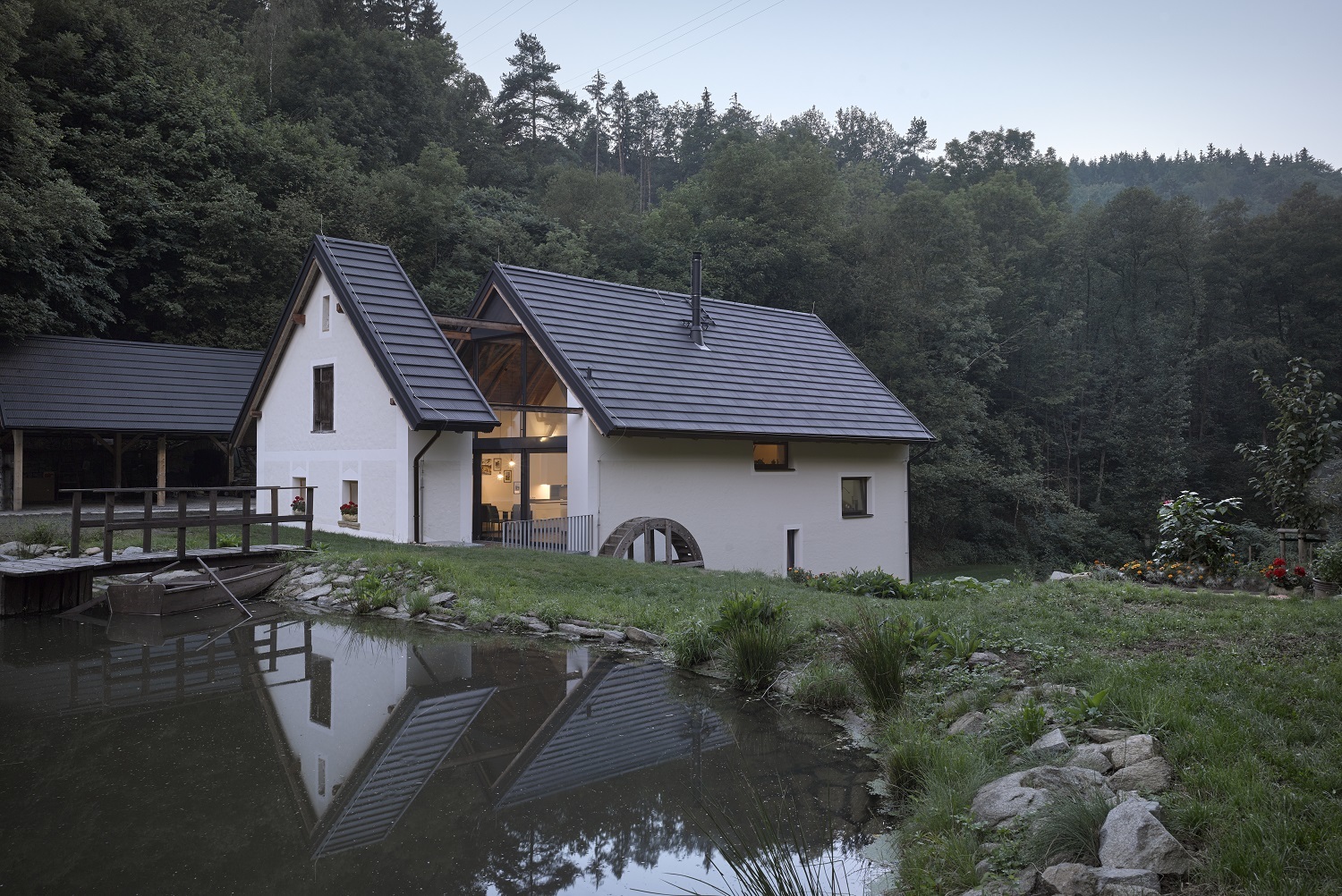
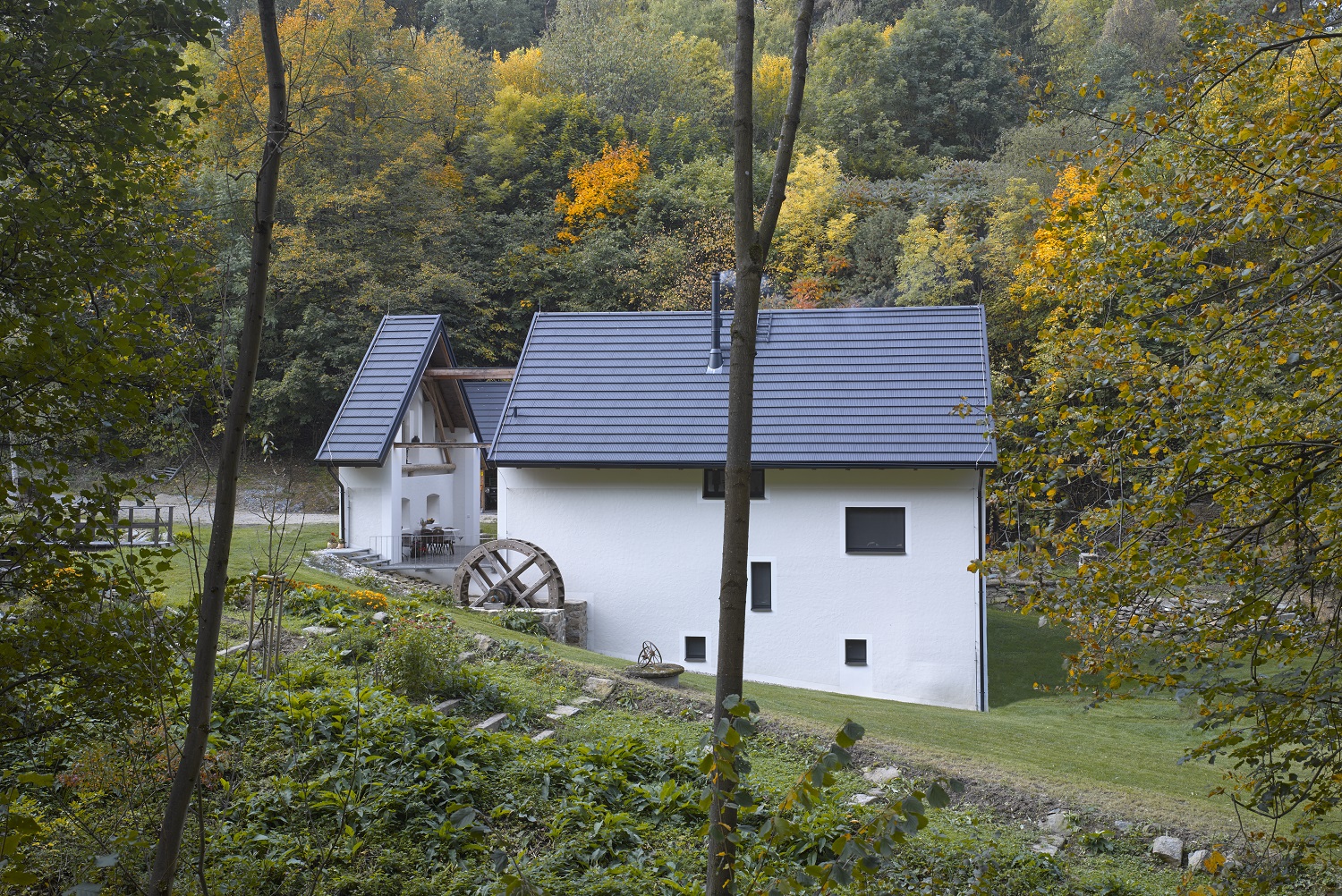
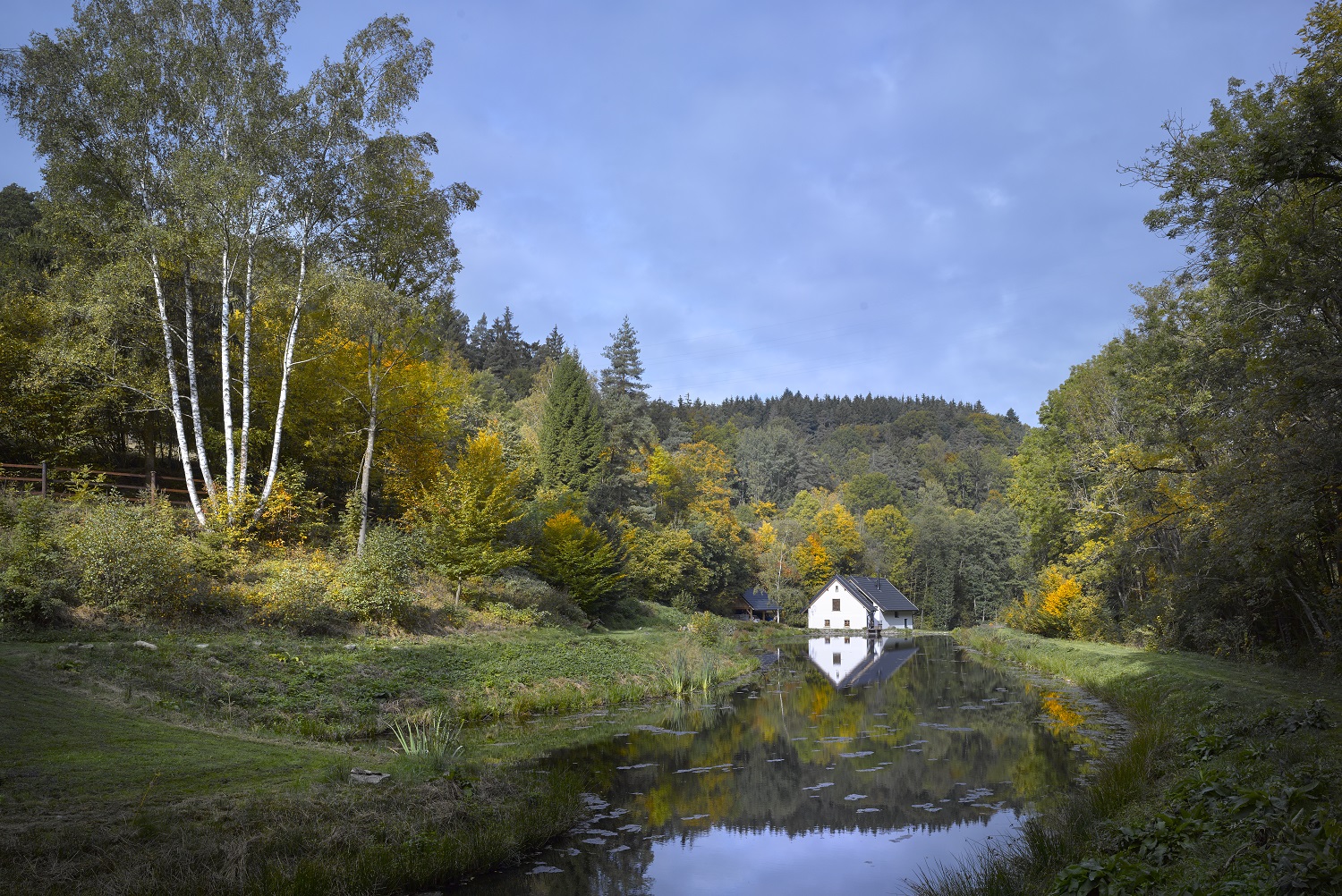
The clients were looking for original and unpretentious housing, ideally in a secluded environment. This longing for a life in solitude was satisfied by the location and genius loci of an old mill by a disused pond. After just one visit, the architects and client decided that the location and house demanded renovation, rather than a new build.
Parts of the mill, however, had not aged gracefully. Years of neglect, damp issues and a problematic layout led to a bolder solution. Instead of plastic surgery, a radical transplant was called for. This would not be a superficial rejuvenation, but the total healing of the building’s essential structures to ensure that the magic atmosphere of centuries past would not be lost.
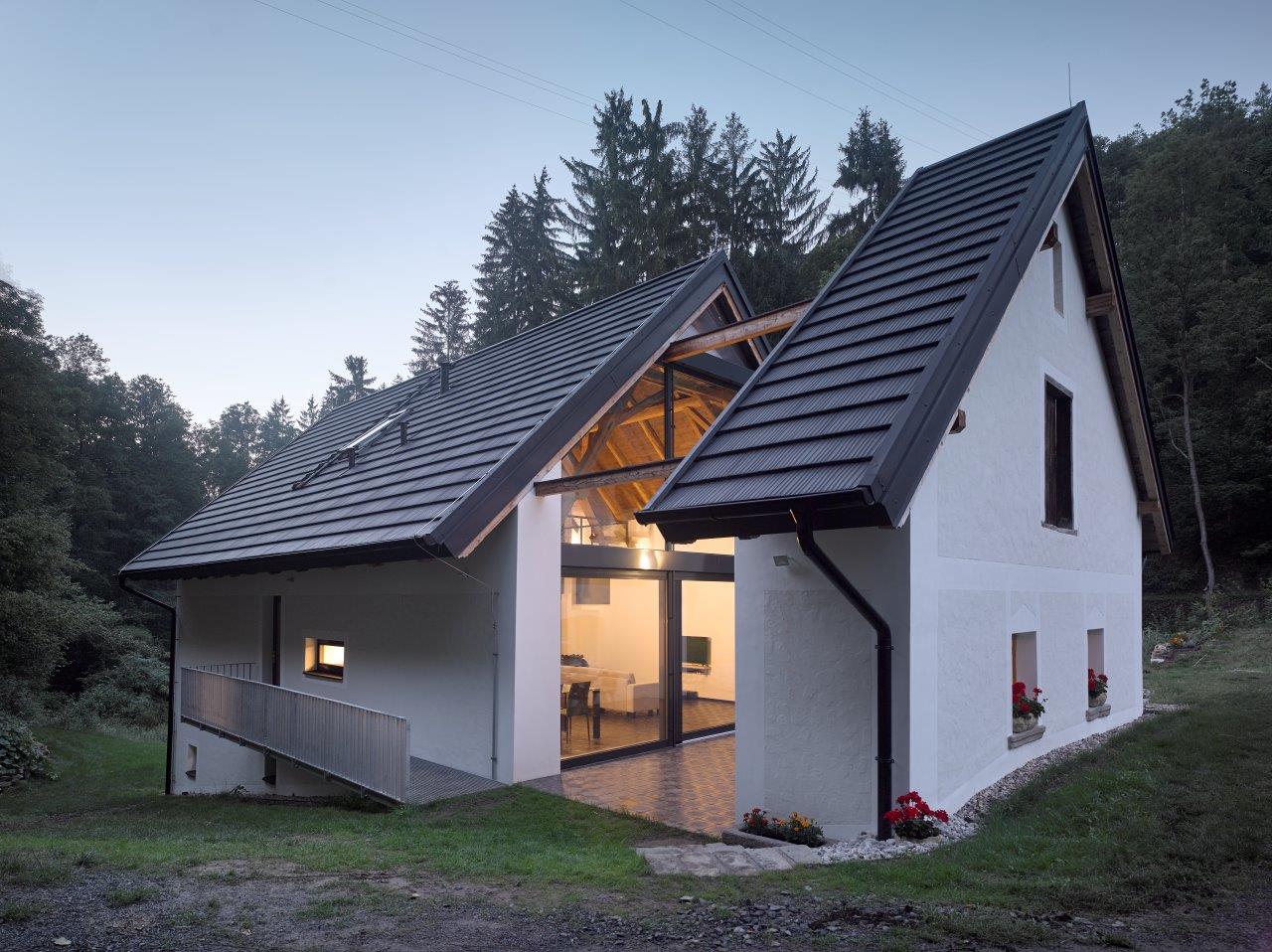
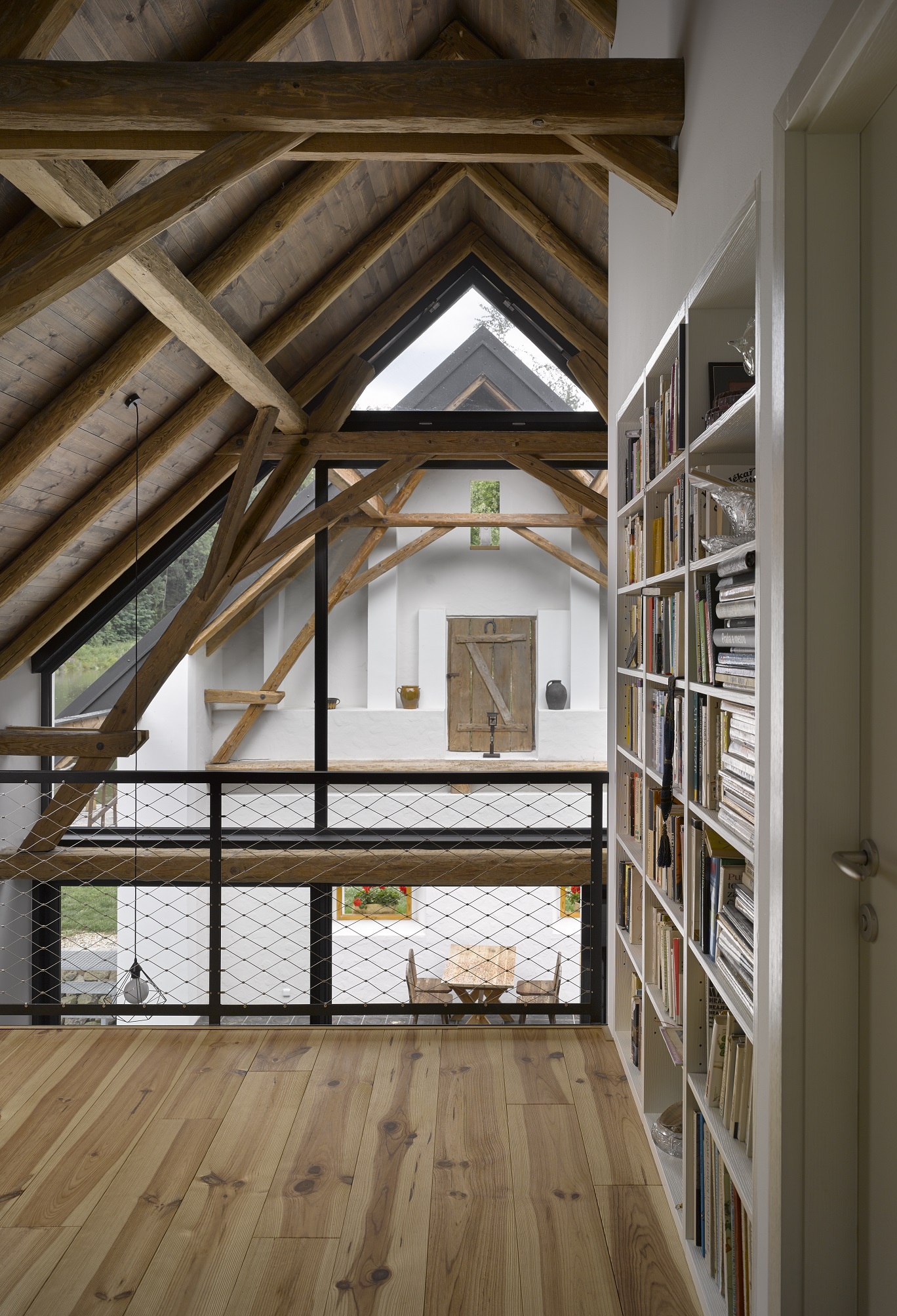
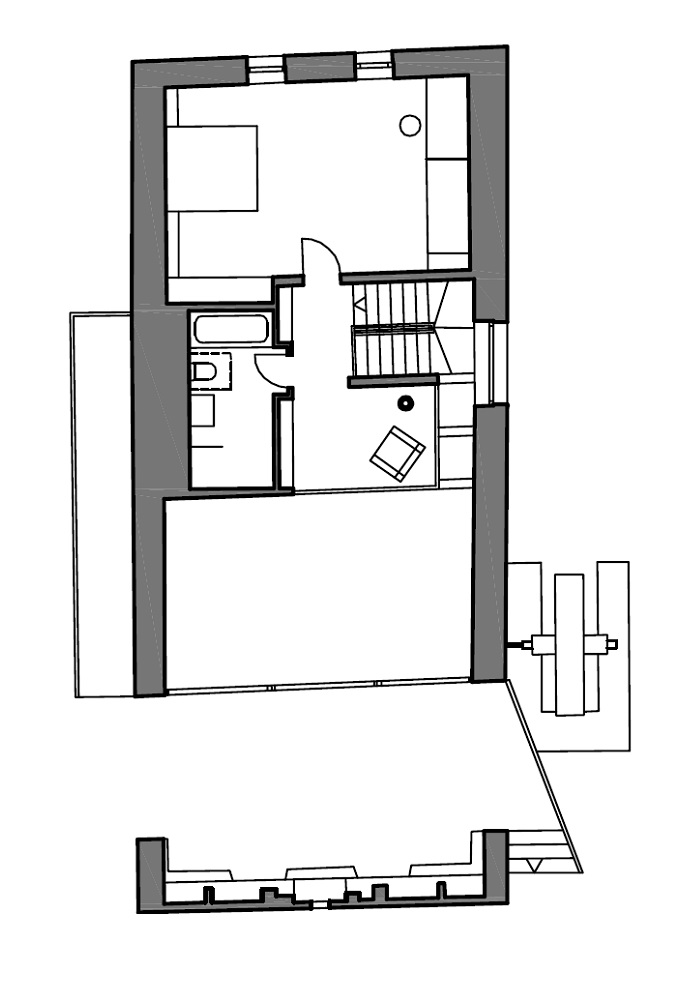
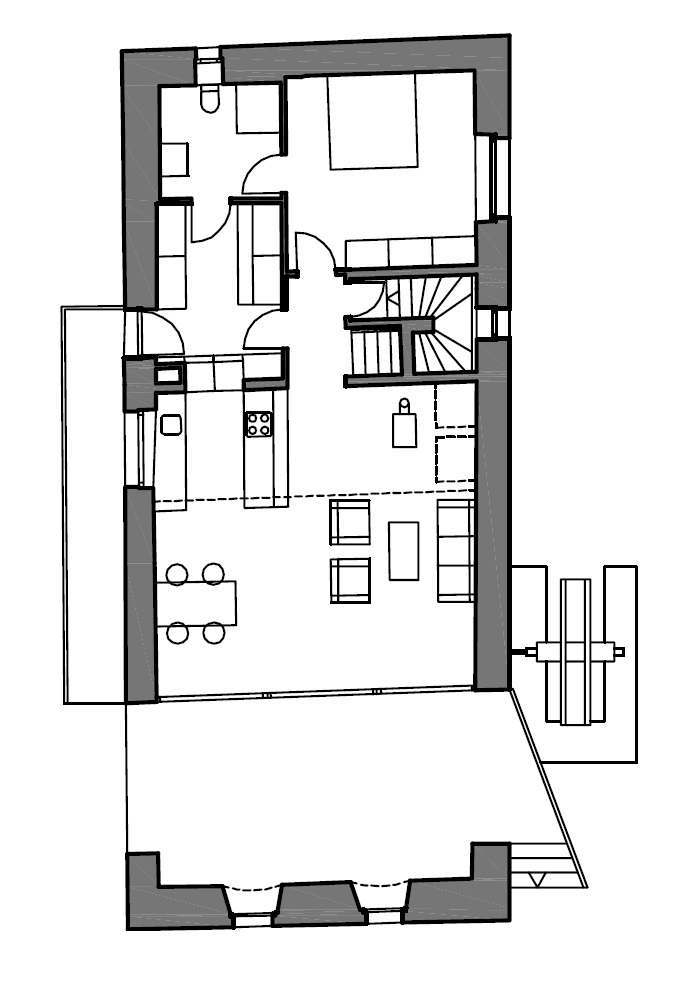
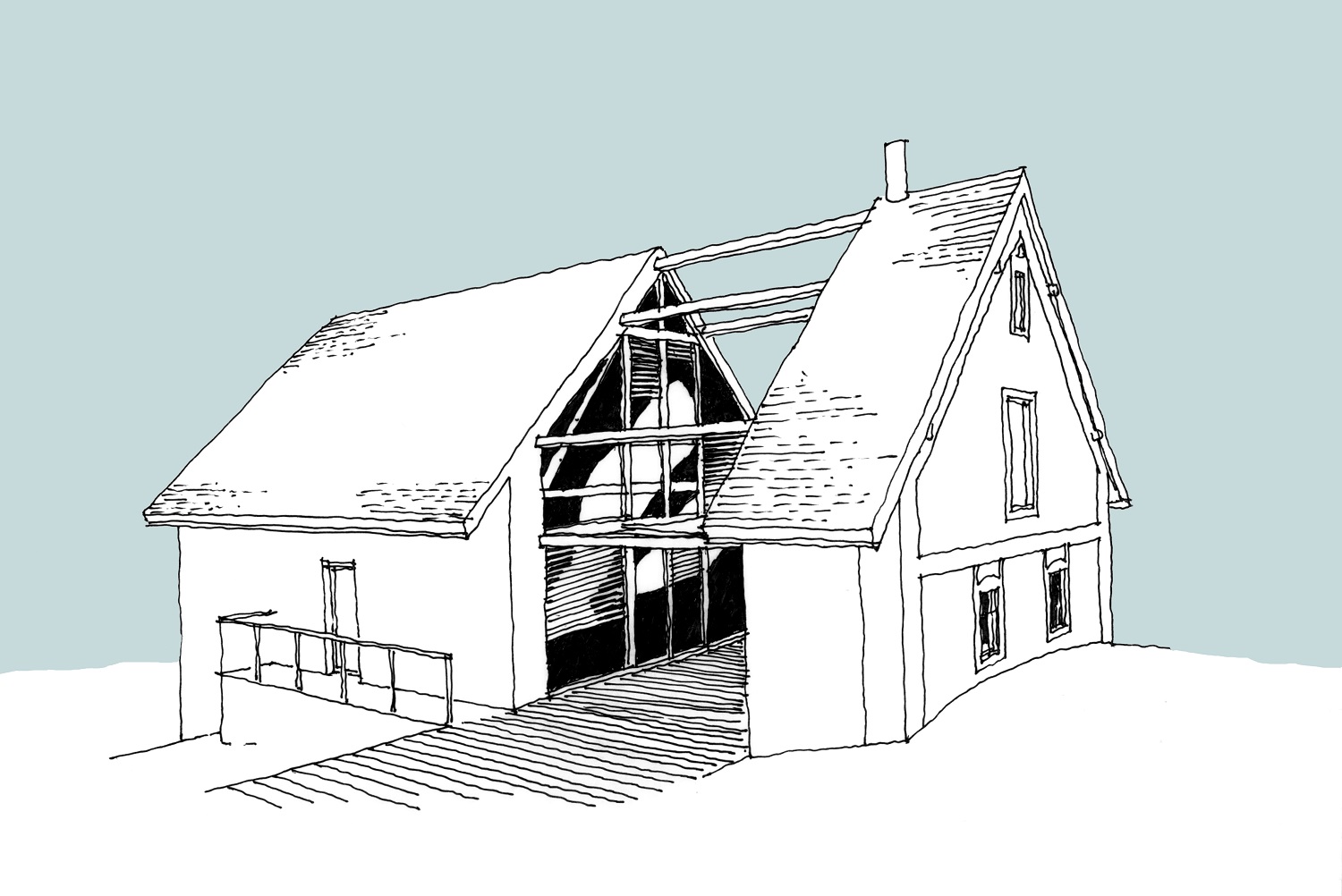
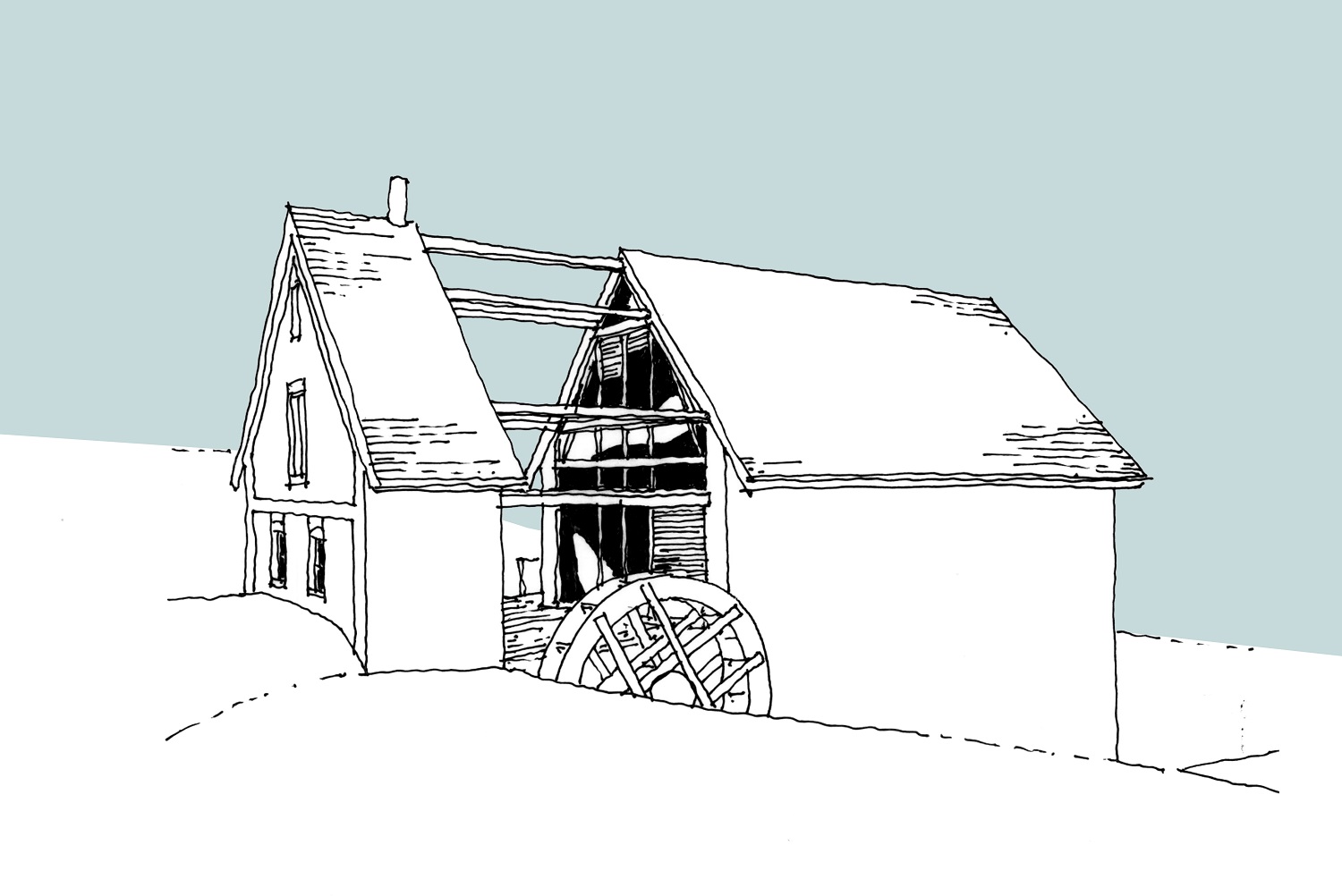
The primary task was to get air and light to permeate the centre of the house. There was no desire to disturb the gable ends, which led to a section of one being literally amputated. This created a patio between the “amputated” section and the original volume of the mill, allowing sunlight to enter the building via a glazed insert. Stripping the gable end from both sides let in a flow of fresh air that addressed the perennial dampness problem, which would have been further exacerbated following the pond’s restoration.
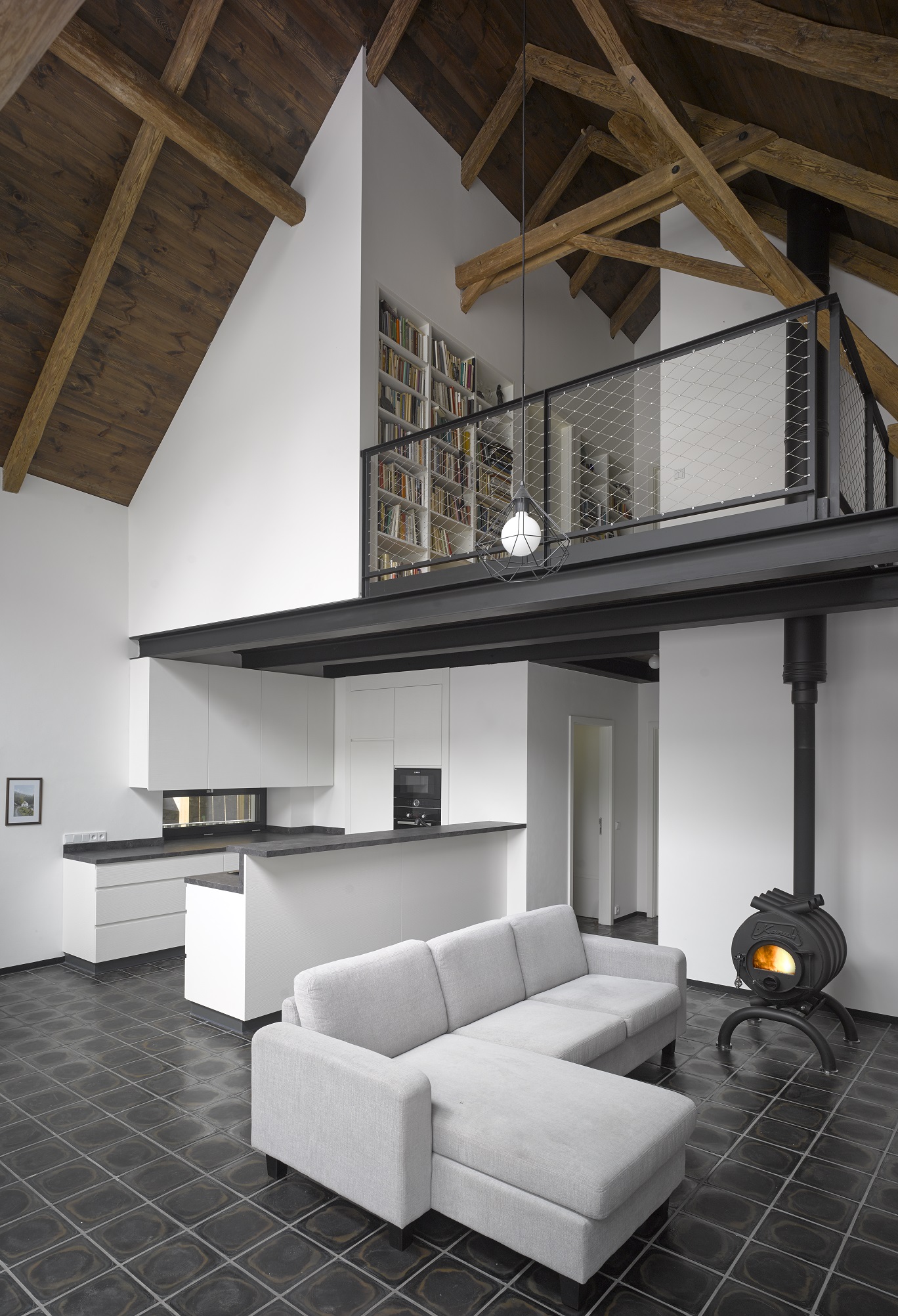
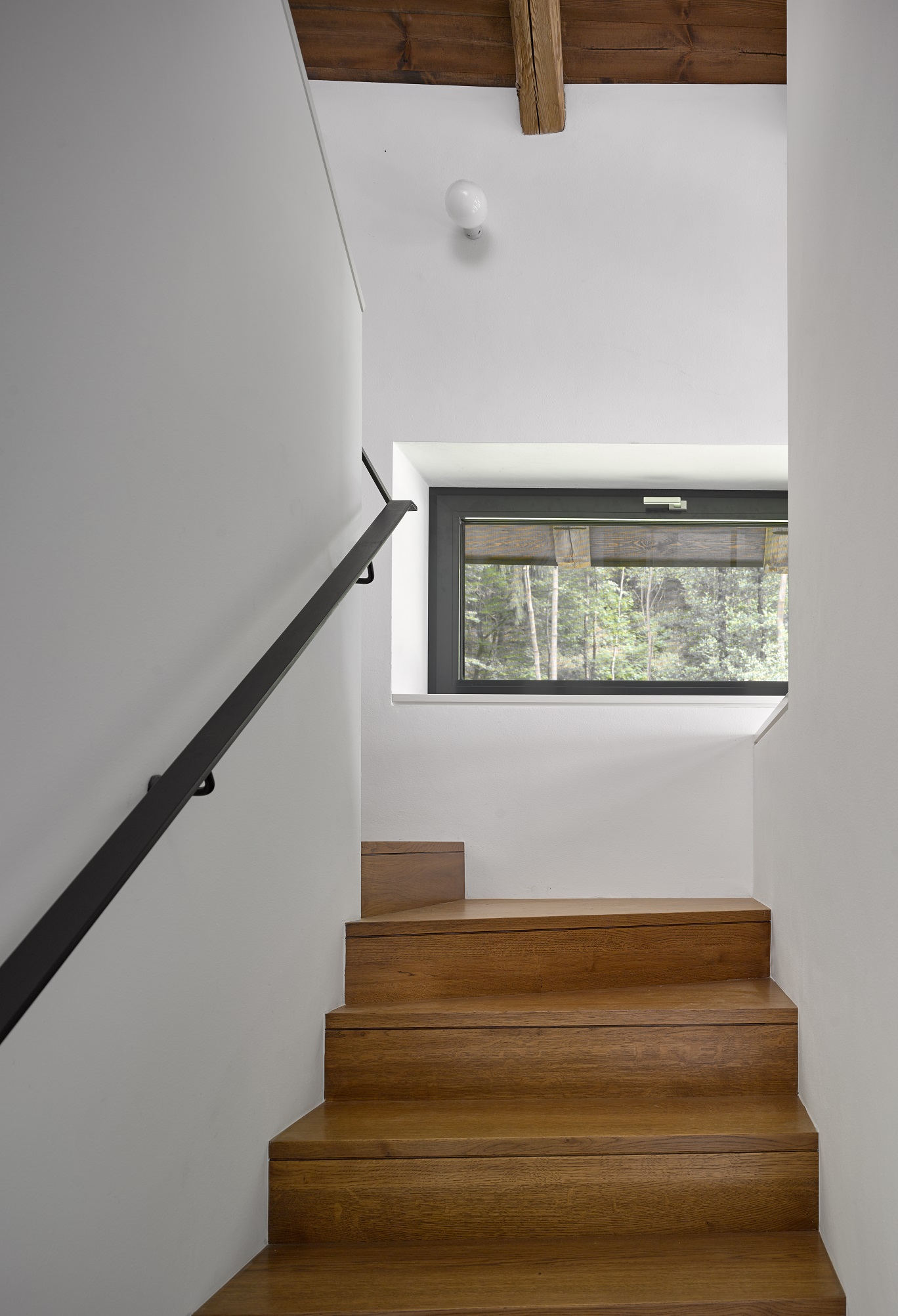
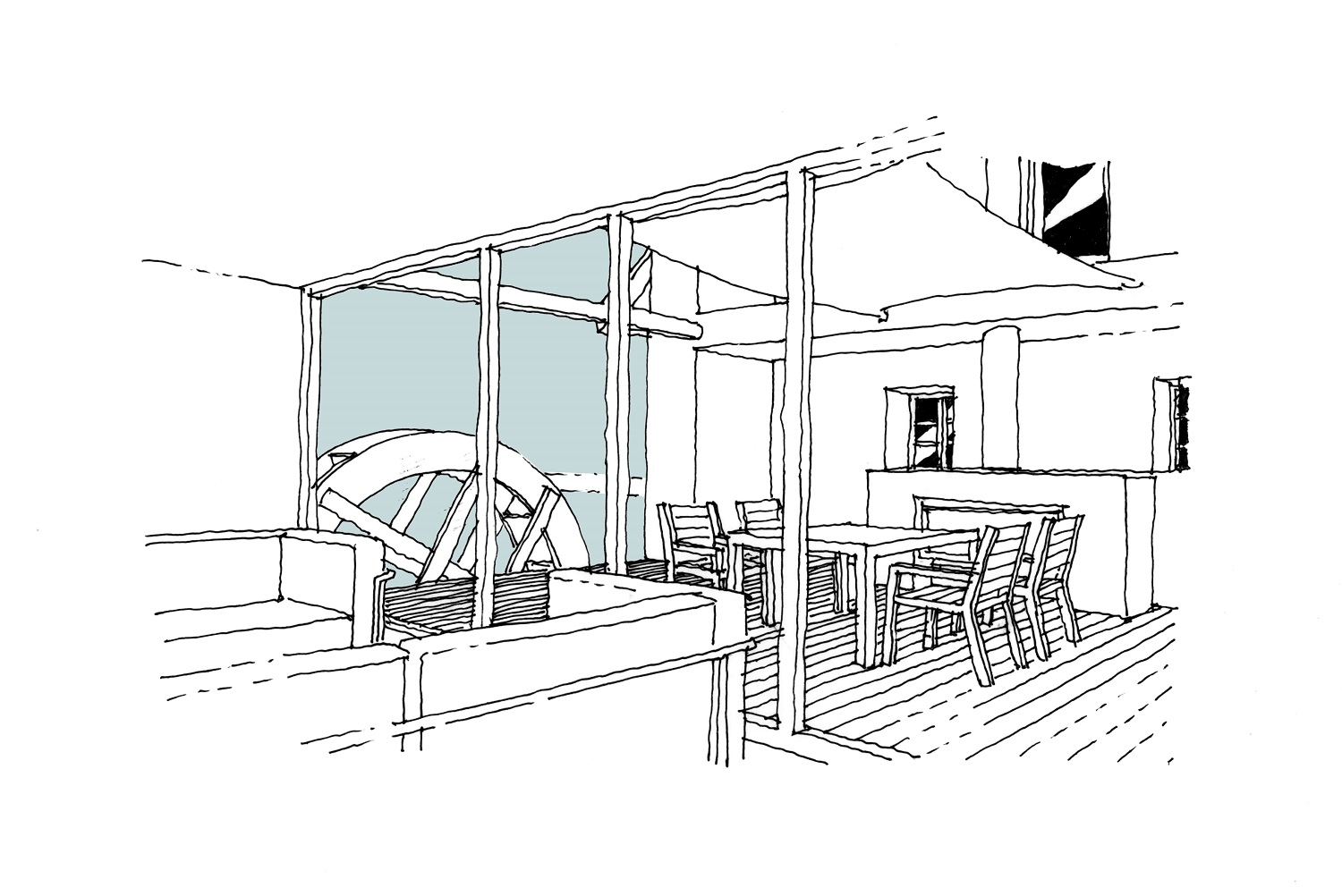
The existing roof was disassembled, renovated and returned to its original position. The interior space was opened up by removing a ceiling, allowing features of the original craftsmanship to be seen from the living room, kitchen and dining area.
The mill’s entrance remained in its original location. Only the footbridge, which was past renovating, was restored with the use of contemporary materials. Hot-dip galvanised beams and grates have been put to effective use. The architects’ sensitive approach has allowed individual parts of the mill to be gradually renovated or replaced in harmony with the project’s aim: to preserve the beauty of old age. The entire ground floor, including the patios, is paved with basalt tiles. The mill wheel was made using traditional methods of craftsmanship.
Now inhabited, the mill has once more found a purpose in life. The restoration process did not turn it into an open-air museum, but a place for living.

Credits
Architect: Stempel & Tesar Architekti
Project and construction: 2014-2017
Land area: 4 732 m2
Built-up area: 147 m2
Photos: Filip Šlapal
Materials used / Suppliers
Roofing: SATJAM Šindel
Rate
How much do you like this?