Filter


0 %
rates
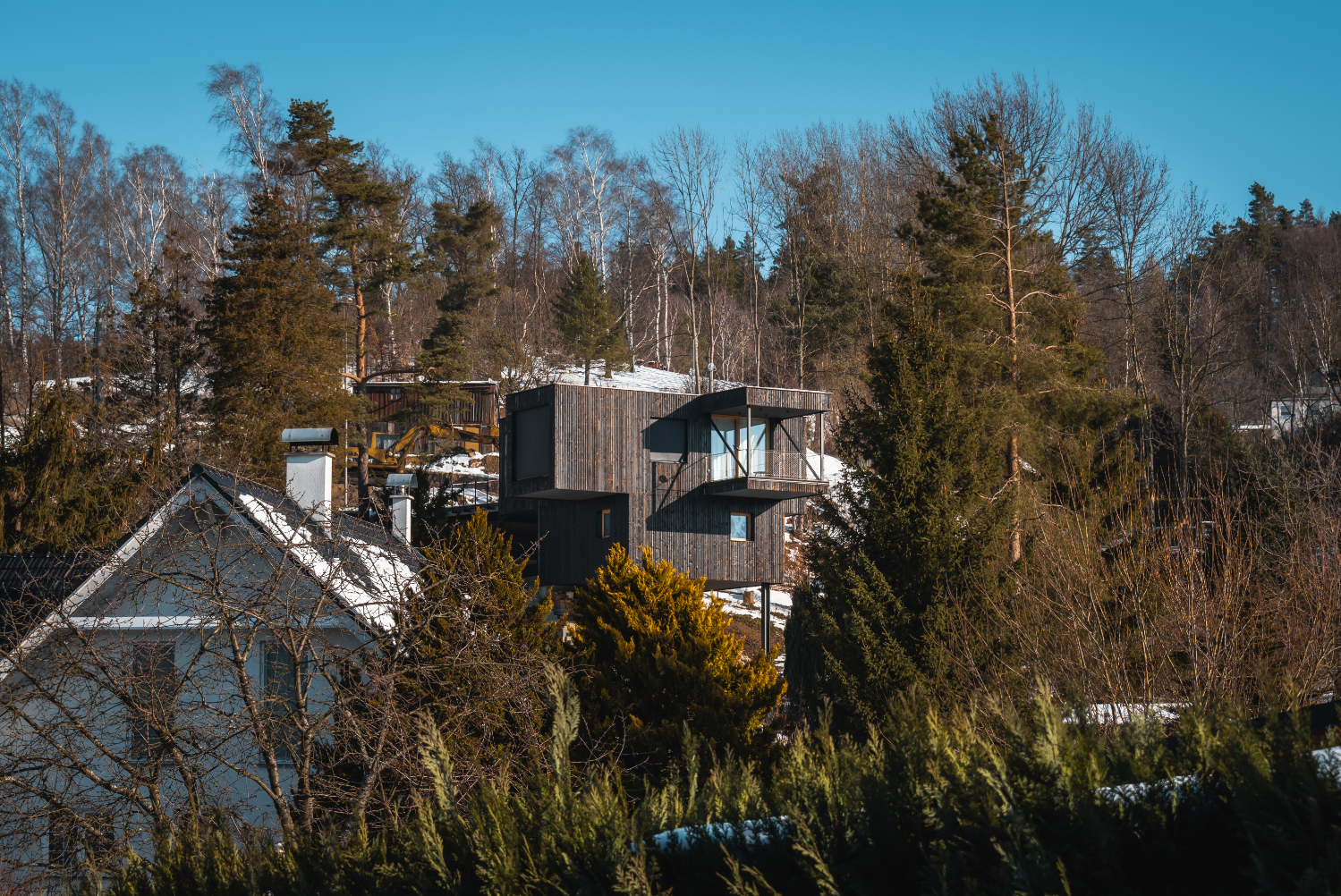
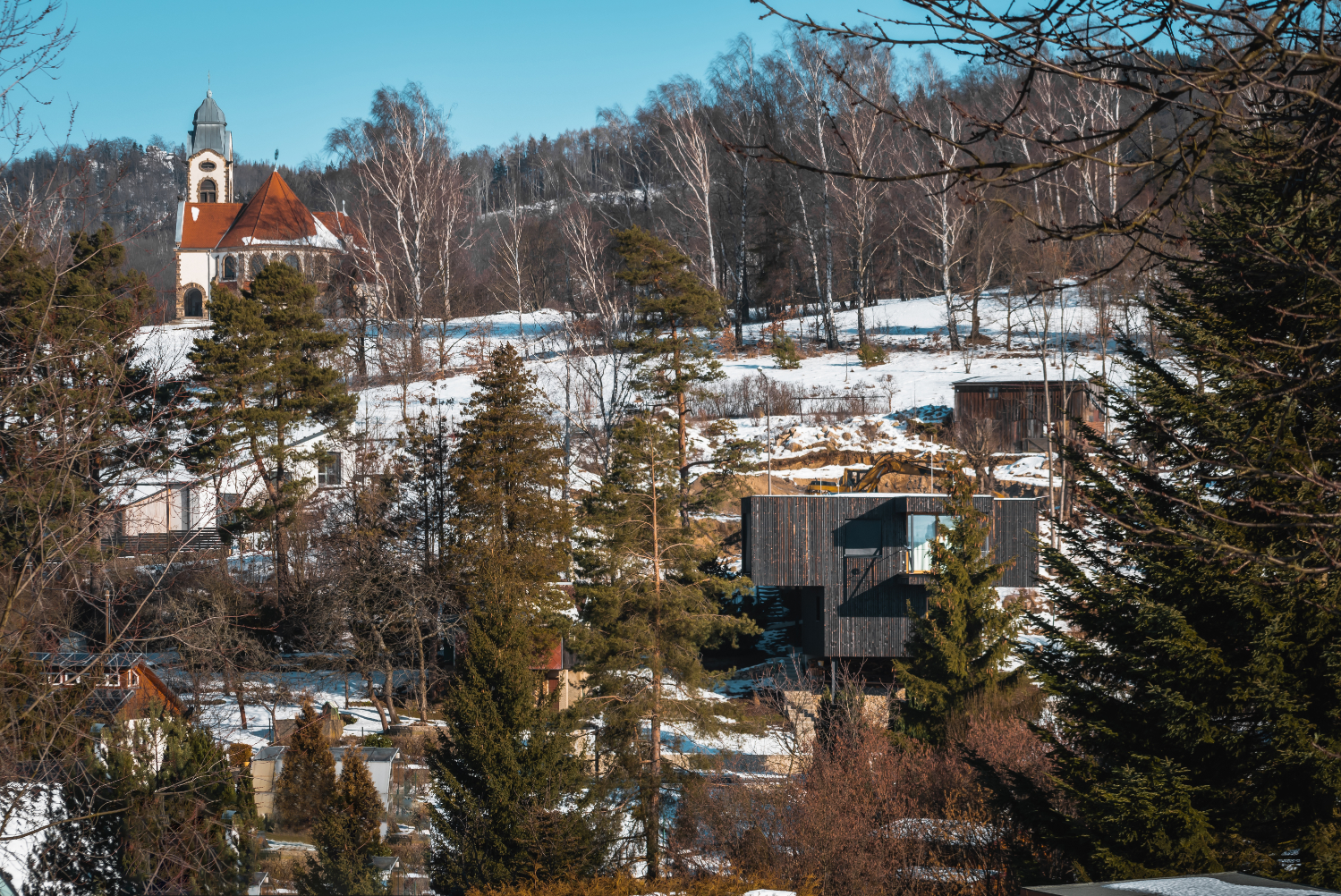
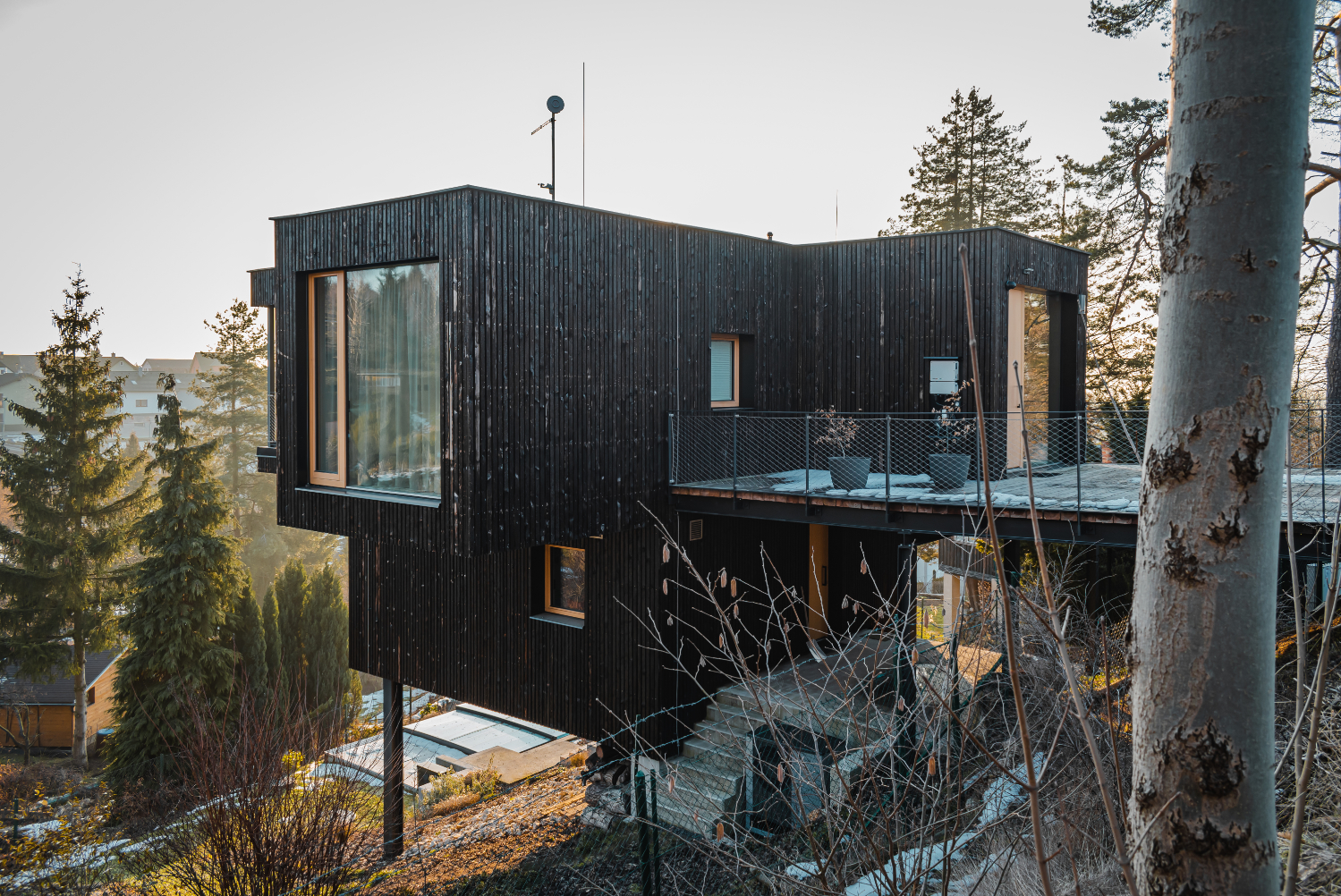
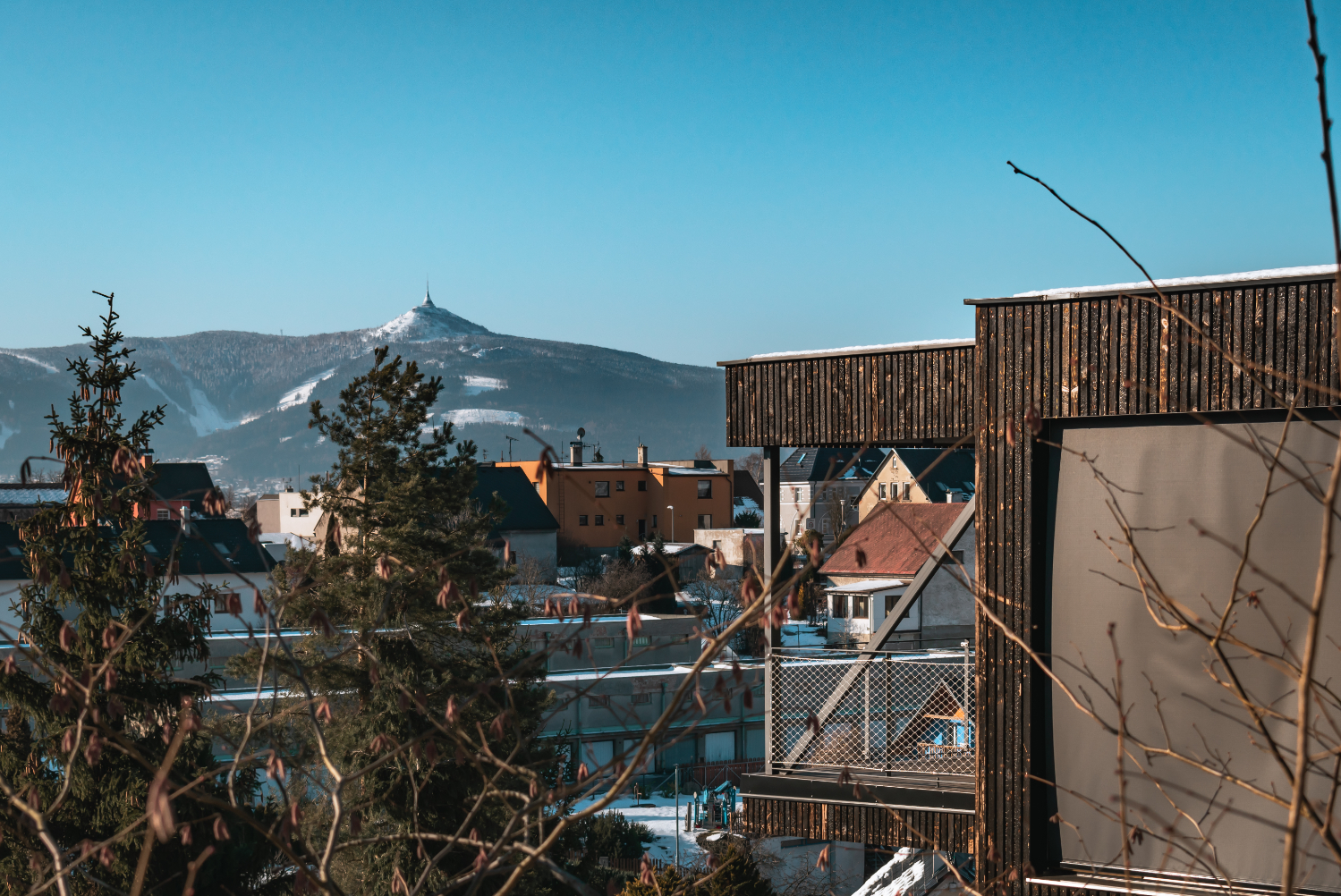
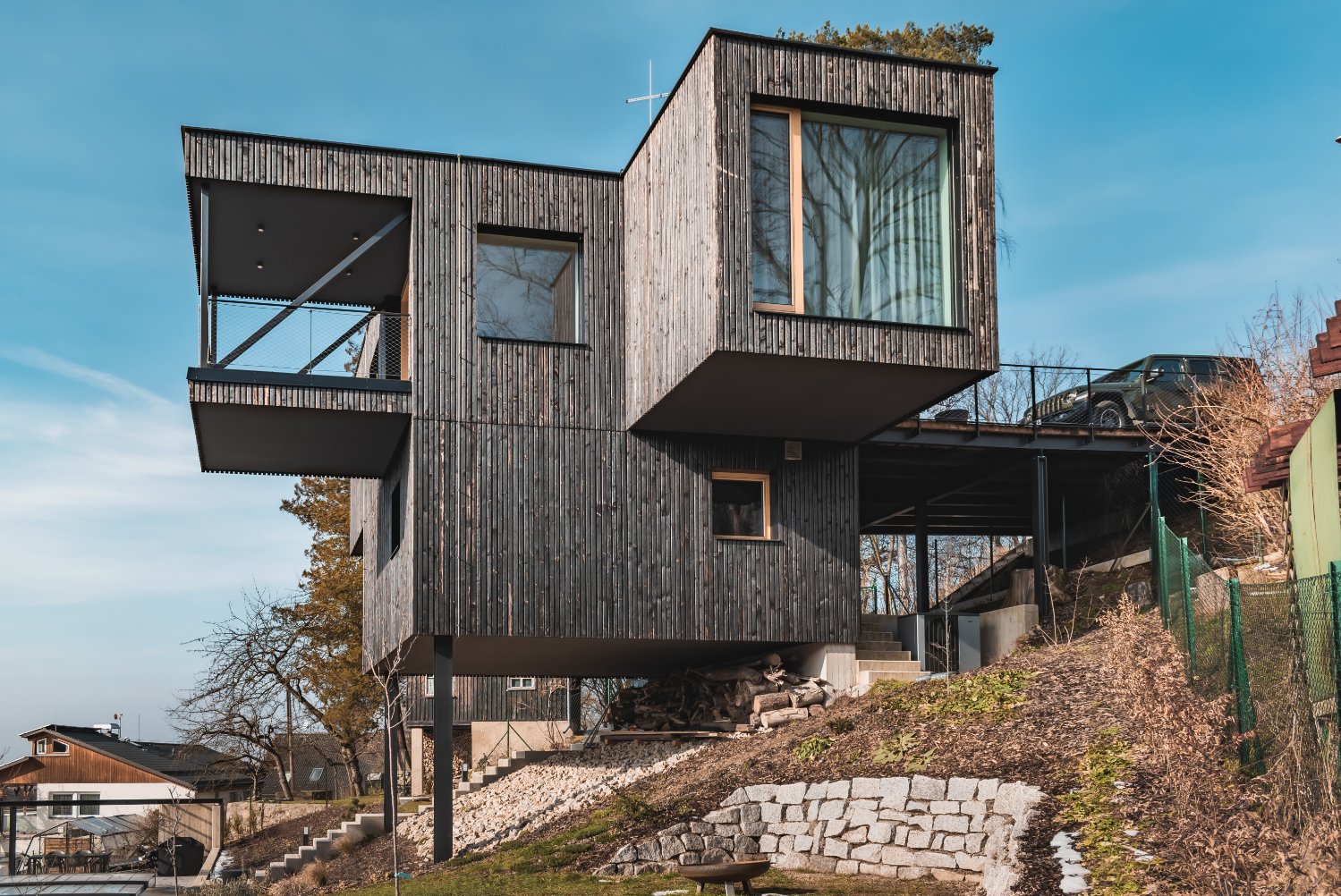
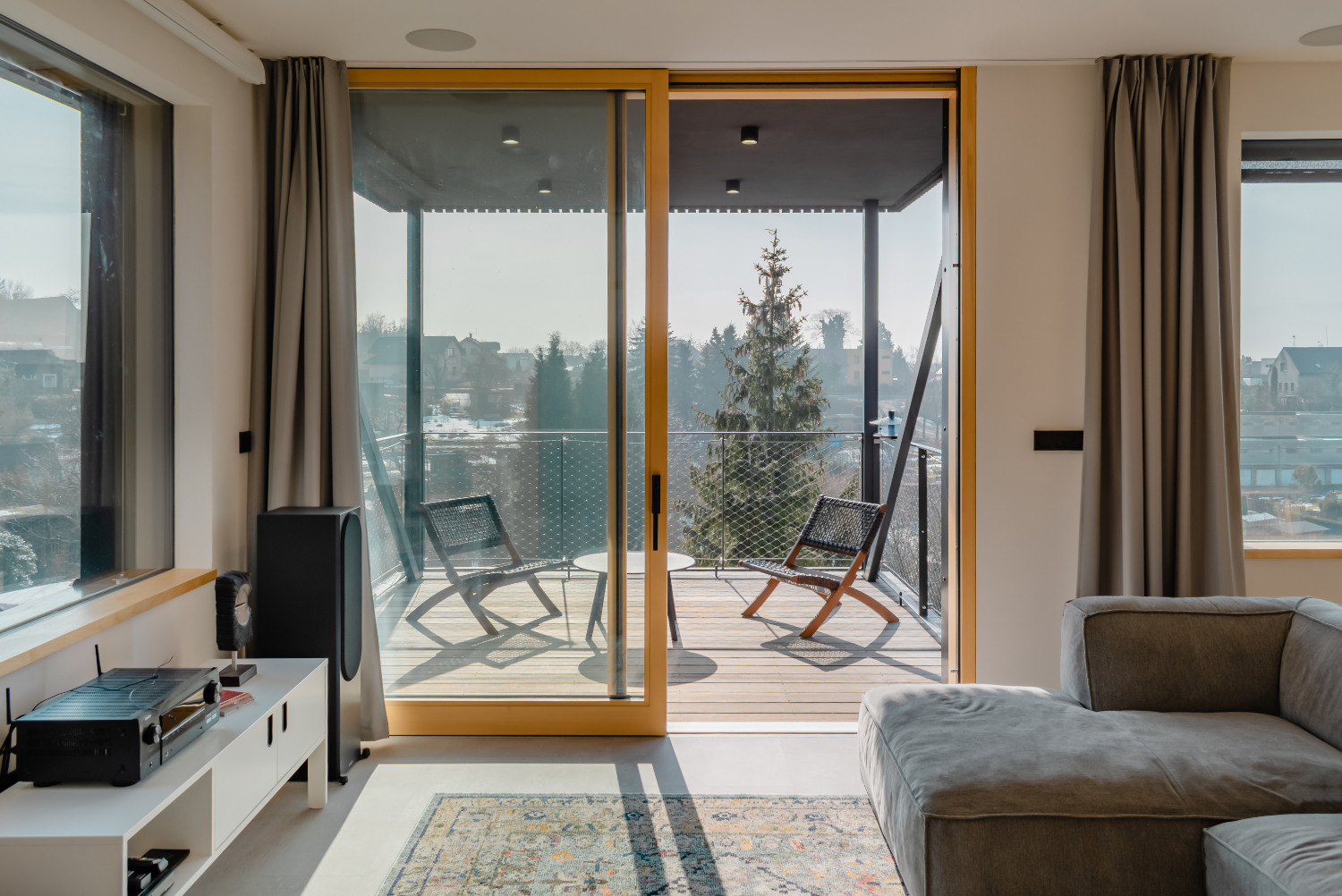
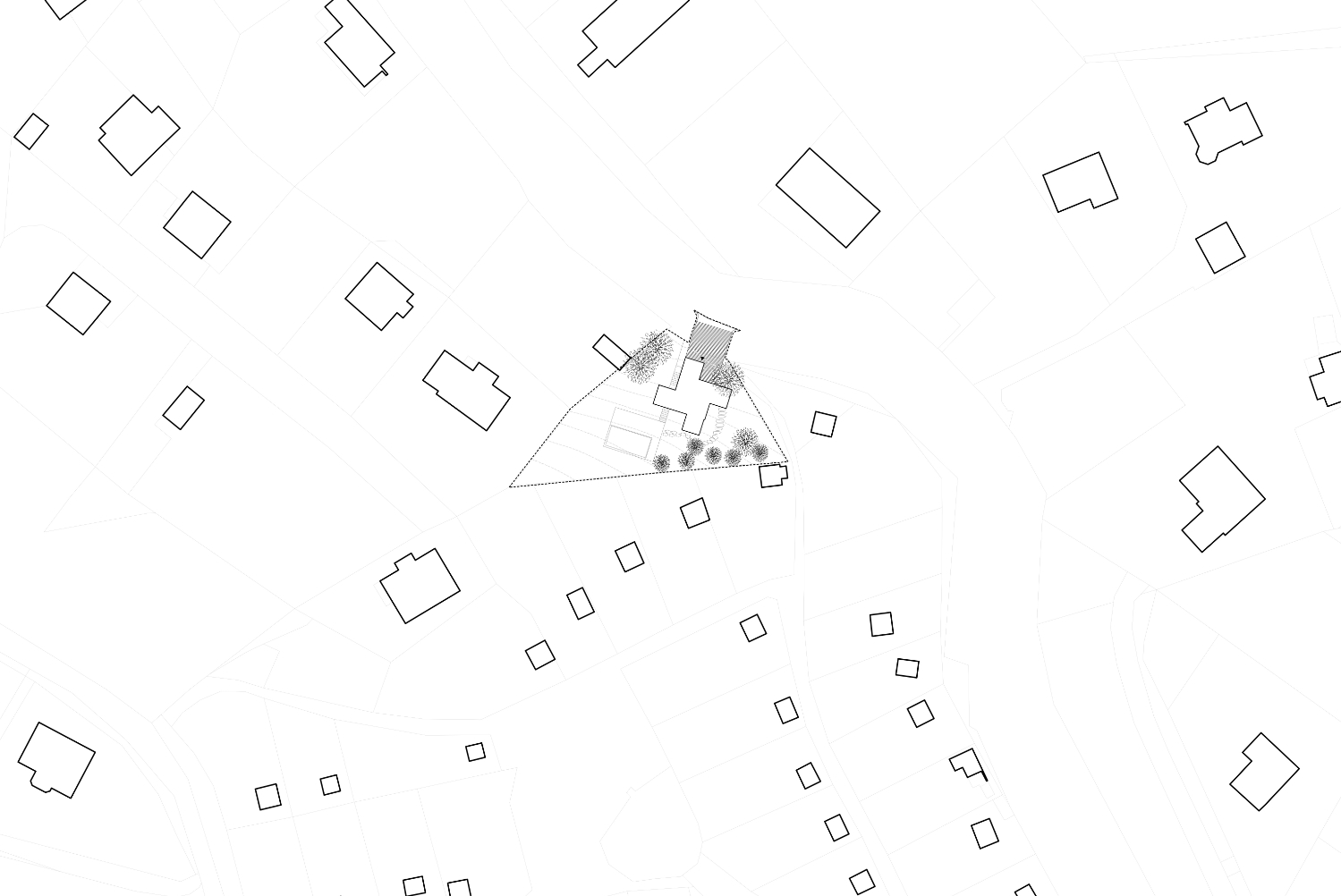
On the border of a development of houses and a garden colony in Ruprechtice, just a few steps from the Church of Our Lady of the Image, a small house dances on the edge of an extreme slope. It glimpses an irregularly shaped plot of land, the quality of which is the almost ideal orientation to the southwest, and from where impressive views of the Ještěd-Kozak Ridge open up. In the opposite direction, the development thins out, the forest thickens and the scene is soon dominated by the Jizera Mountains.
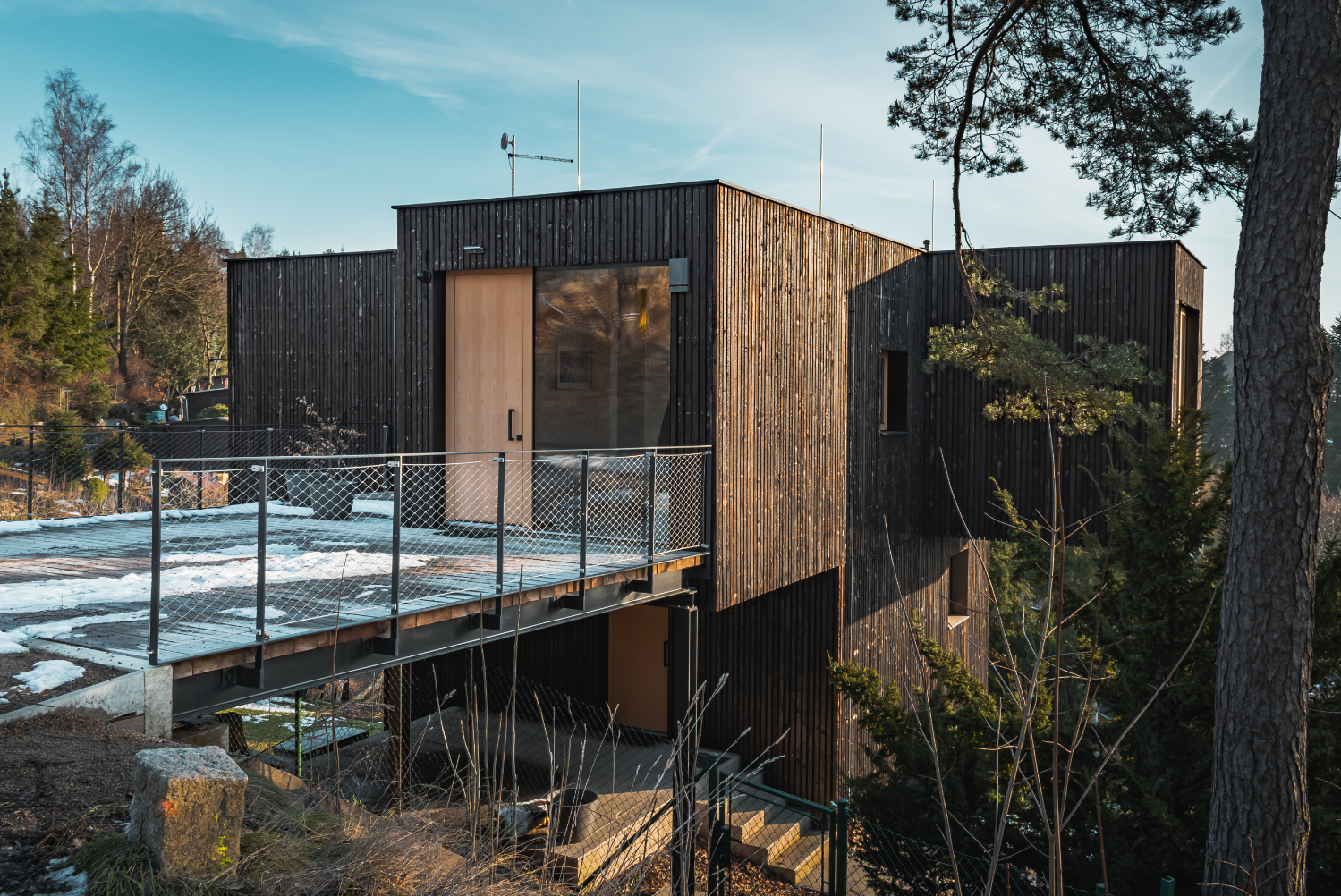
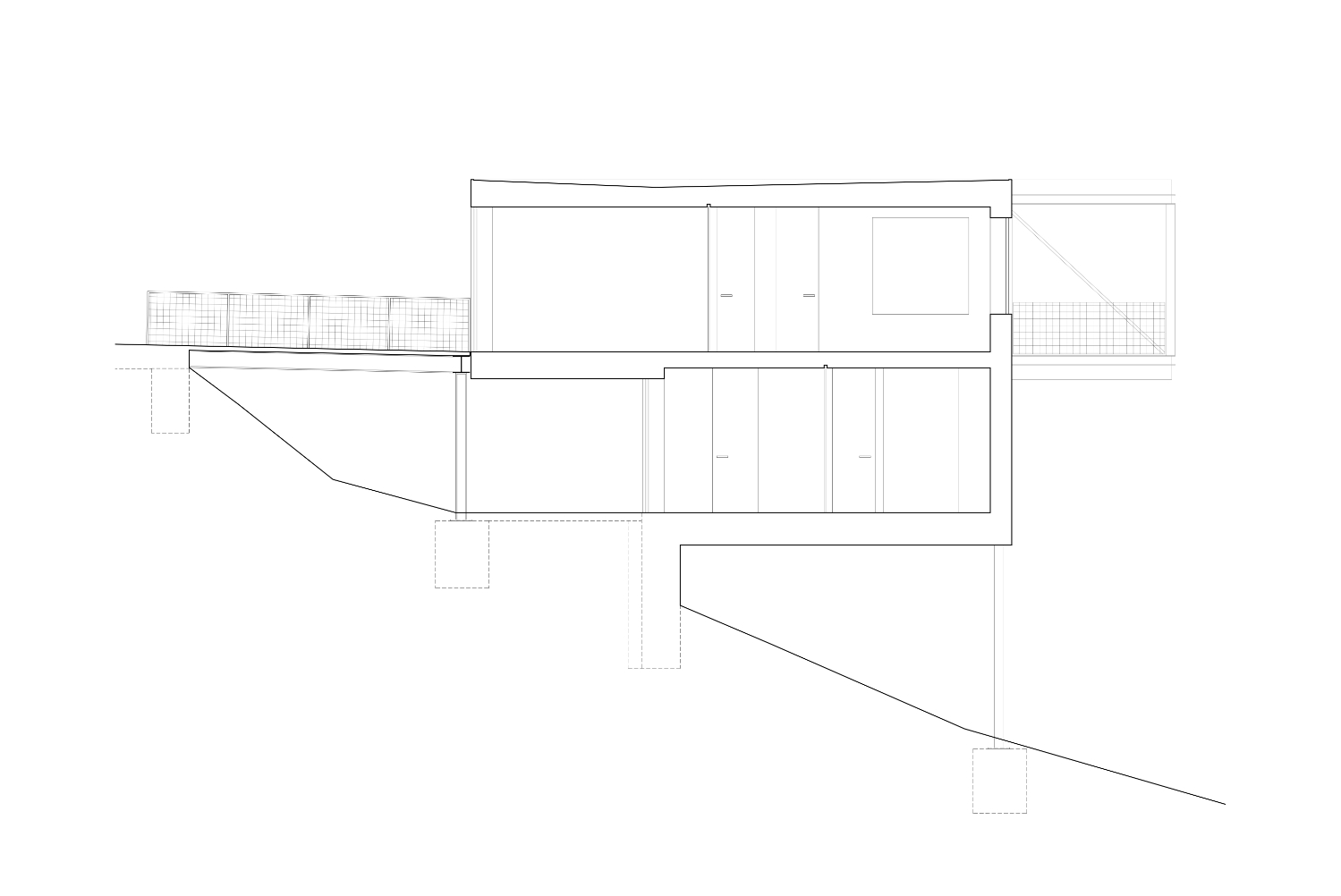
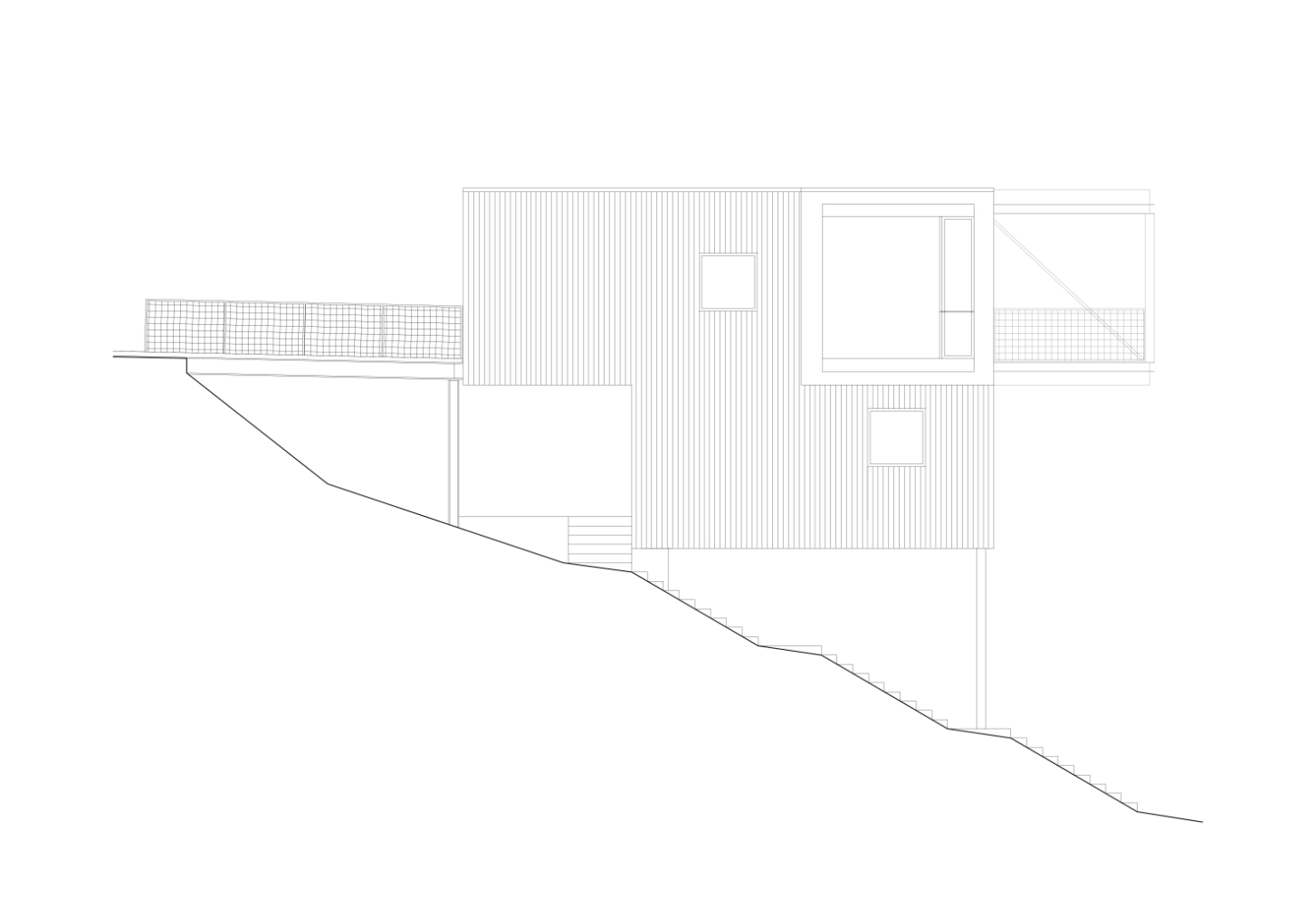
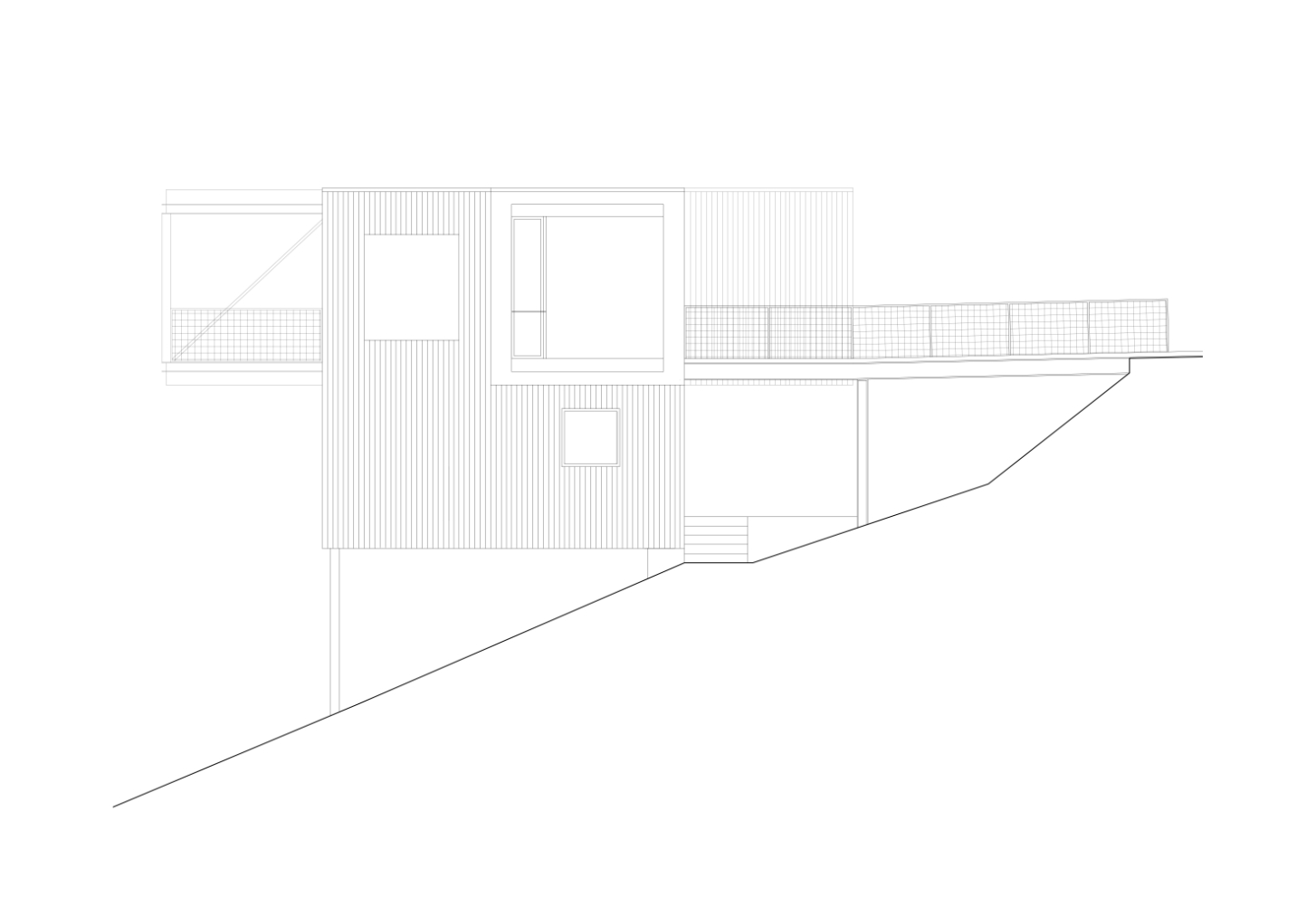
The mass of the house respects the urban structure of the site and follows the scale of the neighbouring buildings. Due to the steep slope of the terrain, it was necessary to compress the size of the house as much as possible and find a solution that eliminates the need for landscaping. As a result, the house retains its lightness and sensitively demonstrates how similarly complex sites can be inhabited. It connects directly to Horská Street by means of a footbridge - a plateau - which also provides space for parking.
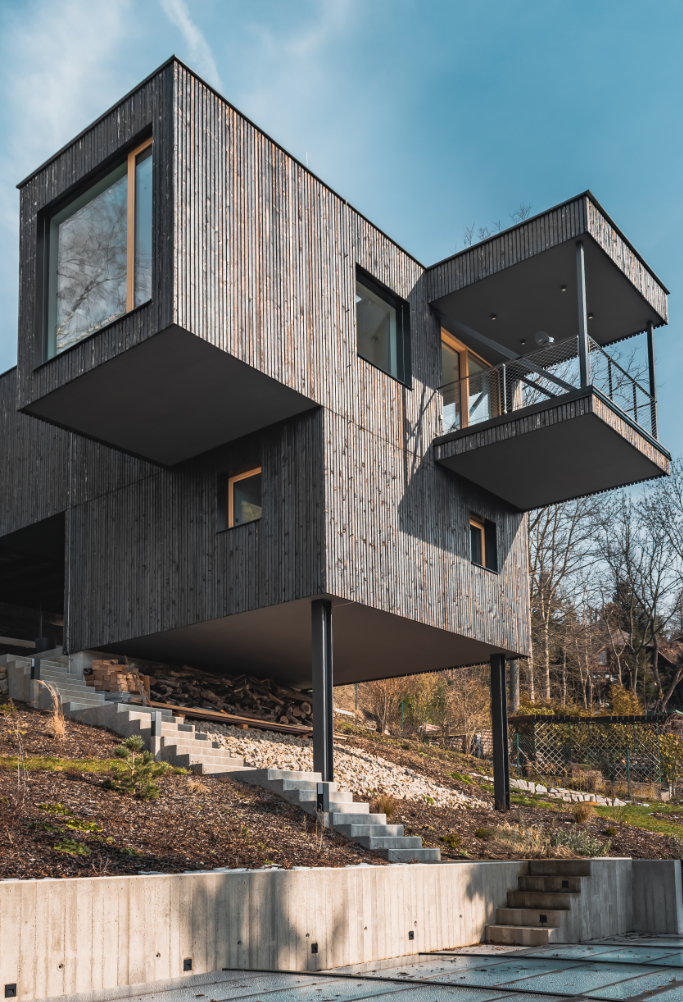
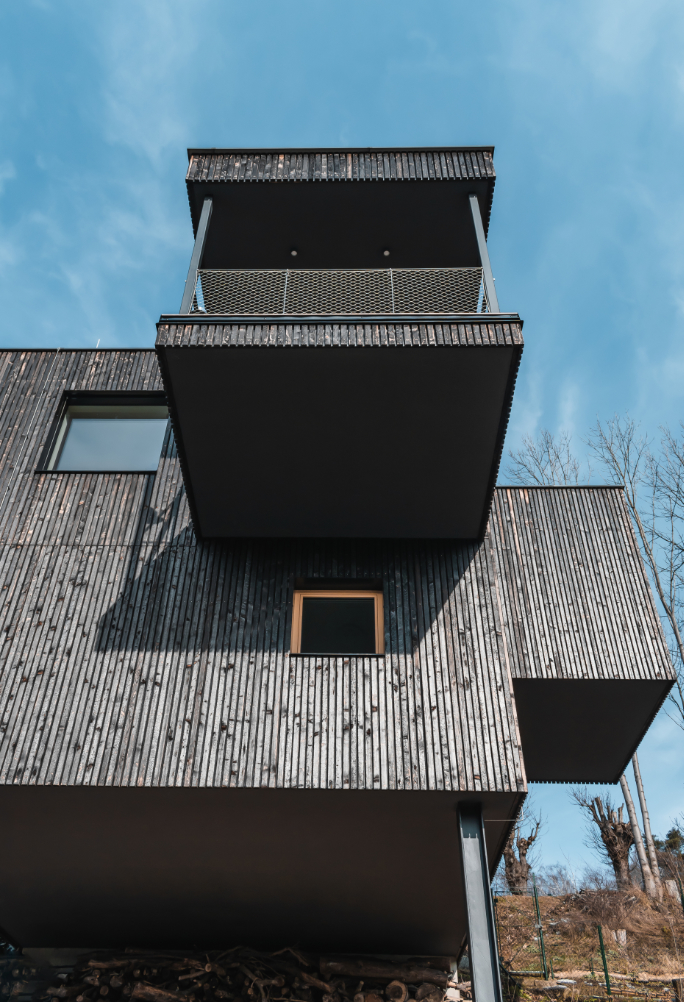
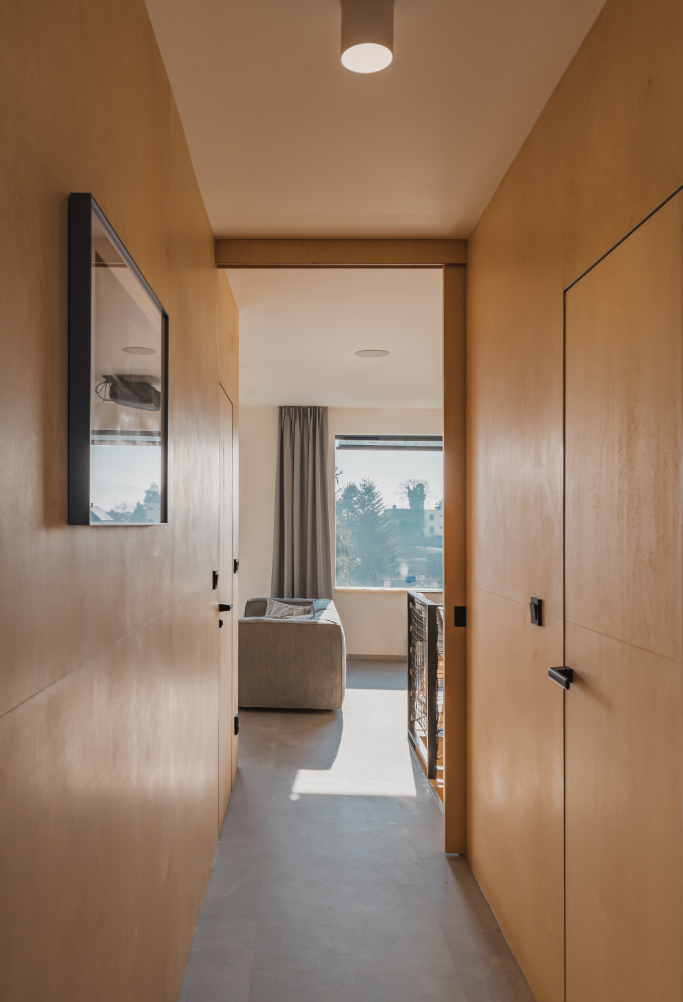
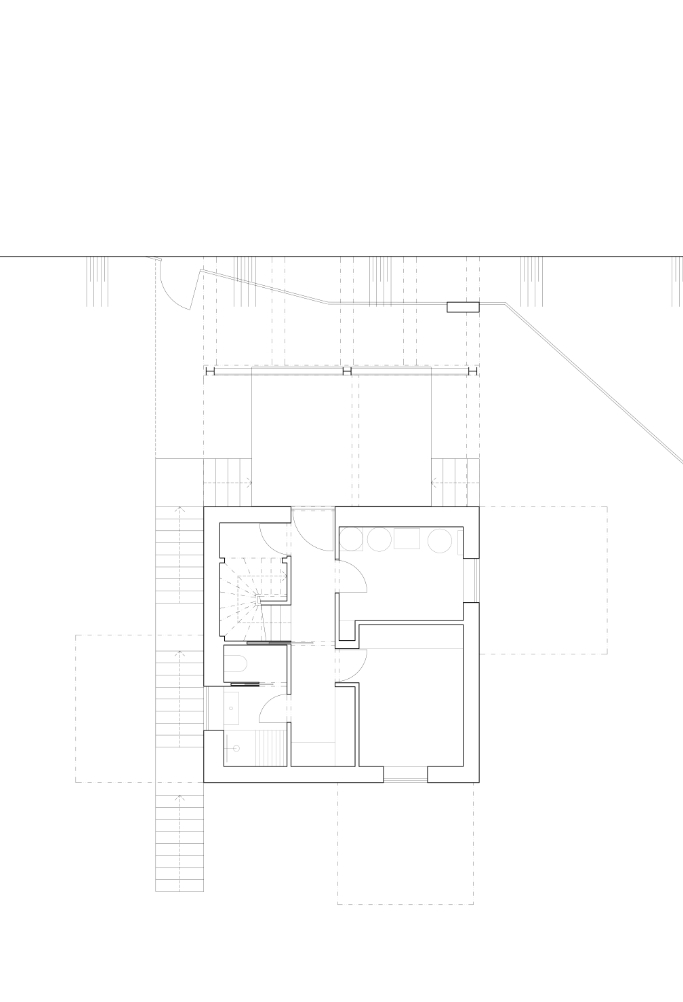
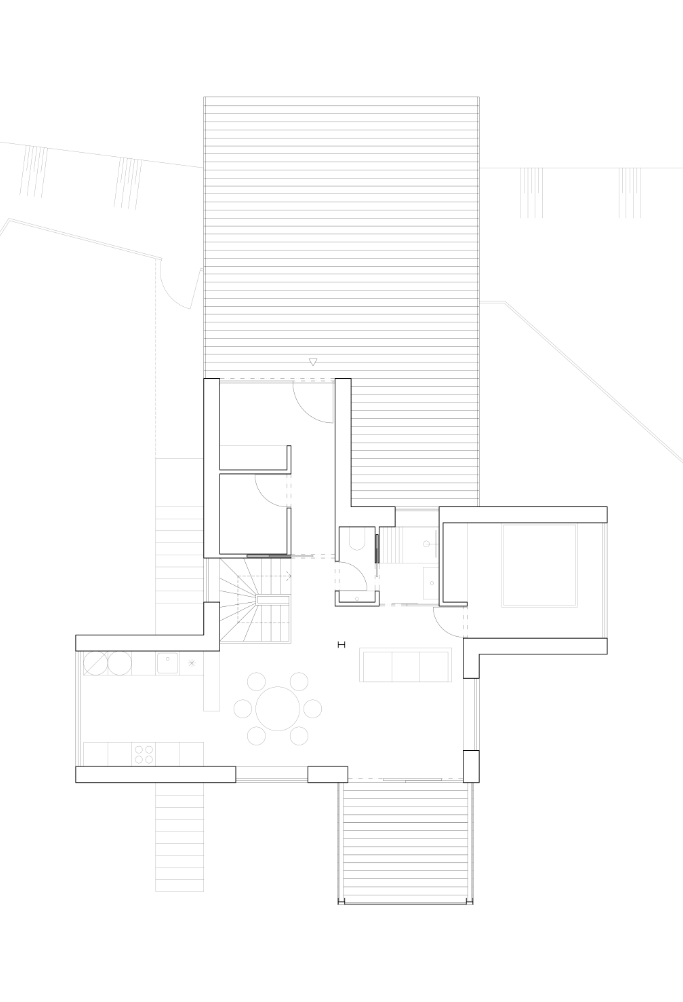
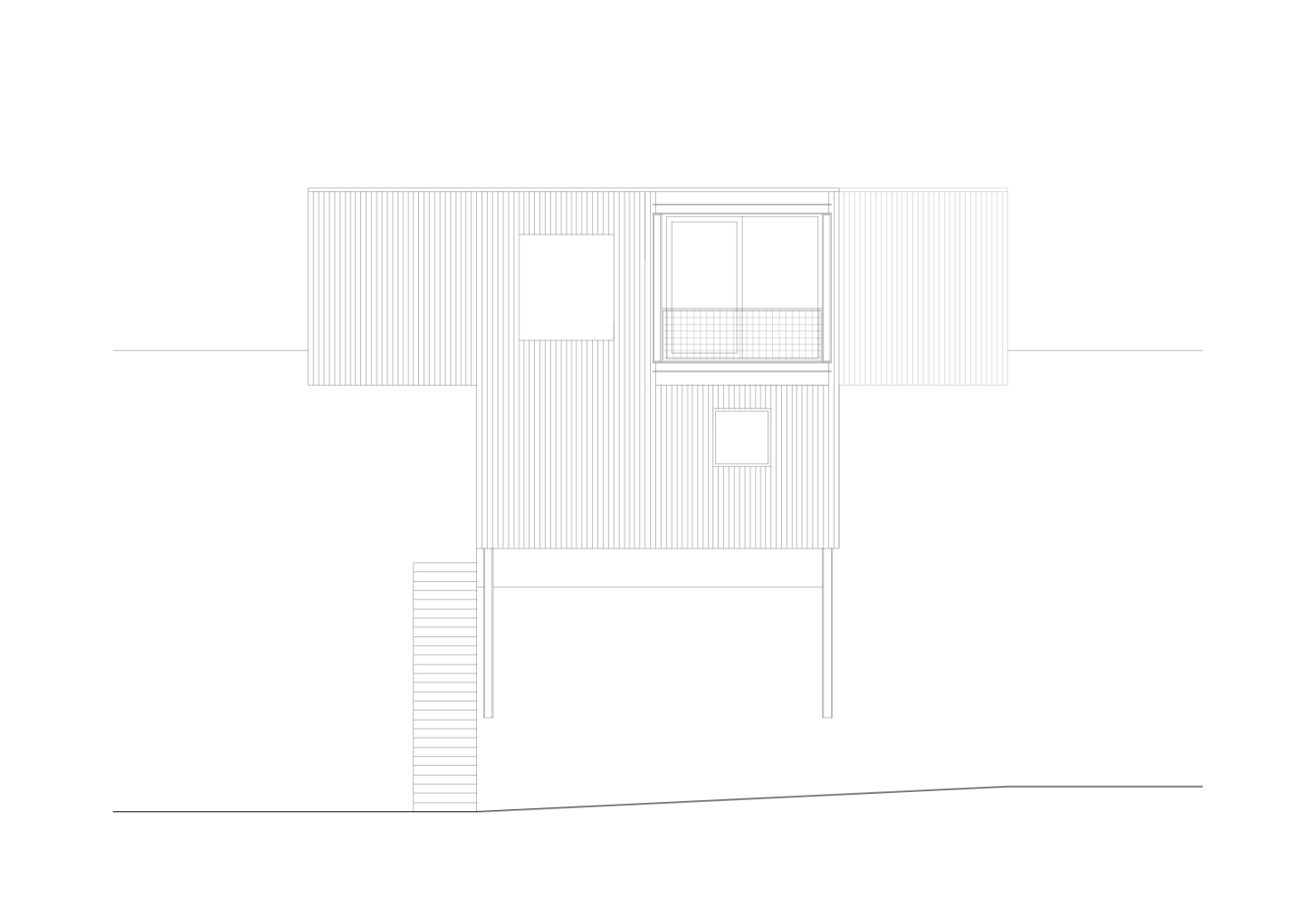
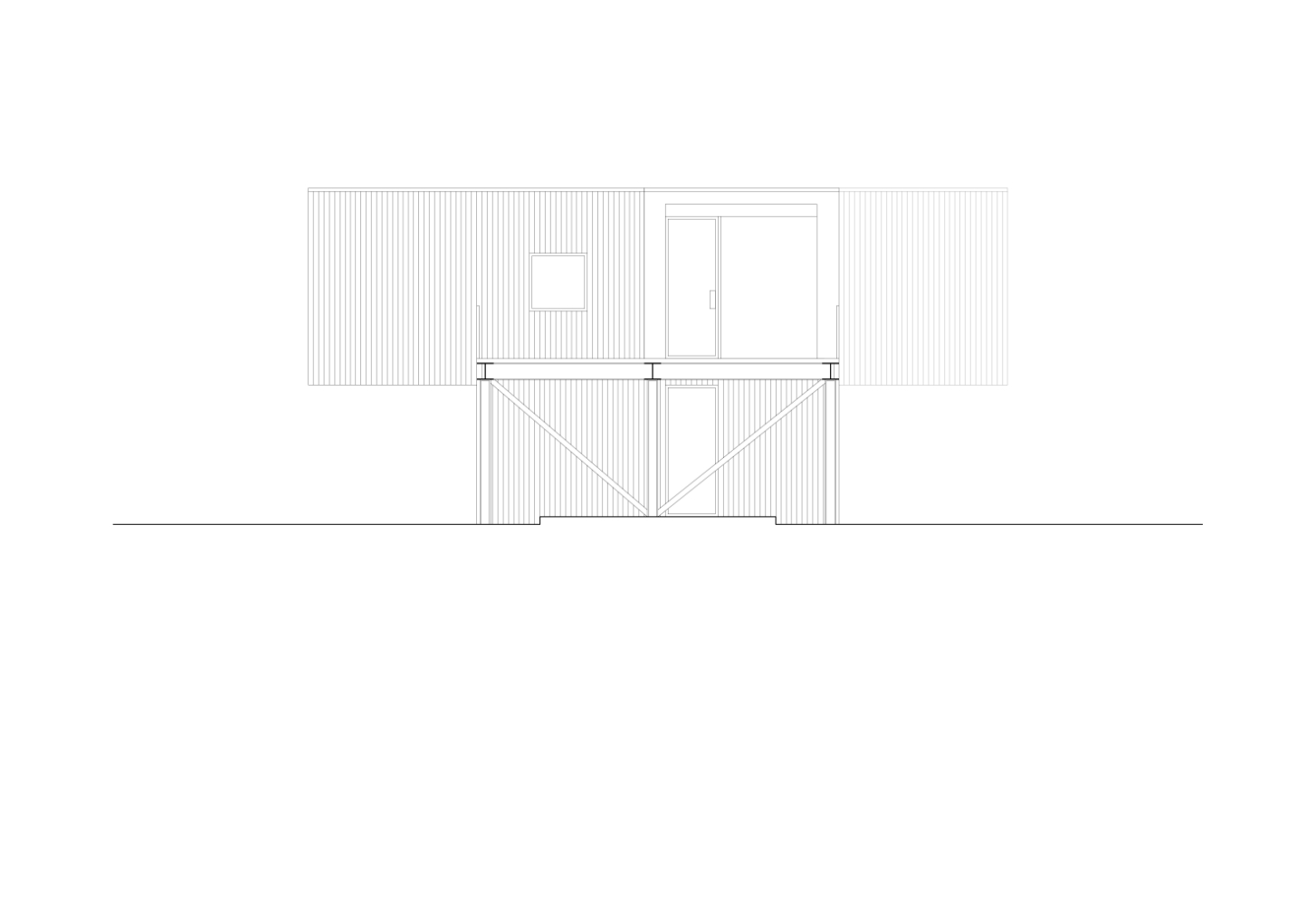
The main compositional and functional principle of the design was to work consistently with daylight and views while ensuring sufficient privacy. The materially restrained lower floor is partly supported by a steep slope, partly carried on columns, and forms a pedestal for the upper floor. The latter turns playfully to the cardinal points, and spreads out its blades like a weathervane, reaching out across them through the storey bay windows or balconies.
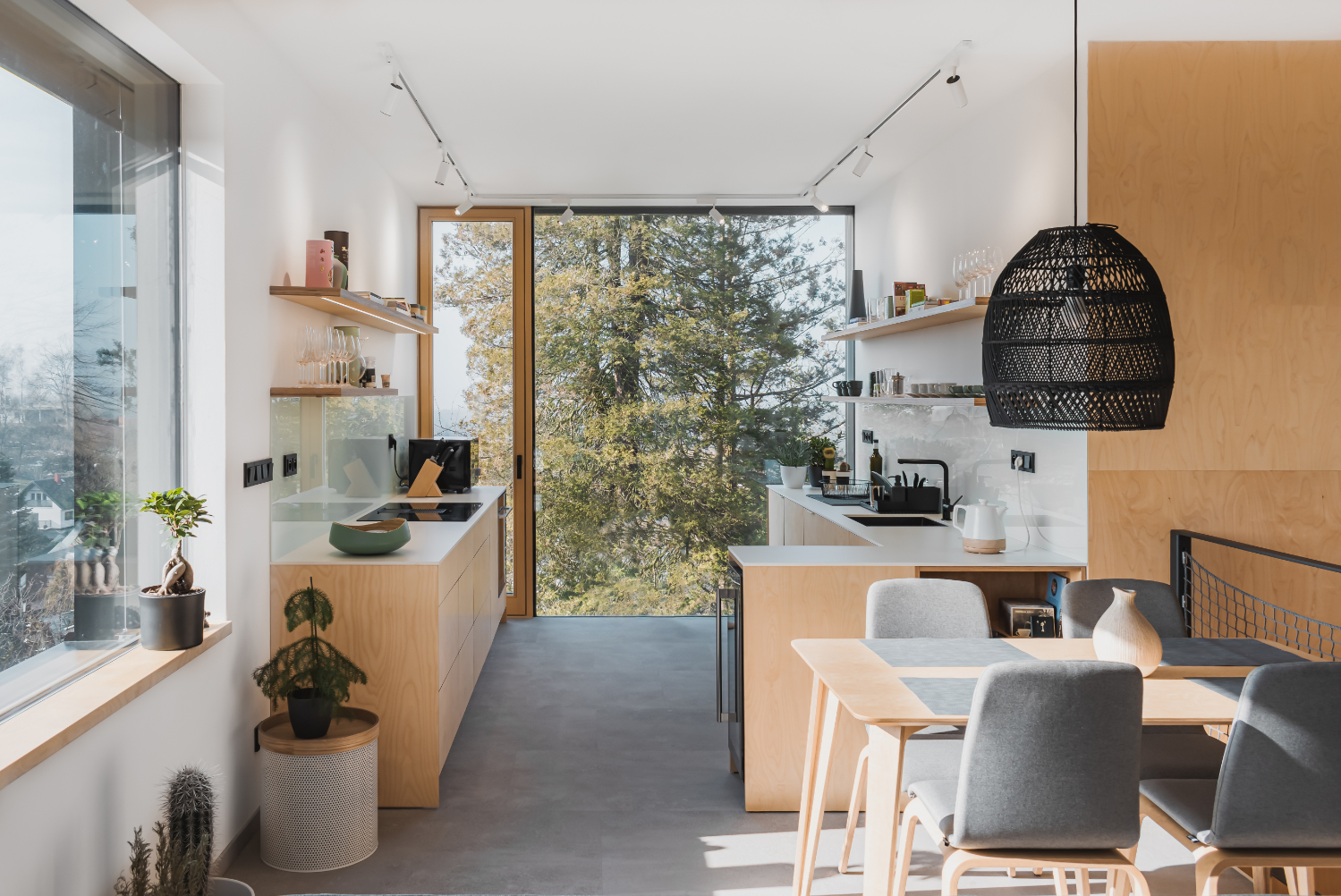
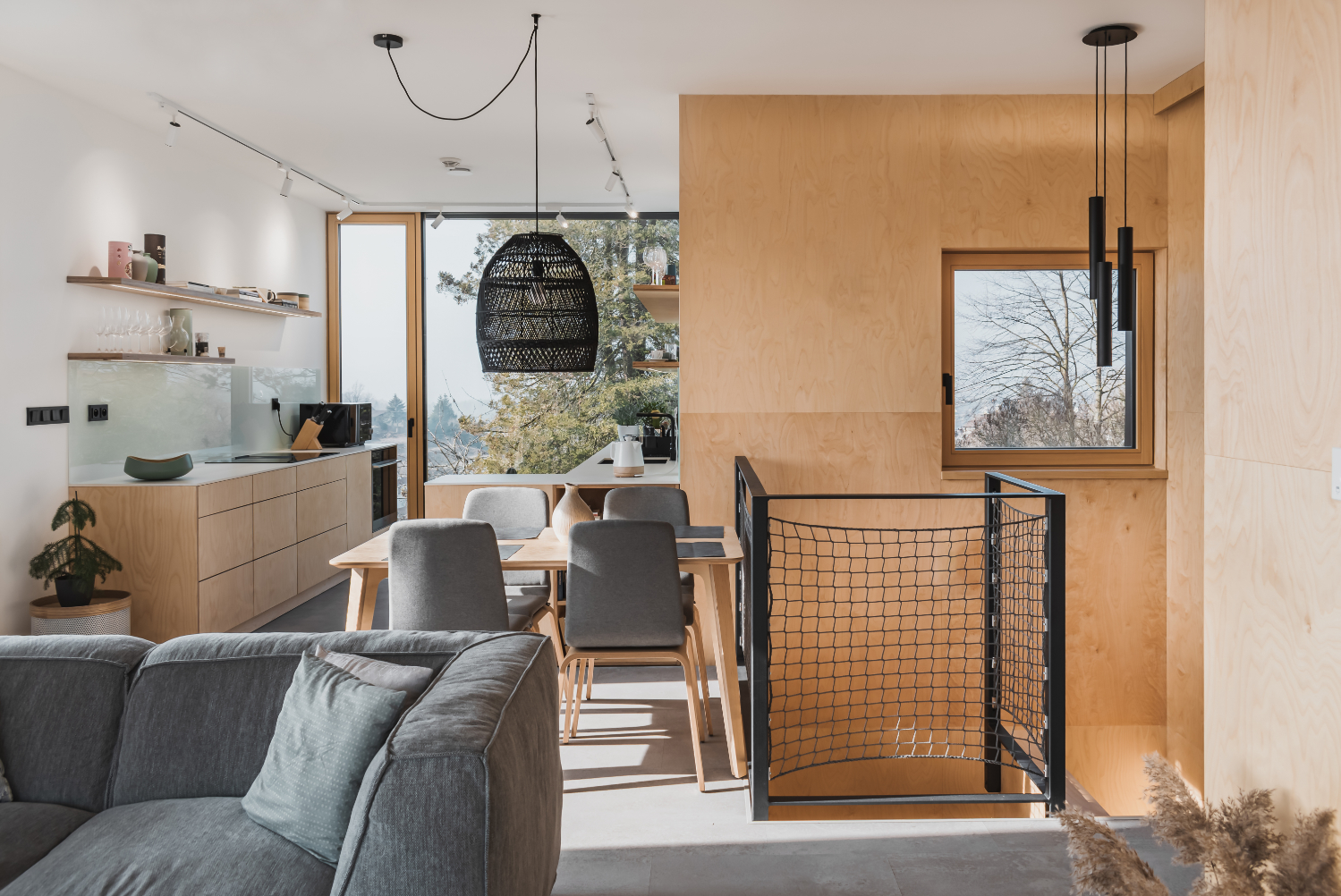
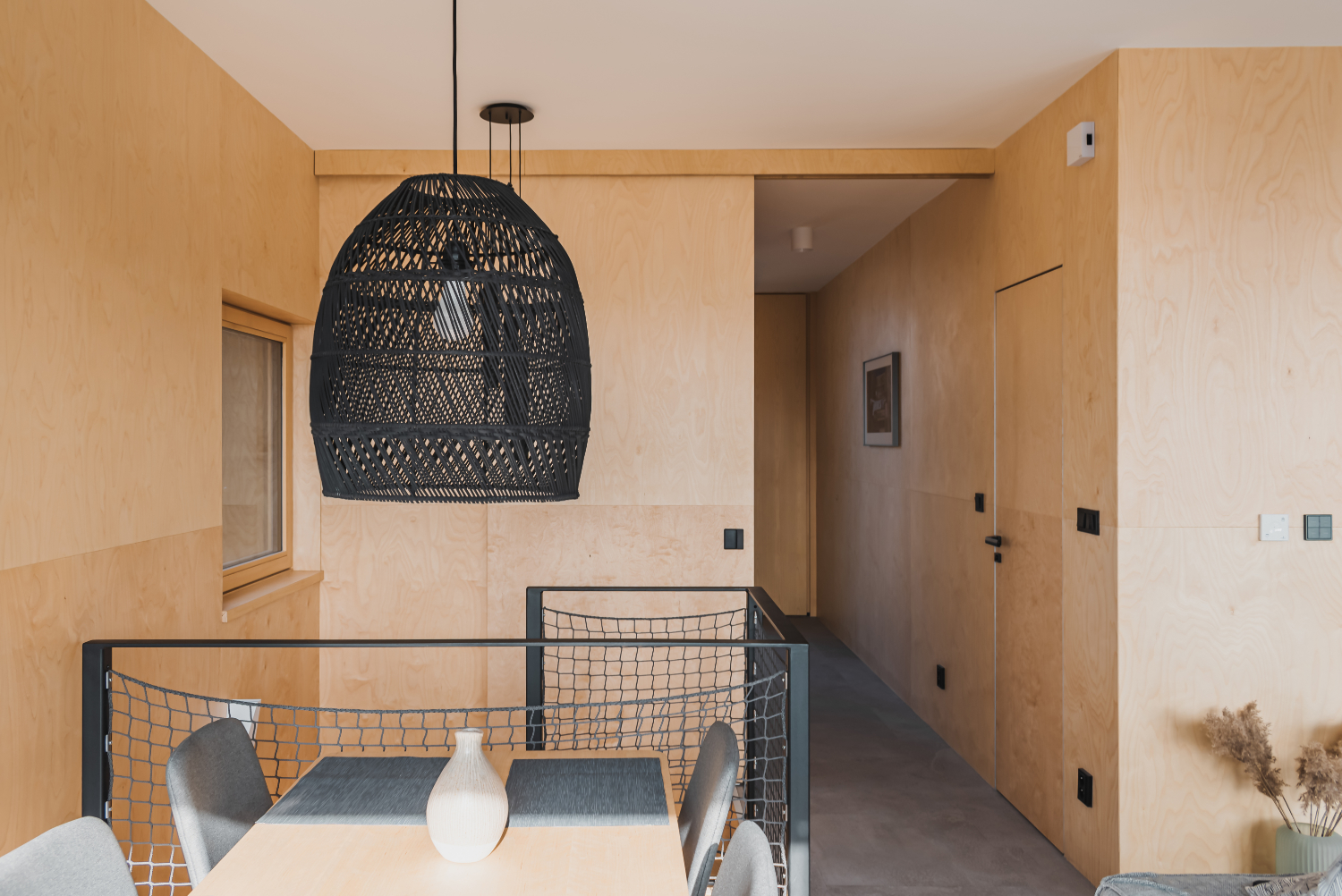
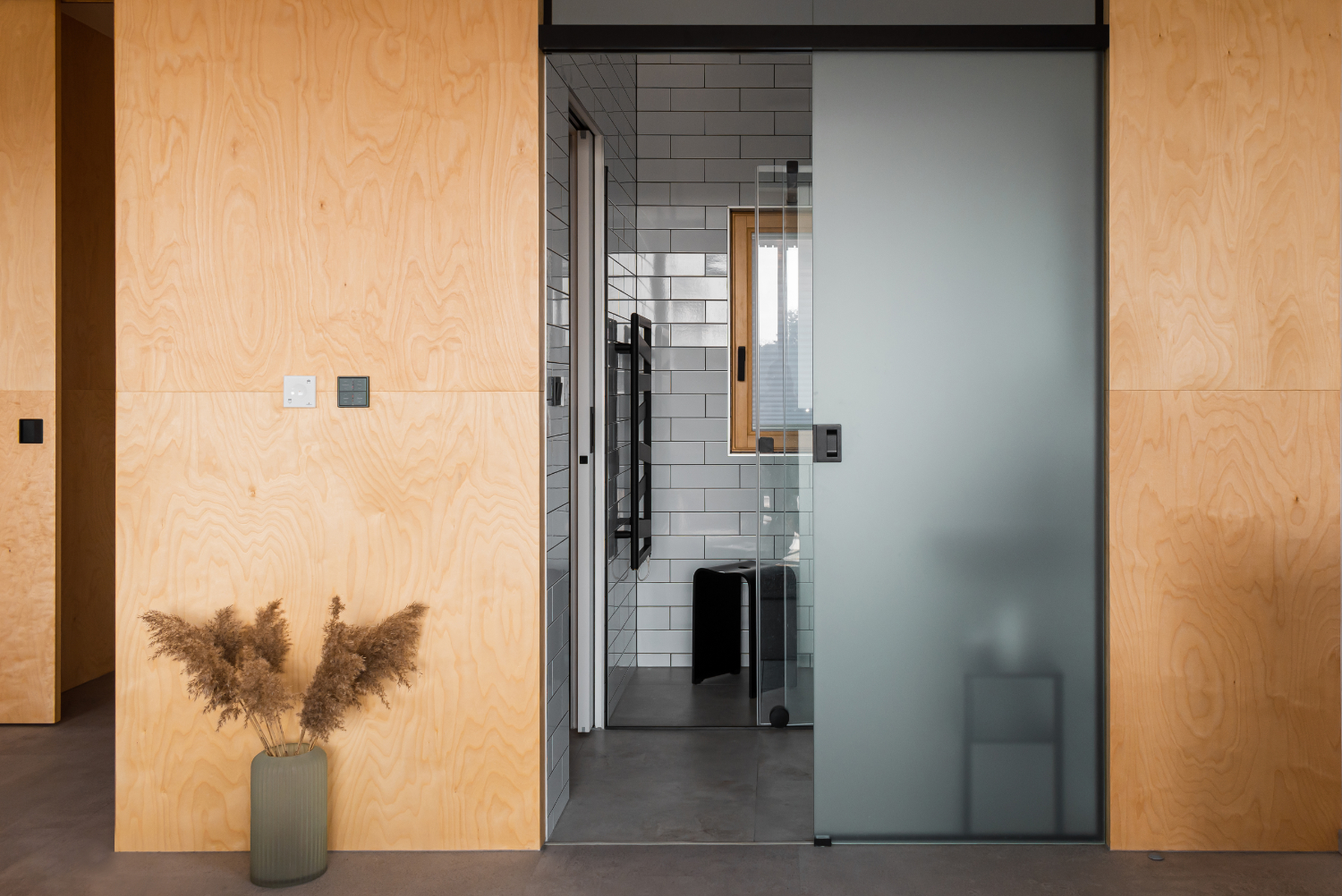
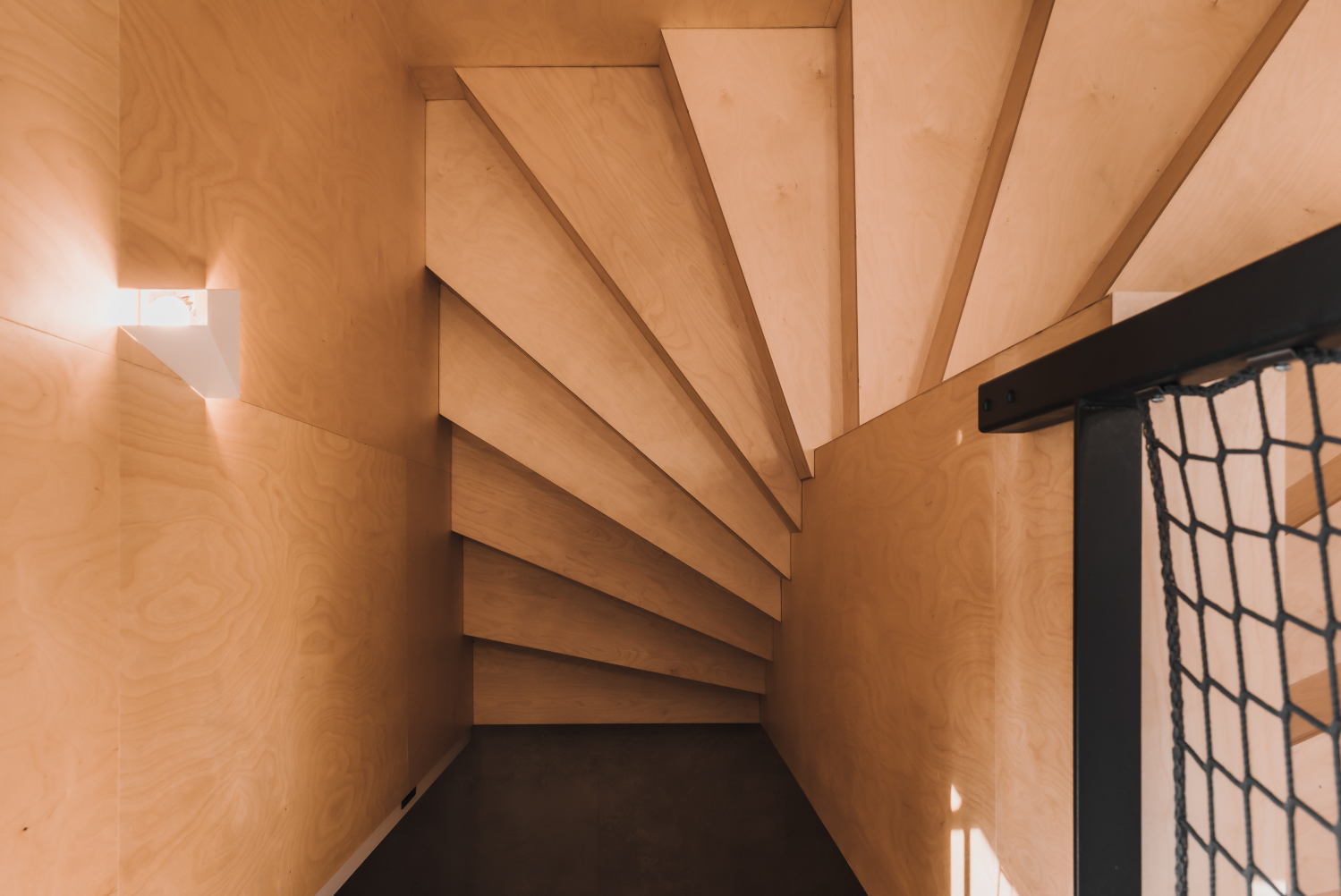
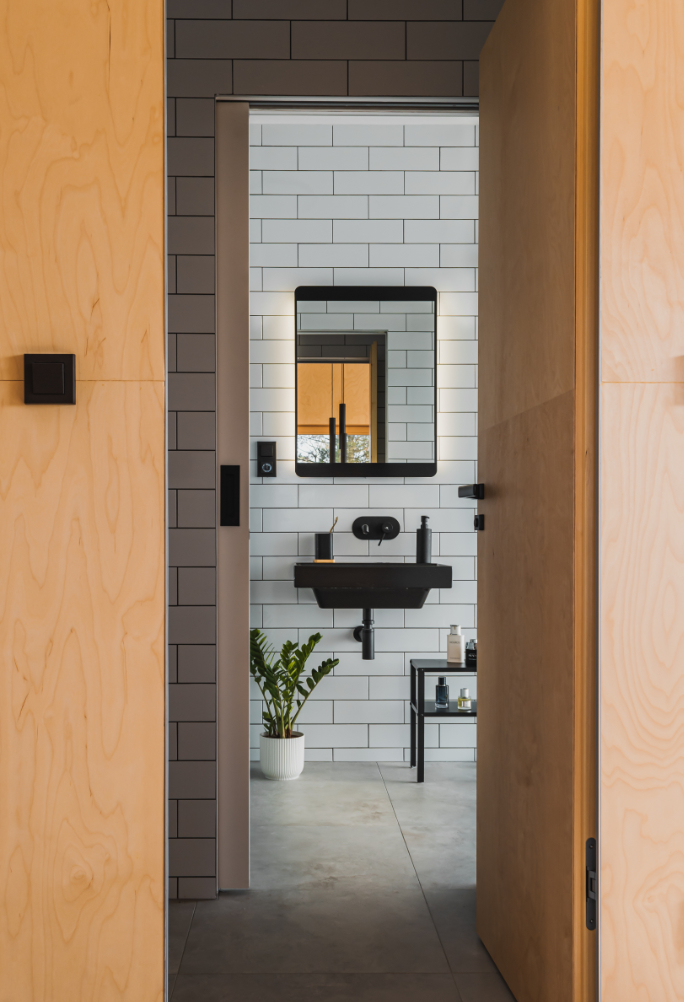
The entrance to the house leads from the footbridge to the upper, articulated floor, the heart of which is the living area with a staircase. This is followed by the 'fan' wings with a bedroom to the east, kitchen to the west, entrance hall to the north and south-facing balcony. The individual wings are framed by views of the surroundings and Podještědí area. A staircase descends to the base of the house, where there is a utility room, storage room and cloakroom with sanitary facilities. From here also leads the entrance to the garden.
The load-bearing structure of the house consists of a light steel skeleton interconnected at the interfaces by welded and bolted elements. While the main living area of the house is almost entirely above ground level, the base of the house is supported by the slope through a beam on the foundation. The front of the base is supported by a pair of steel columns. The perimeter walls are sandwich-board, the ceilings are made of trapezoidal sheets and the roof is flat single-skin with a soft PVC roofing.
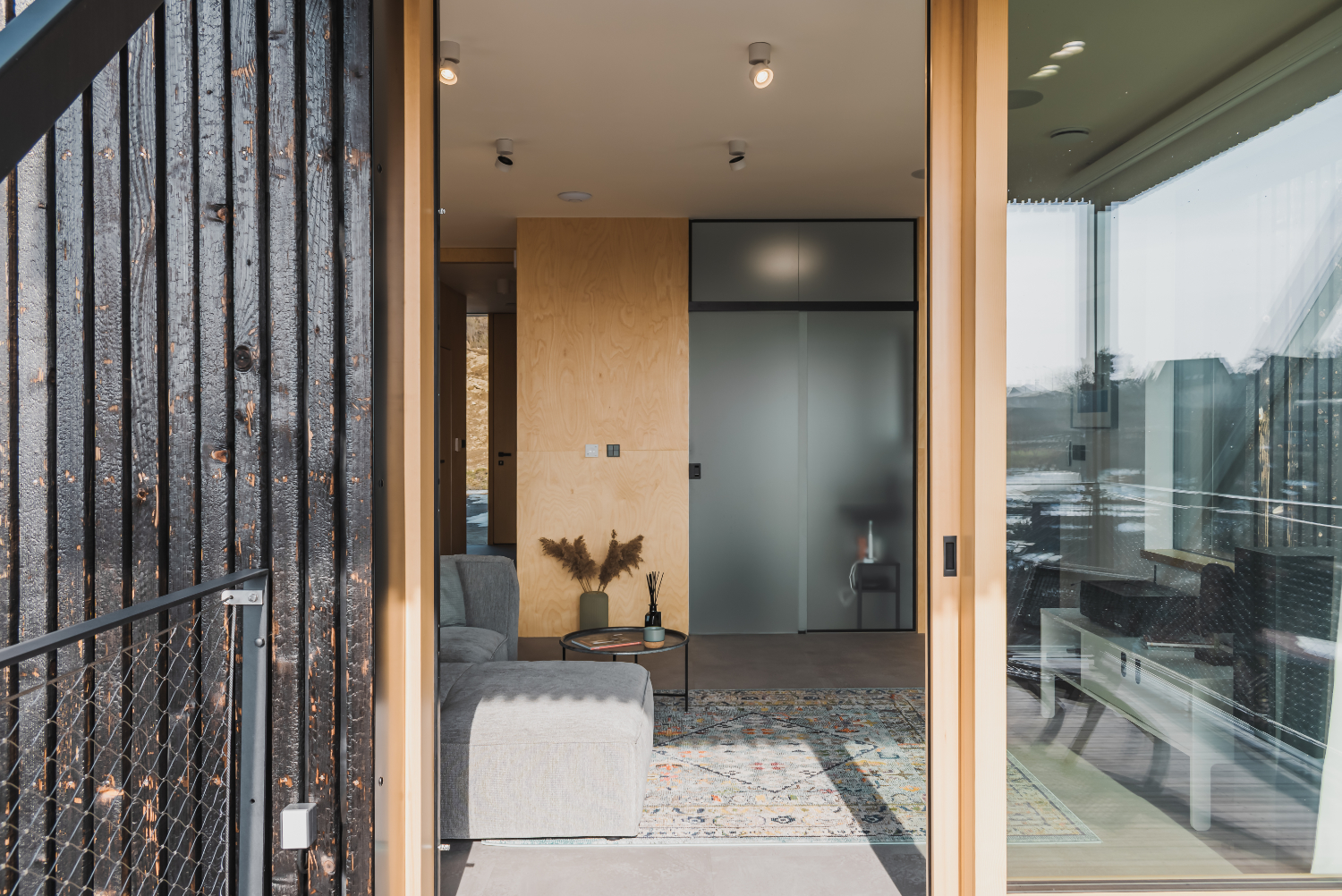
The material of the facade is based on the natural character of the site - a cladding made of burnt Siberian larch slats in combination with areas of waterproof veneered plywood on the bay fronts was chosen. The windows and glazed walls are flanked by minimalist wooden frames made of oiled larch, the panels are frameless. The visible steel structures of the house are painted with black blacksmith's paint, and the balcony and footbridge railings have stainless steel mesh infill. The walkway is composed of timbers placed on steel beams.

Credits
Family house Větrník
place: Liberec, Czech Republic
studio: atakarchitekti
author: Jiří Janďourek, Jana Janďourková Medlíková
project: 2018
realization: 2022
contractor: Ligasteel, Jiránek CZ
builder: TERRA SPORT
photo: Martin Zicha
Rate
How much do you like this?