Filter


0 %
rates
Bergen aan Zee is perhaps the most beautifully situated seaside resort in the Netherlands, surrounded by the Schoorl Dunes and the dune landscapes of Bergen aan Zee and Egmond. Fewer than 400 people live here, fairly isolated, encircled by 7,500 hectares of Natura 2000 landscape.
The village was founded in 1906 at the initiative of landowner and mayor Van Reenen and his wife Reenen-Völter. The Zeiler family took the lead in inviting architect H.P. Berlage to design a large hotel–café–restaurant. It became an international success, and many artists settled in the village, giving rise to the art movement known as the “Bergen School.” During the Second World War, the Germans demolished most of the buildings, including the famous Nassau-Bergen Hotel, in order to create a free line of fire.
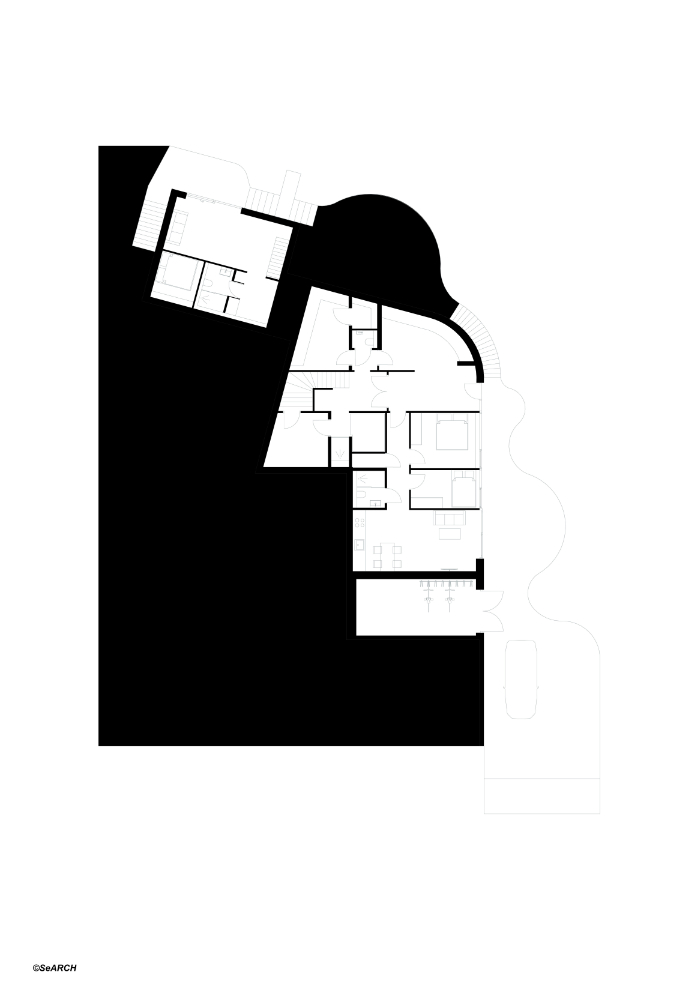
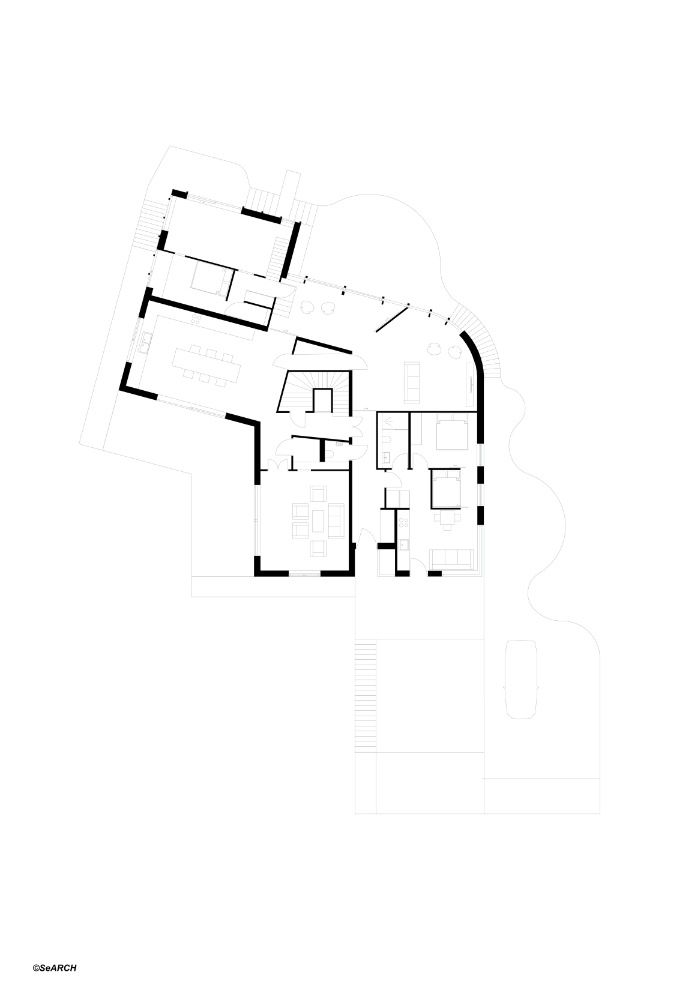
Most houses therefore date from the 1950s and 1960s and, due to their outdated and fragile construction, are in need of replacement. The existing 1952 house by architect N. Byl was expanded multiple times over the years with holiday units and a garage, reaching all the way to the plot boundary. This footprint is now strictly defined and almost impossible to change.
After studying the fascinating history of Bergen aan Zee, it became apparent that the architecture of the 1950s and 60s is rapidly being replaced by ostentatious villas—too tall, too bulky, and built from exclusive materials. The village’s “beauty of simplicity” is at risk of disappearing.
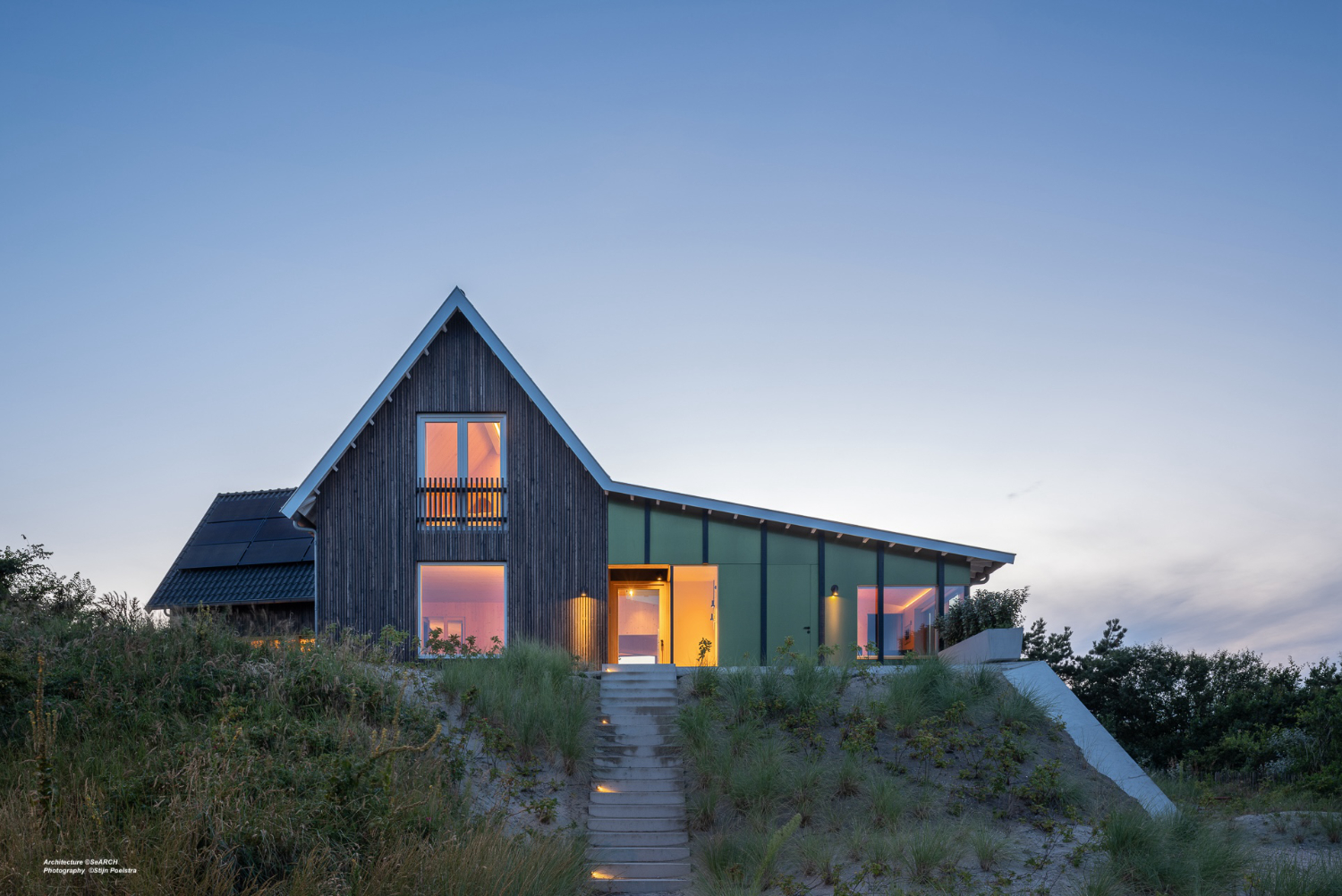
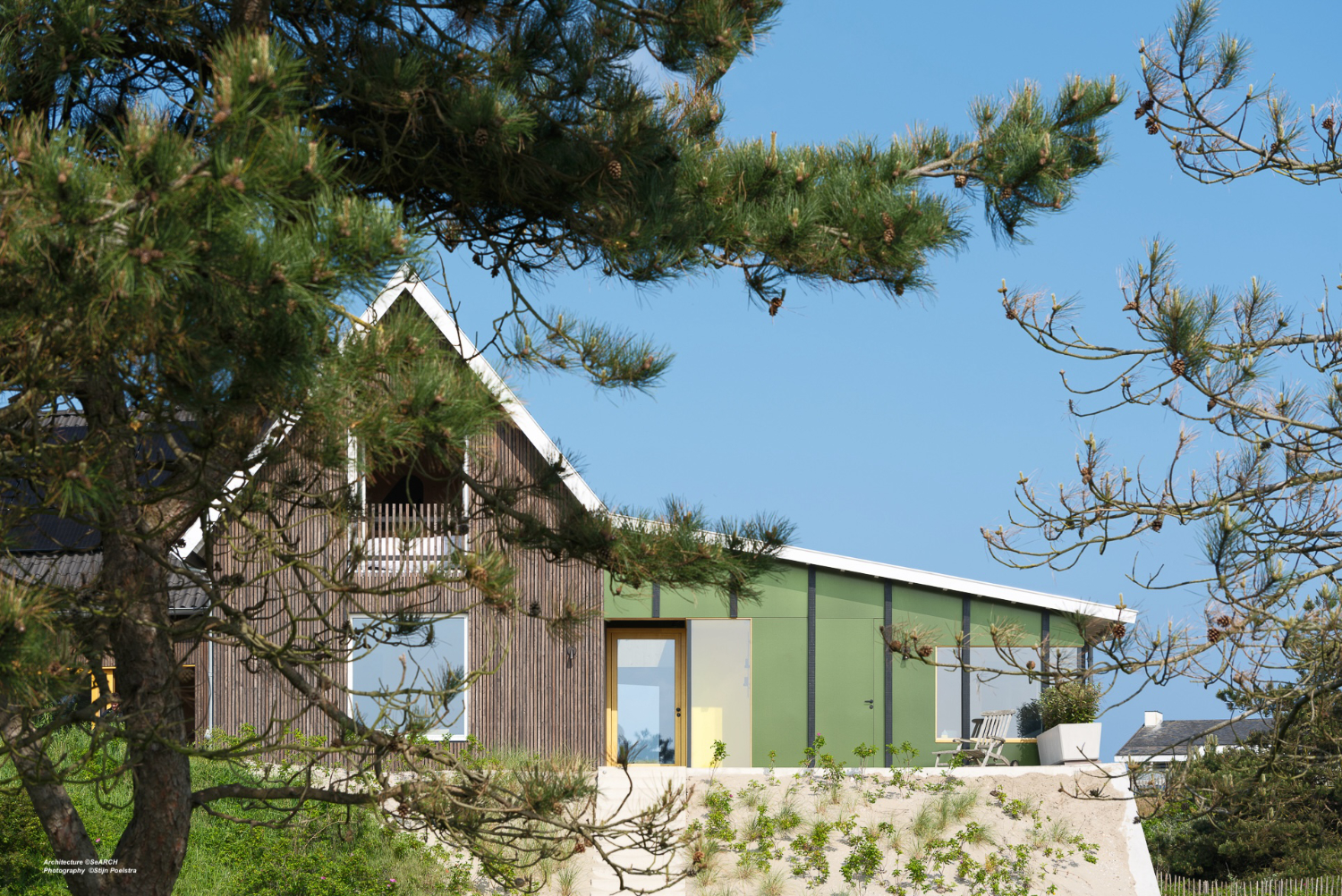
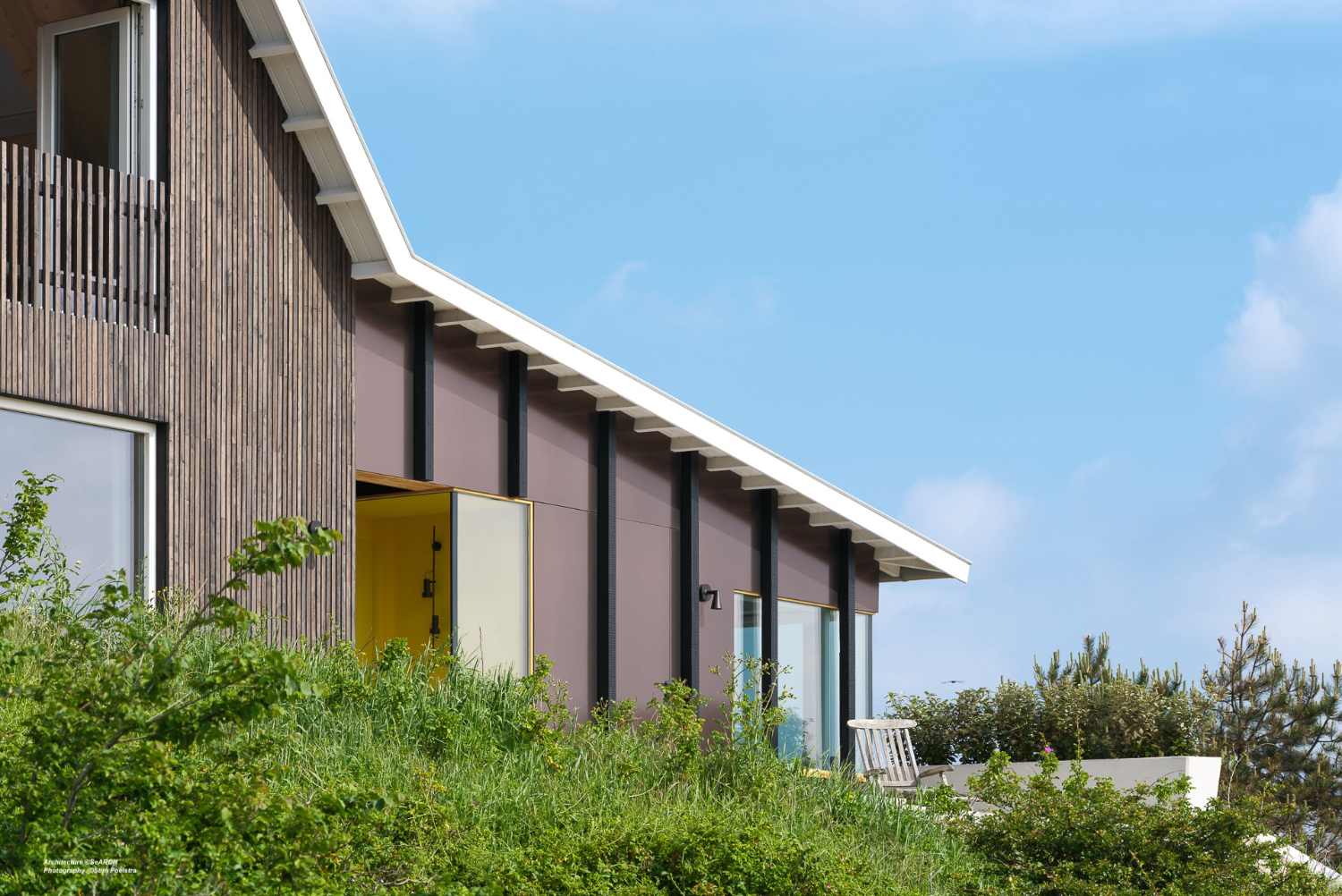
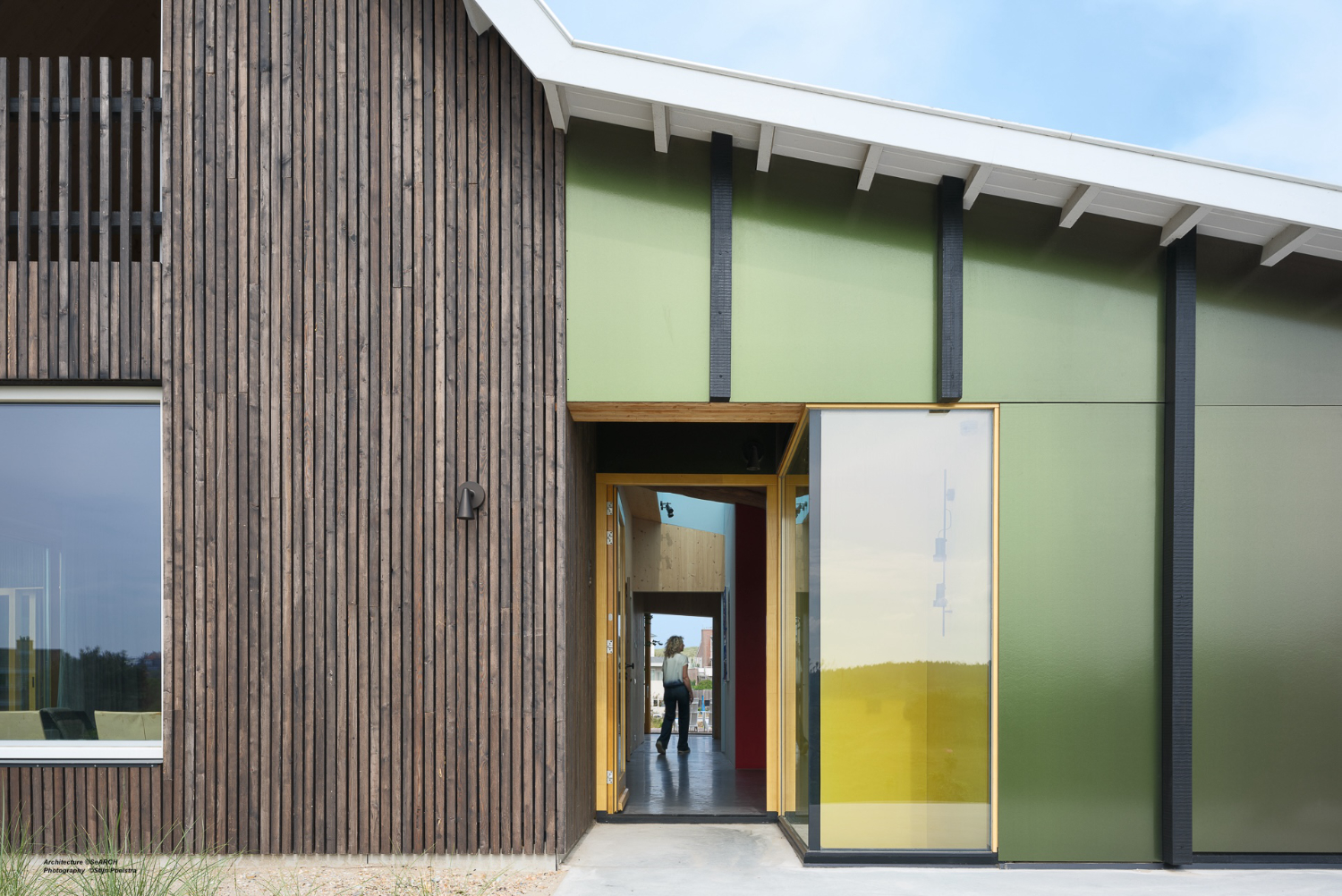
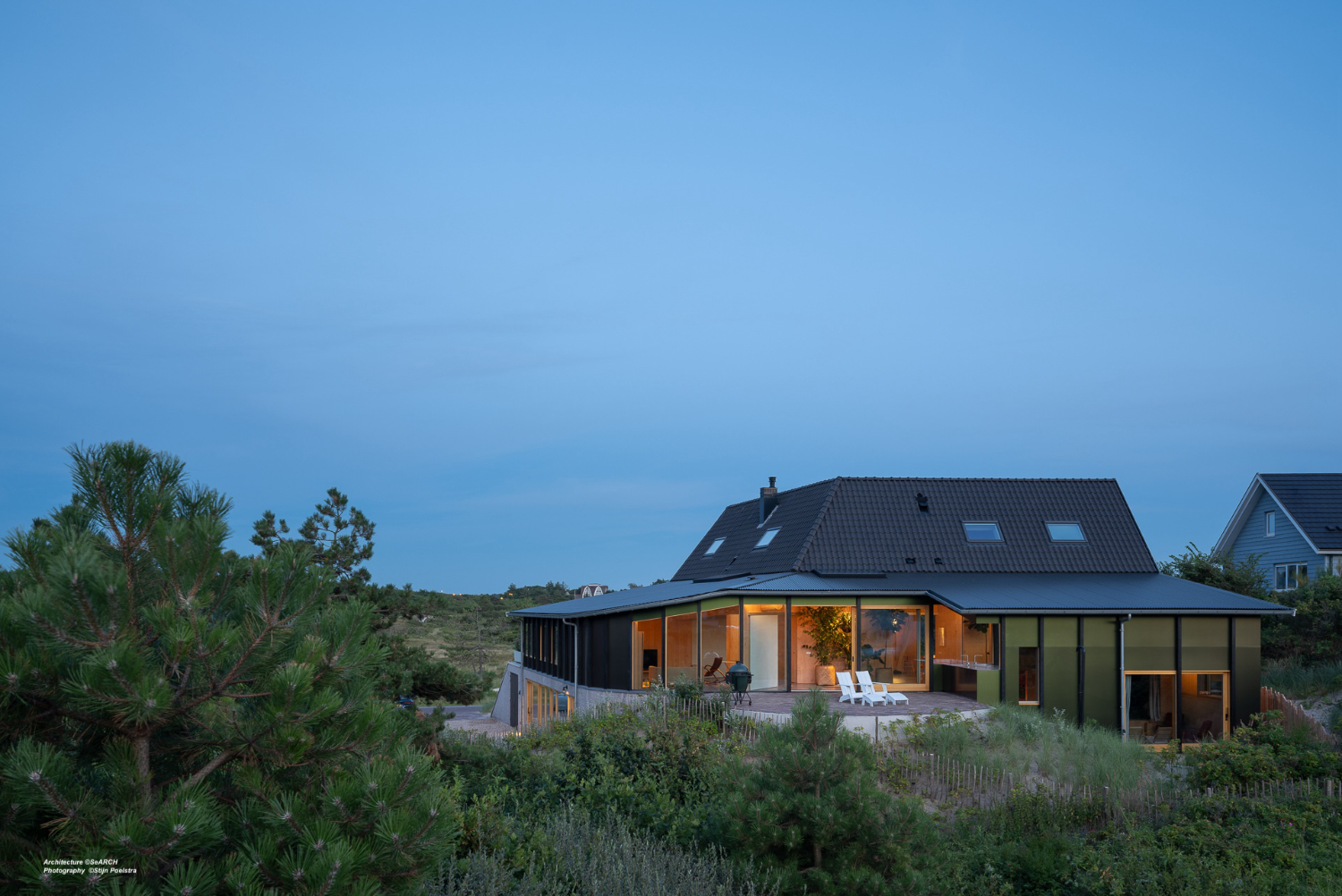
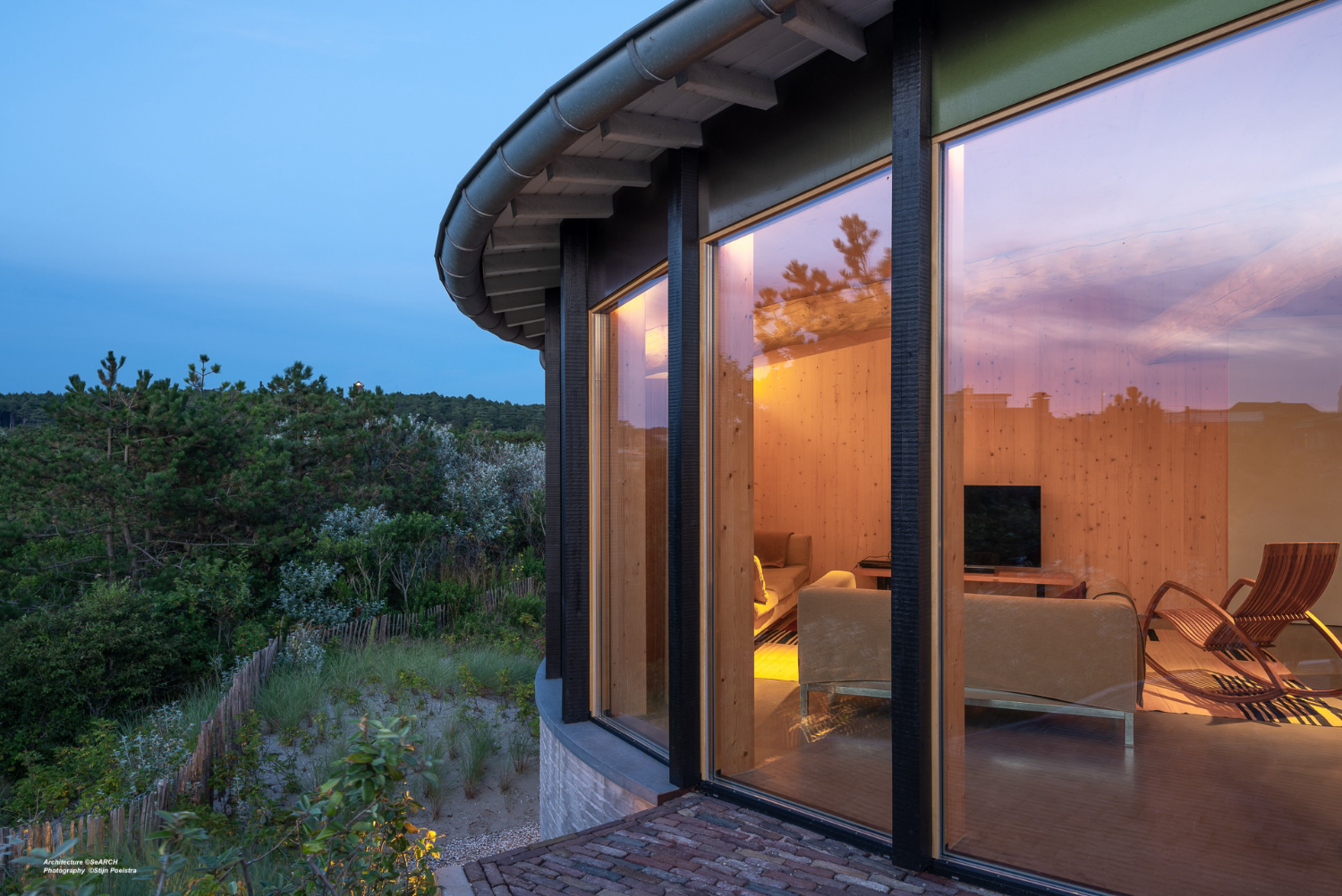
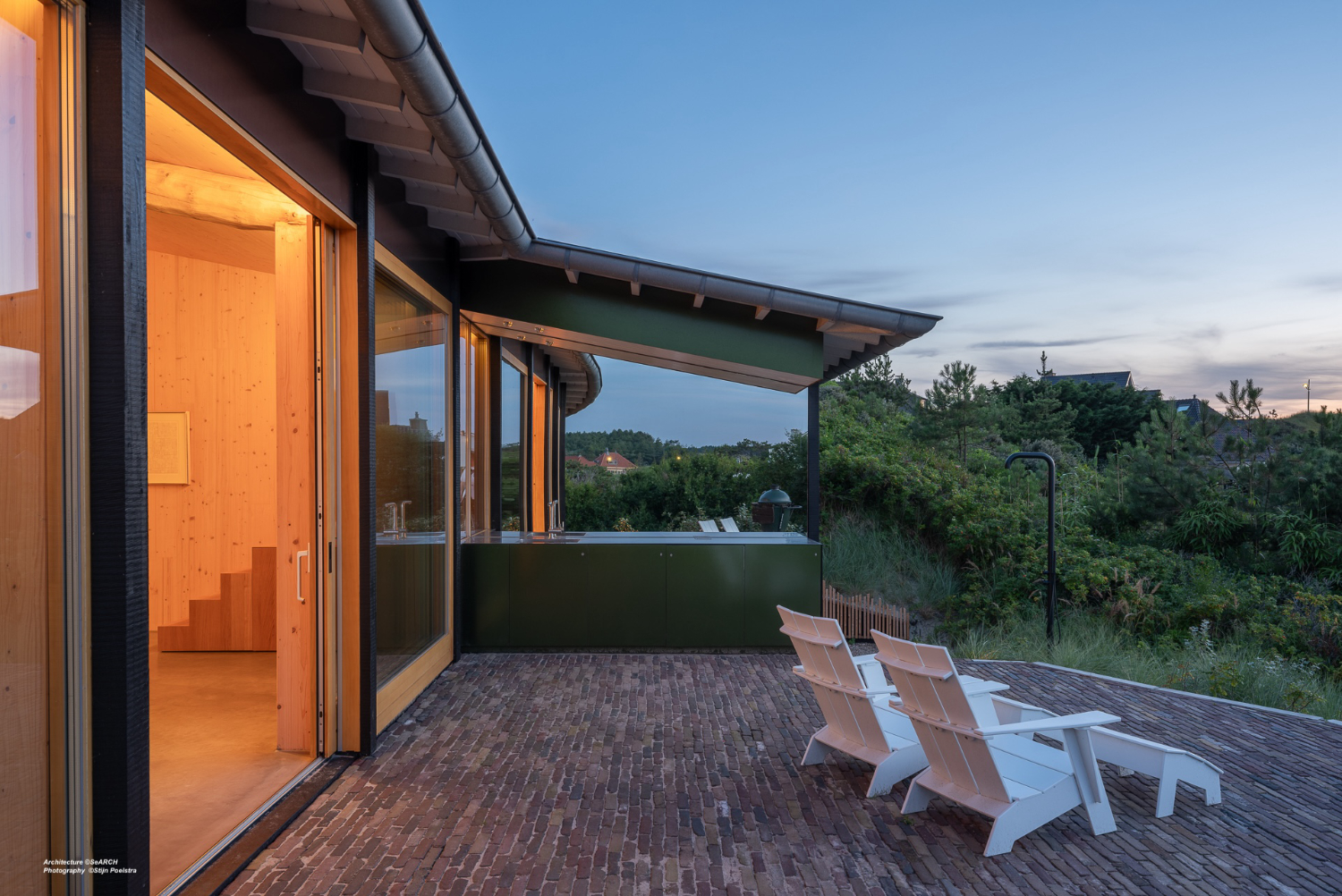
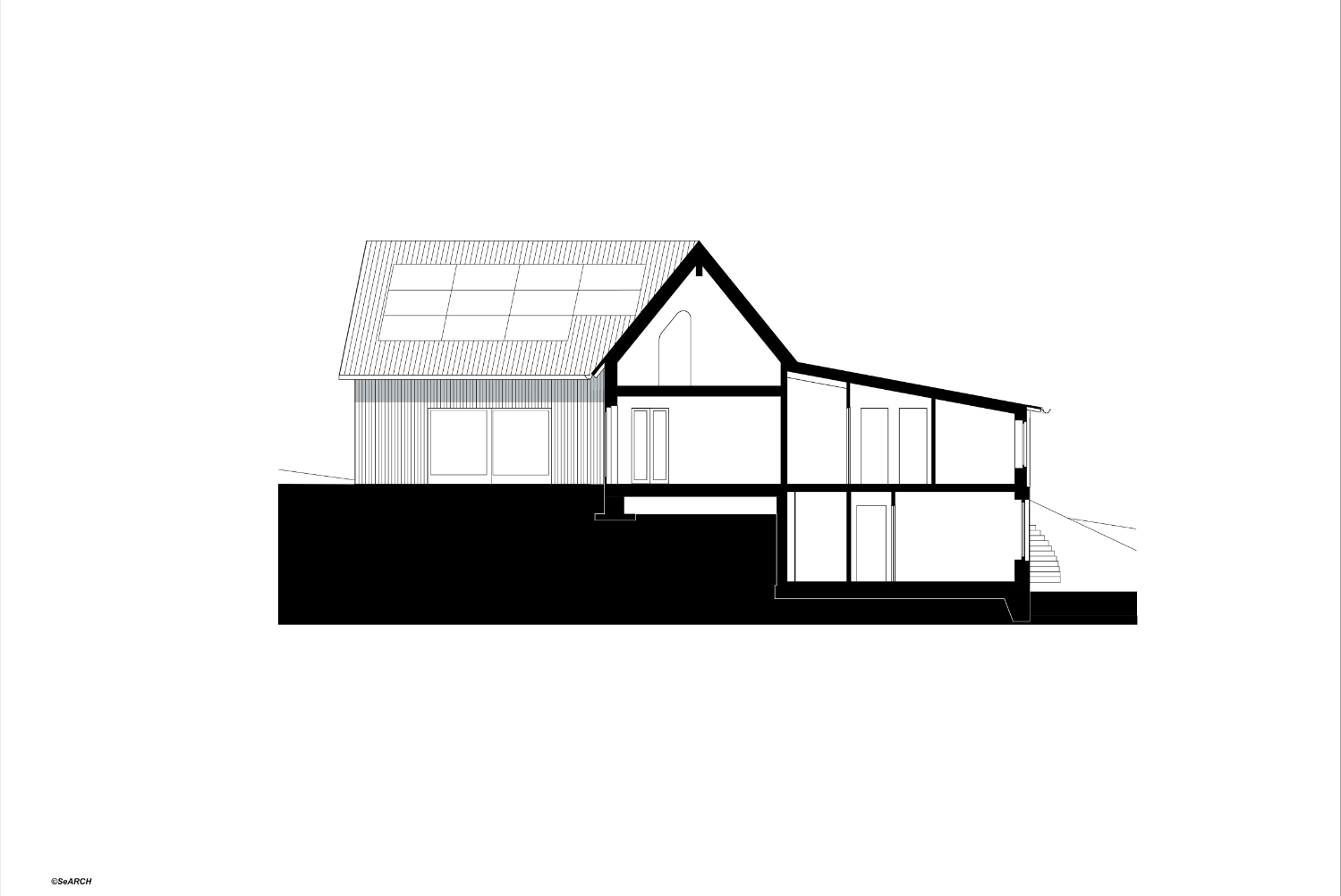
SeARCH aimed to counter this trend by adopting restraint in both architecture and materials. Only a subtle distinction was made between the original 1952 volume and the later extensions, expressed in a new form. The main house features a façade of wooden slats and a tiled roof, while the extension is clad in sheet material with an iridescent effect that appears green when viewed head-on and brown from an angle. The flatter roof is covered with a simple corrugated sheet. A slender white roof edge with wooden brackets— a recurring detail in 1950s houses—visually ties the two parts together.
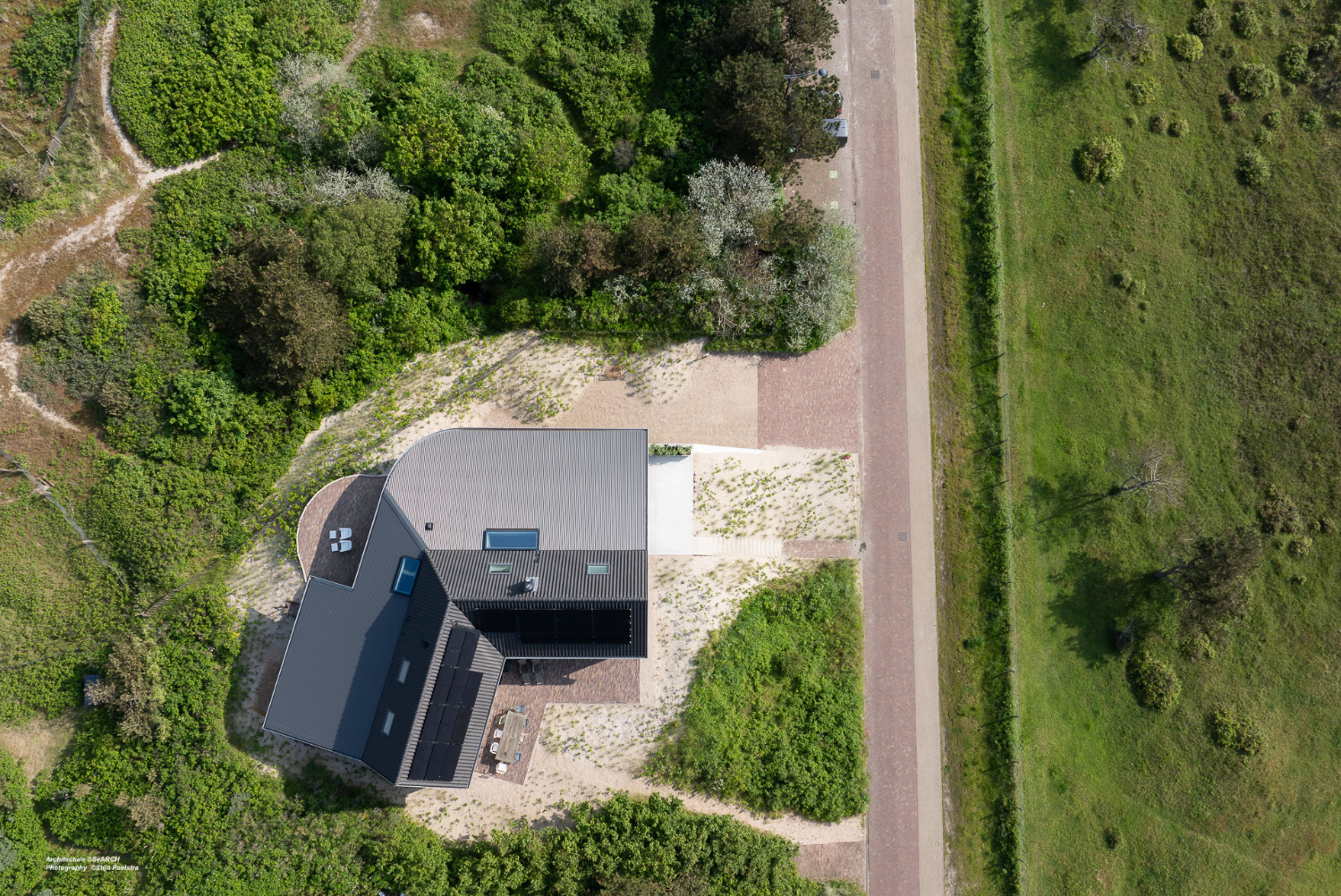
The new programme is “cast” into a more compact volume. It consists of a main residence for a couple with a central family room, conservatory, and wellness area. The former holiday units have been replaced by three studios, one for each of the children. These are positioned as close as possible to the rear of the boomerang-shaped footprint of the main house, allowing the old dune to be restored. Because the studios may also be rented to non-family members, it was essential that they be fully autonomous. The advantage is that the main residence remains pleasantly sized for the couple, while during family gatherings or celebrations the house can comfortably accommodate up to twenty people.
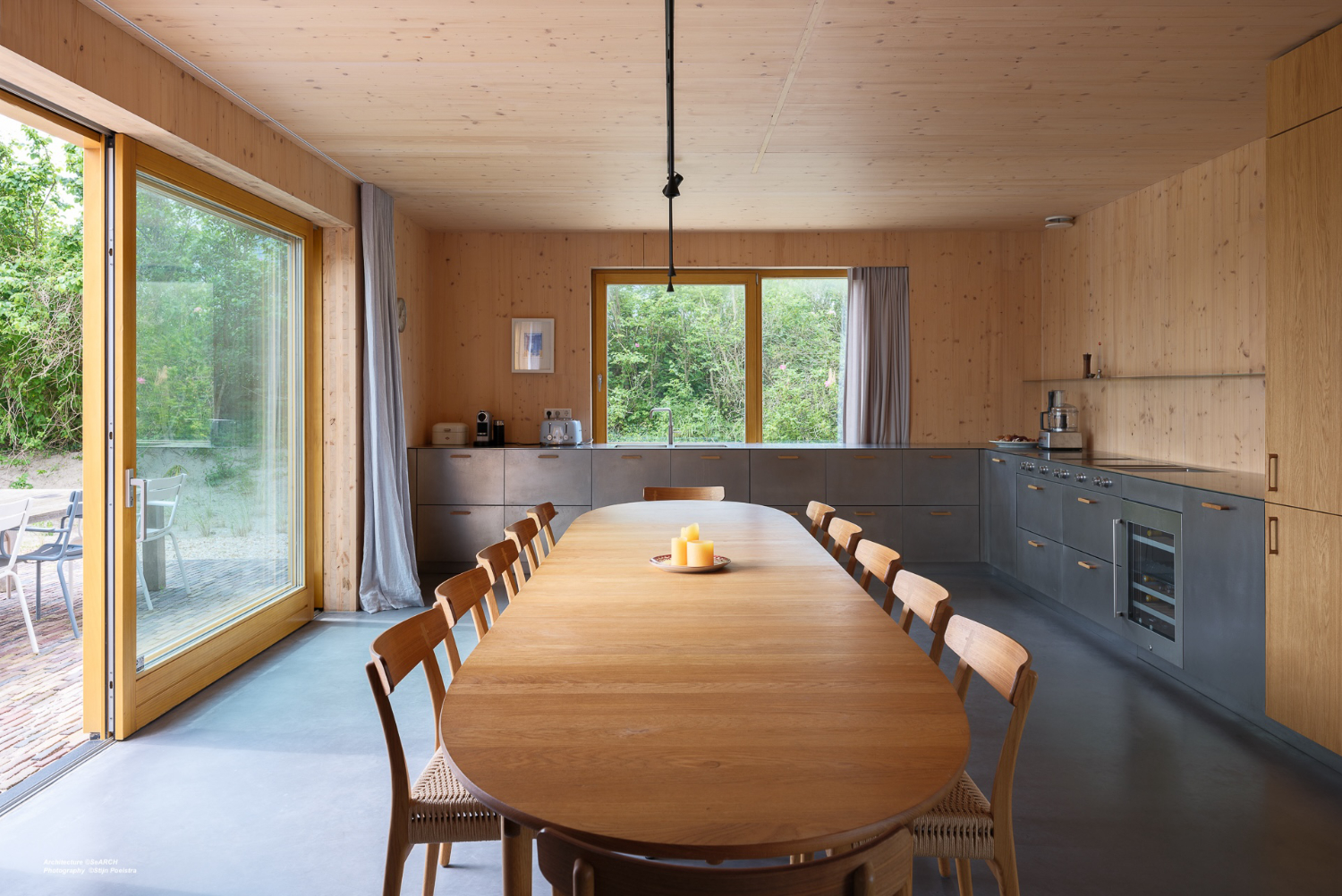
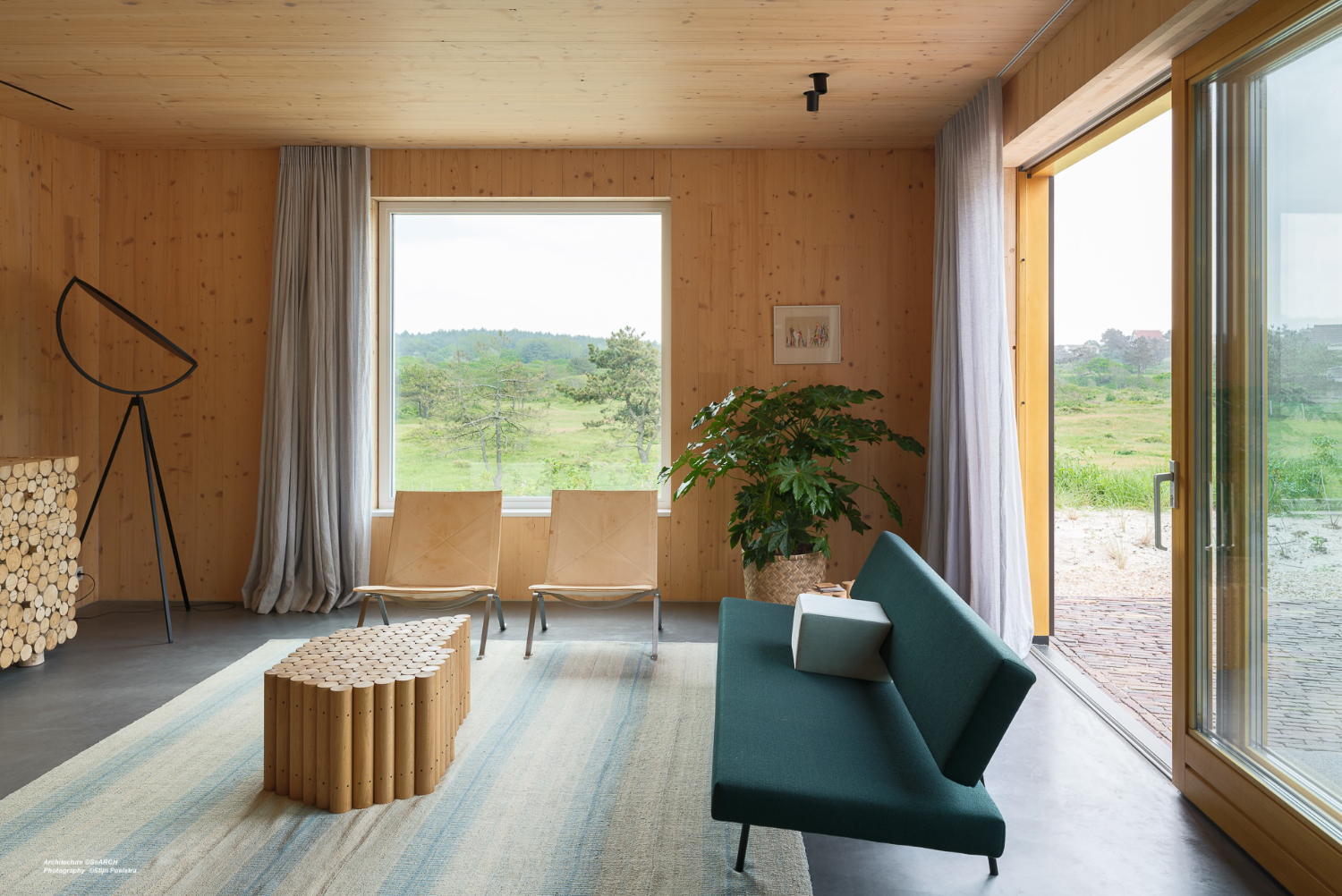
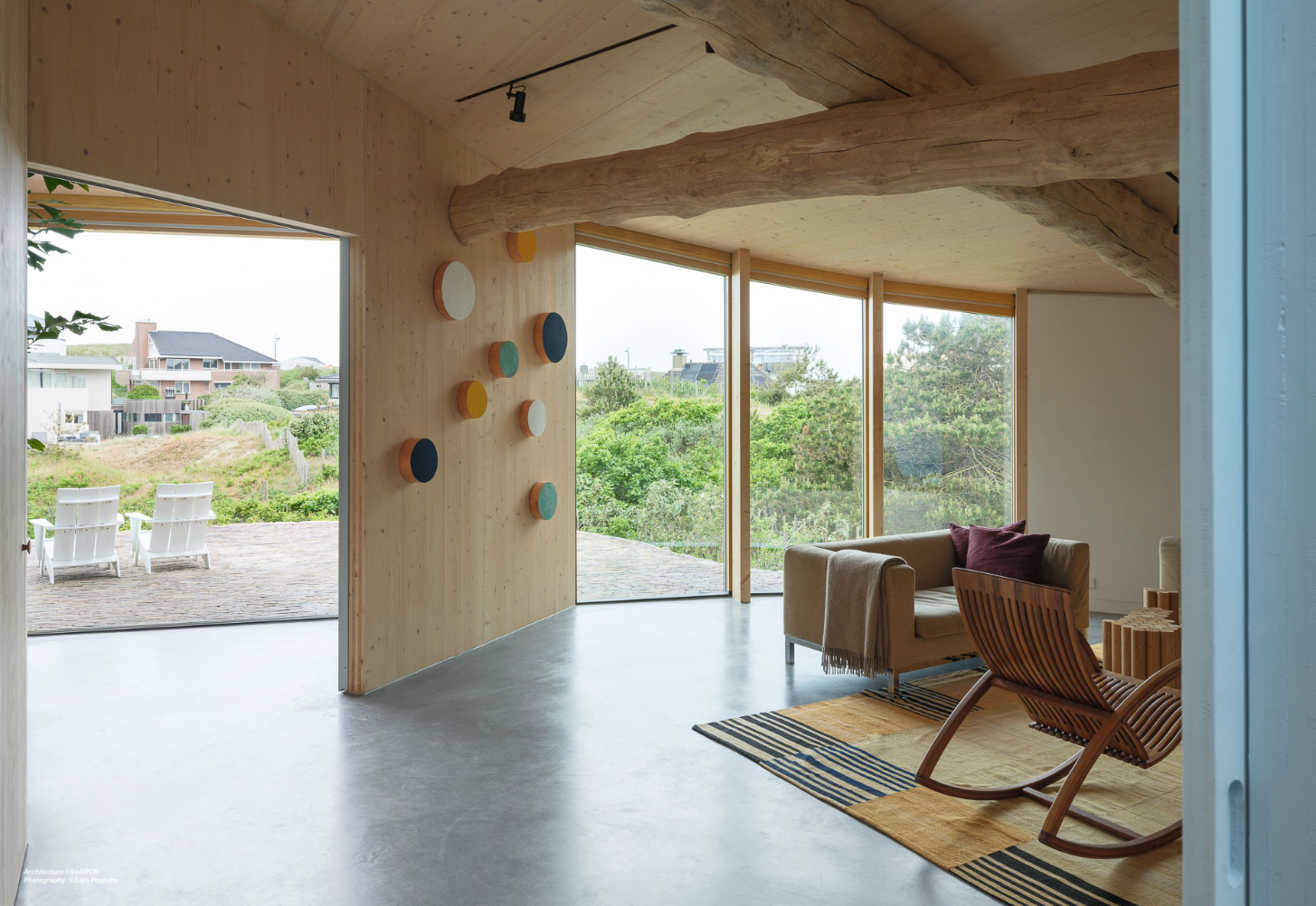
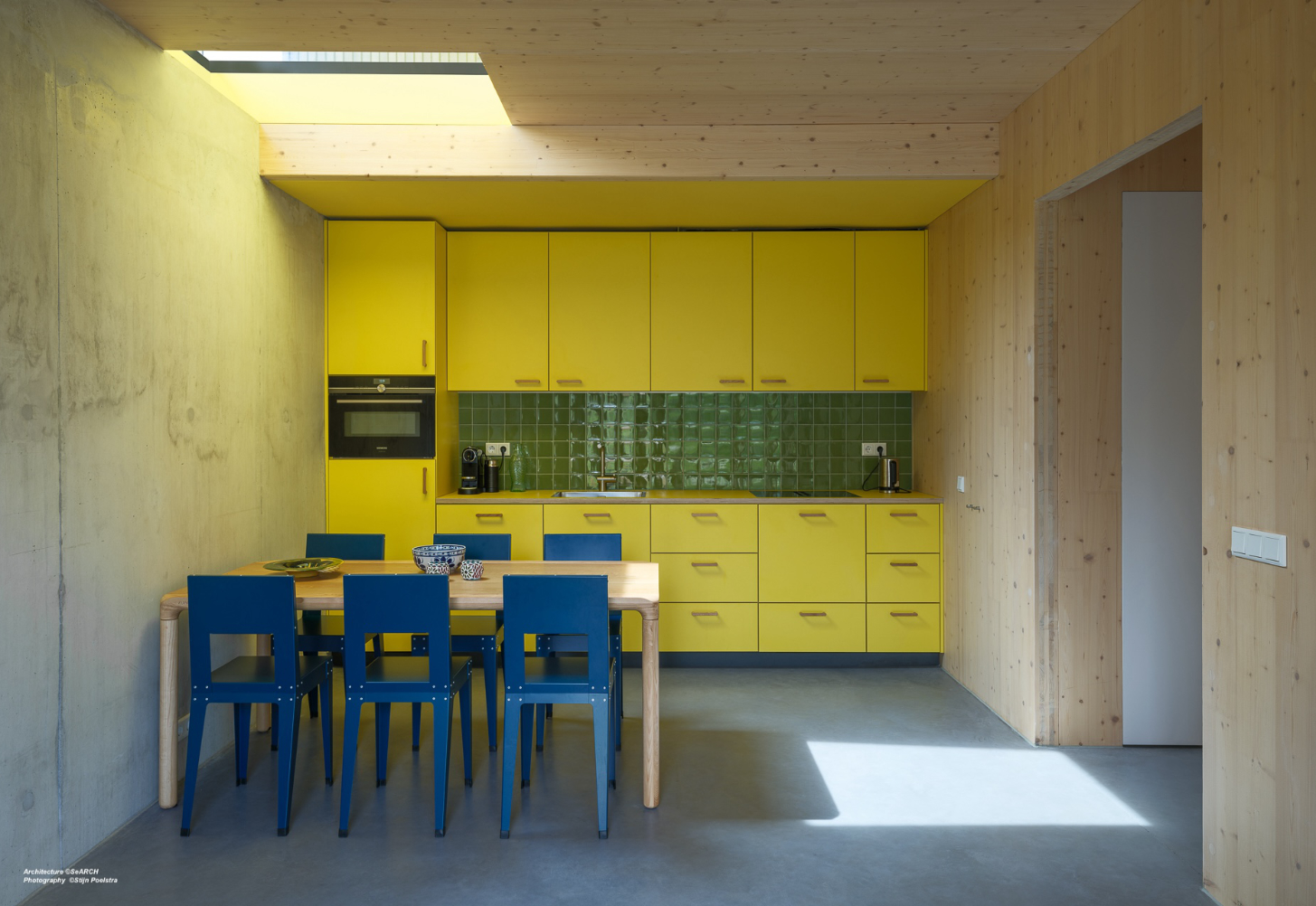
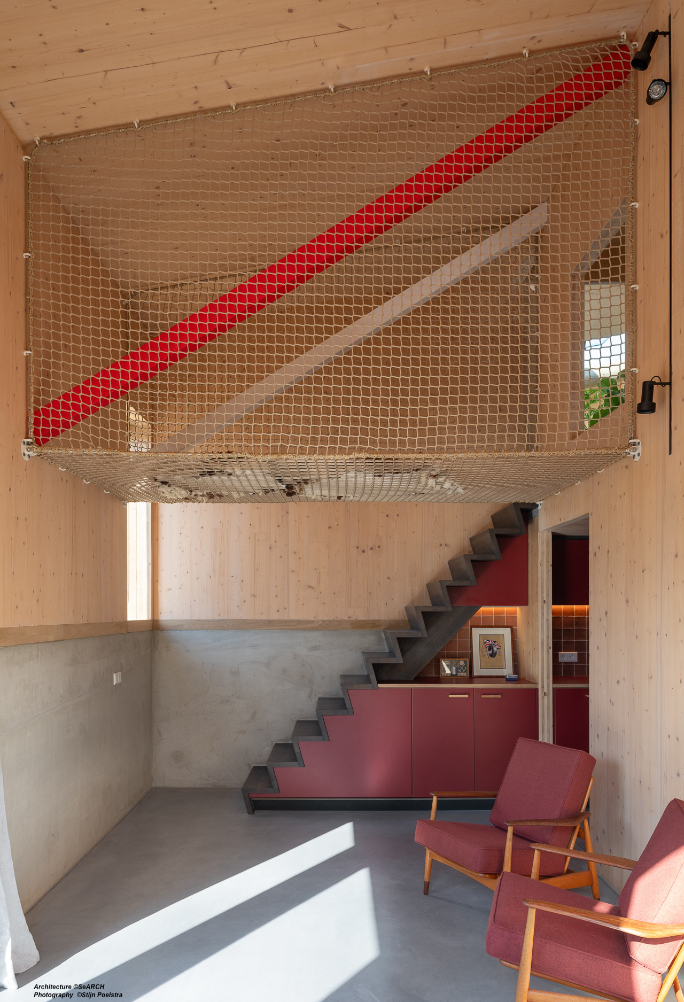
The house is built to the strictest BENG standards and consists largely of biobased materials, with the solid timber structural system of floors, walls, and roofs being the most striking element. Luxury materials were also deliberately avoided in the interior, preserving the atmosphere of a beach house: a floating screed floor and wooden walls and ceilings combined with concrete retaining walls against the dune.


Credits
Villa BaZ
Place: Bergen aan Zee, The Netherlands
Studio: SeARCH
Structural engineer: BREED Integrated Design
Light design: Frans van Hooijdonk Lichtonwerp
General contractor: Van der Grift
CLT contractor: Derix NL/DLD
Completion: 2020–2024
Photo: Stijn Poelstra
Rate
How much do you like this?