Filter


80 %
rates
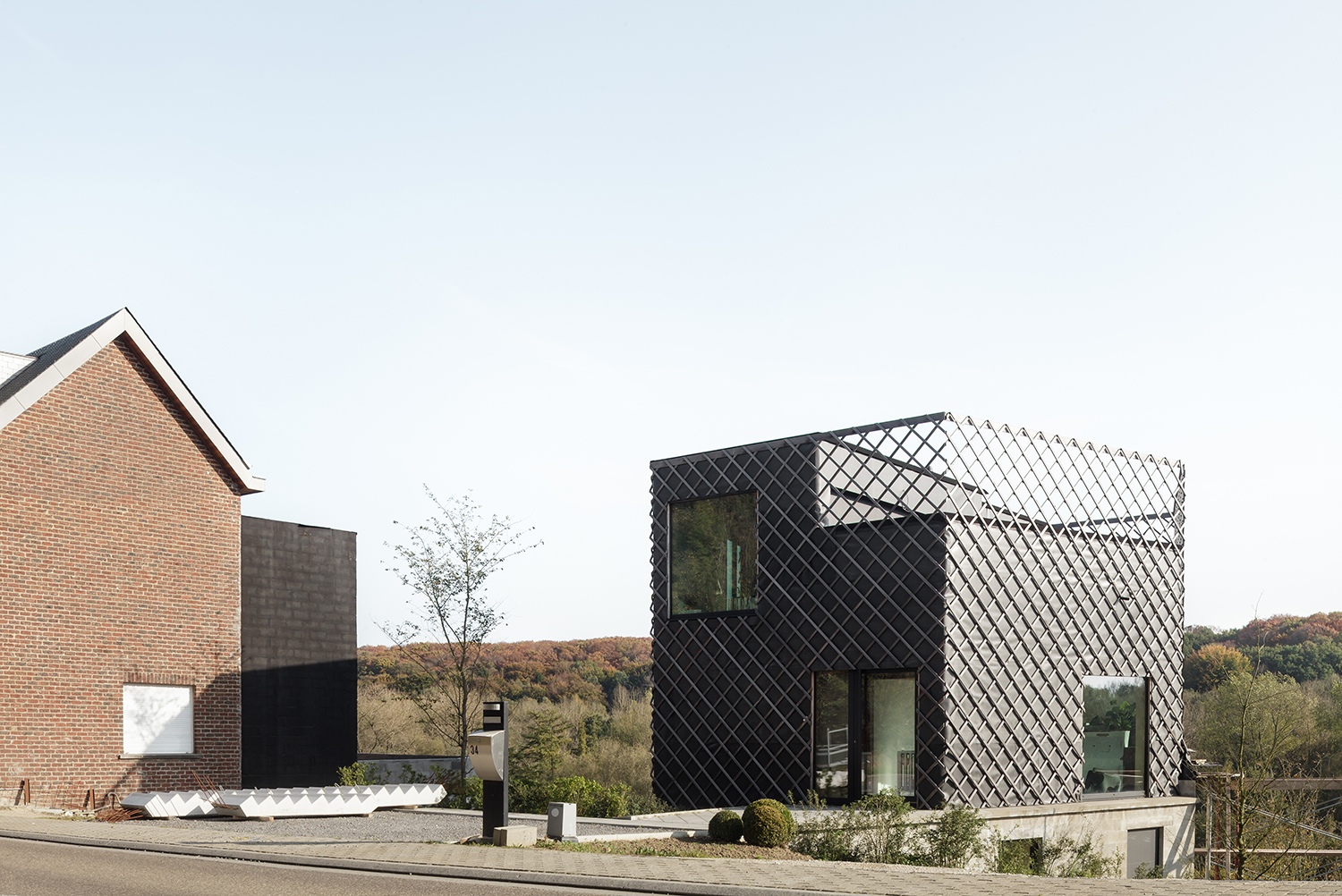
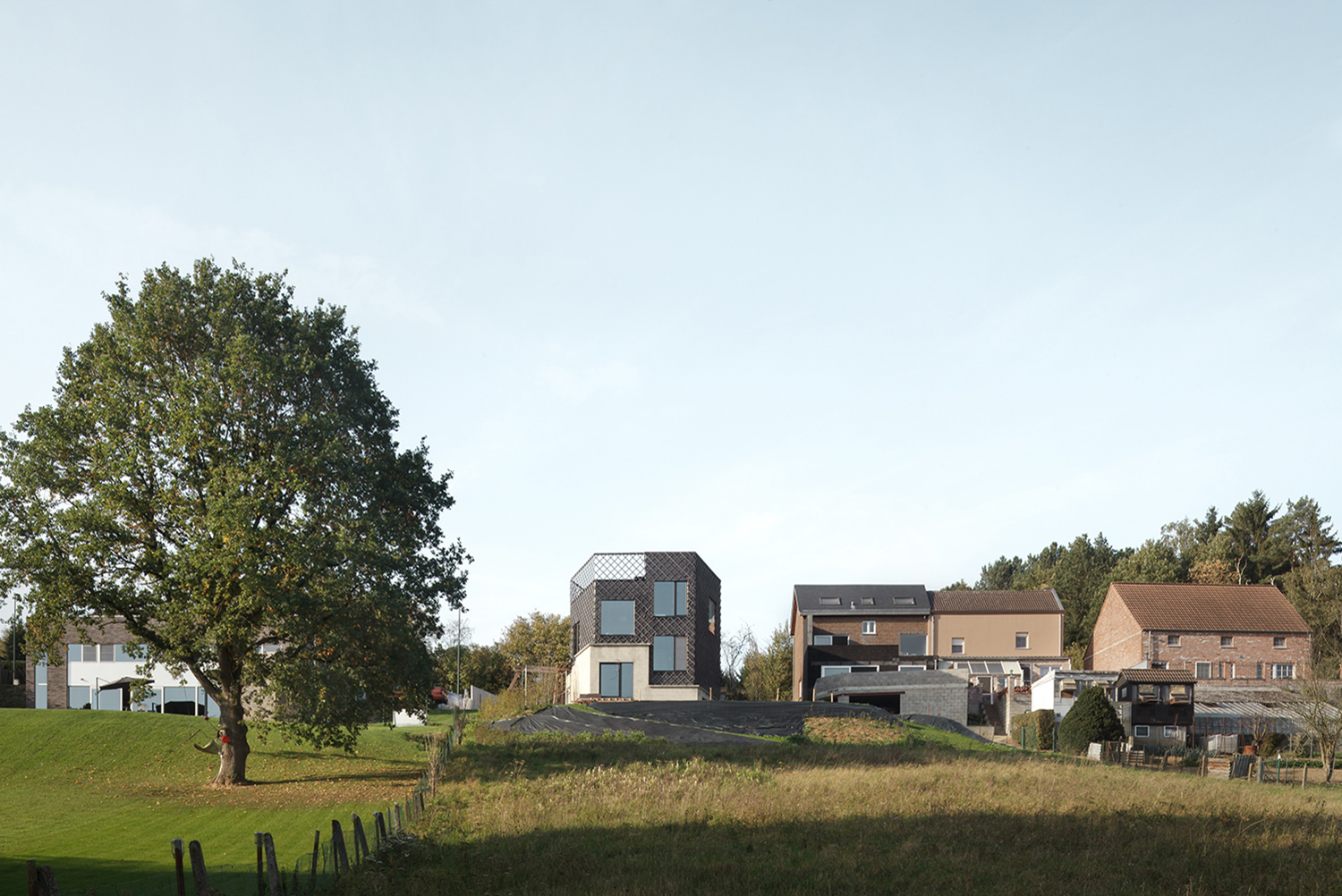
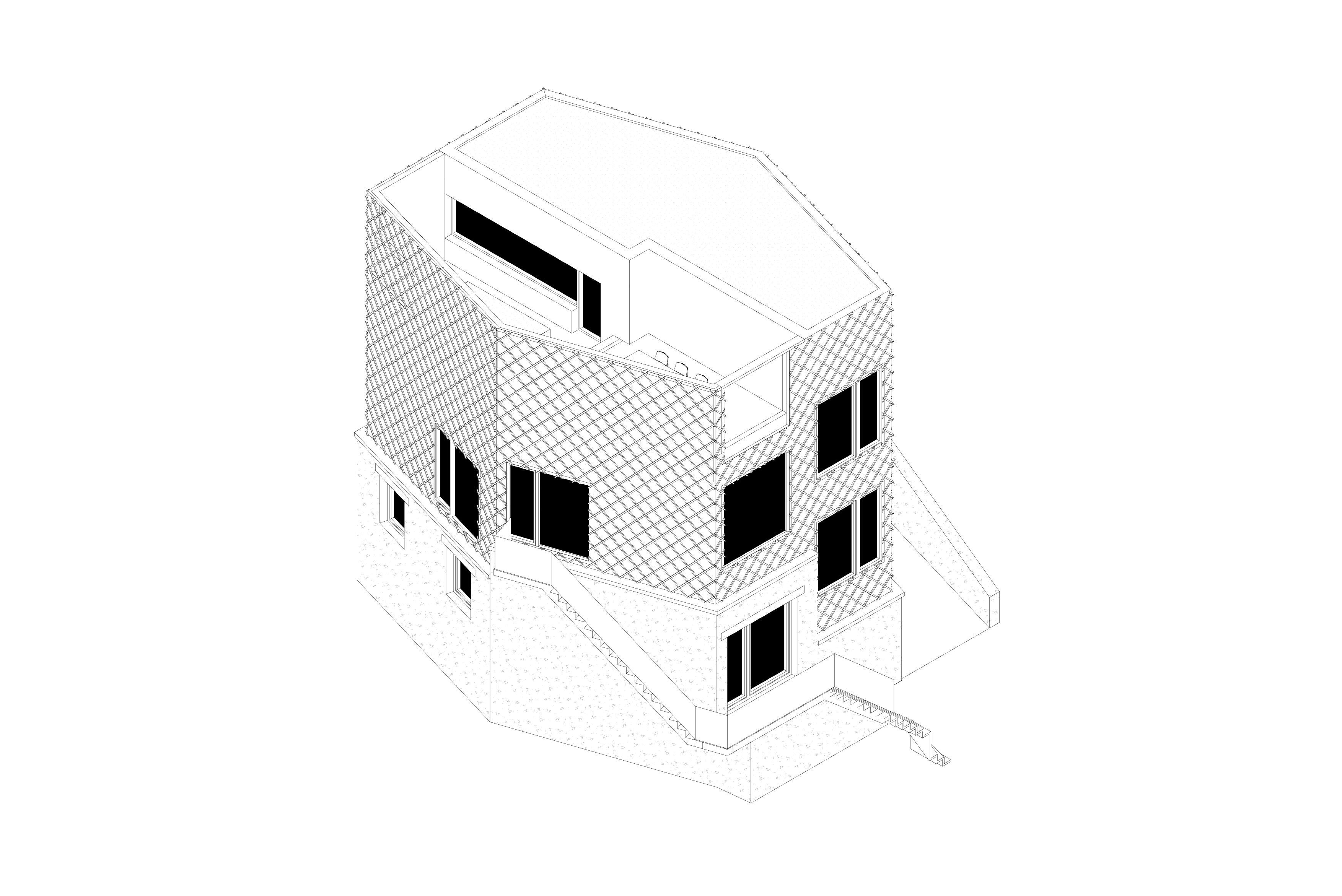
A starting point was a respect for the topography and the environment. A compact volume was pursued so that the visual relation of
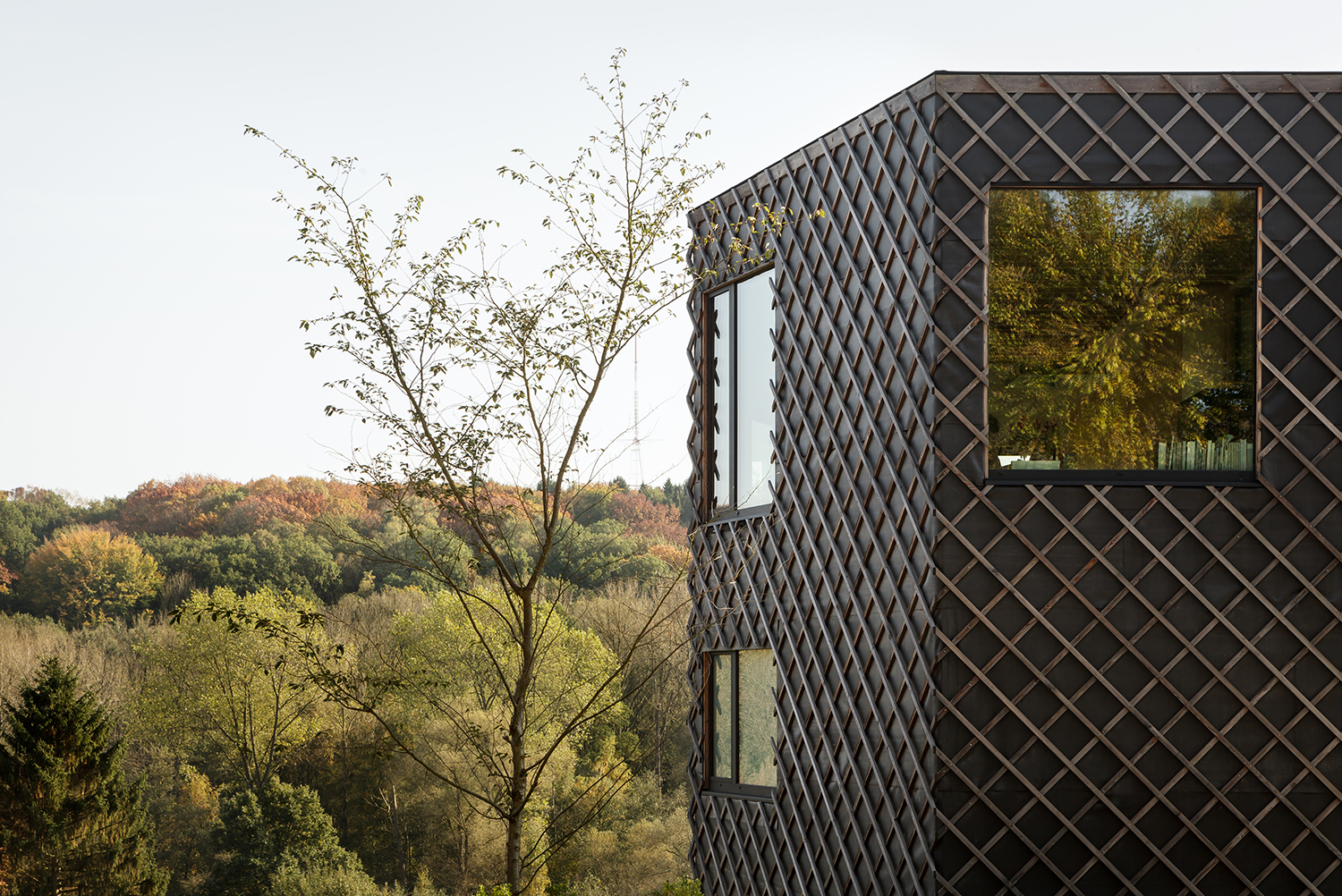
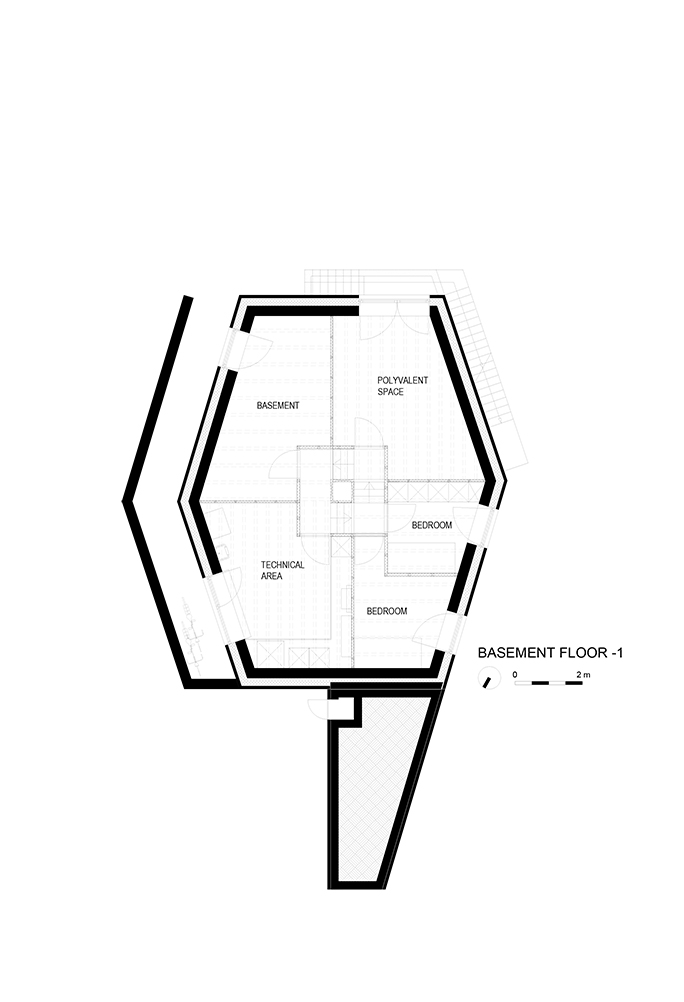
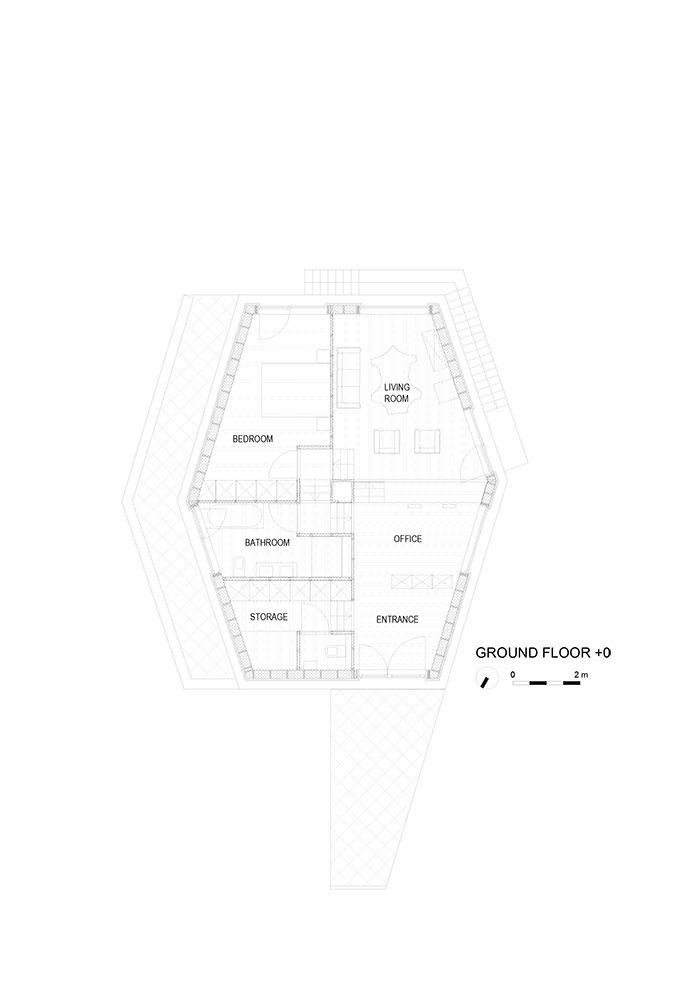
the public domain to the valley is maintained. Due to the compact hexagonal footprint of the house, the volume stands solitary in the
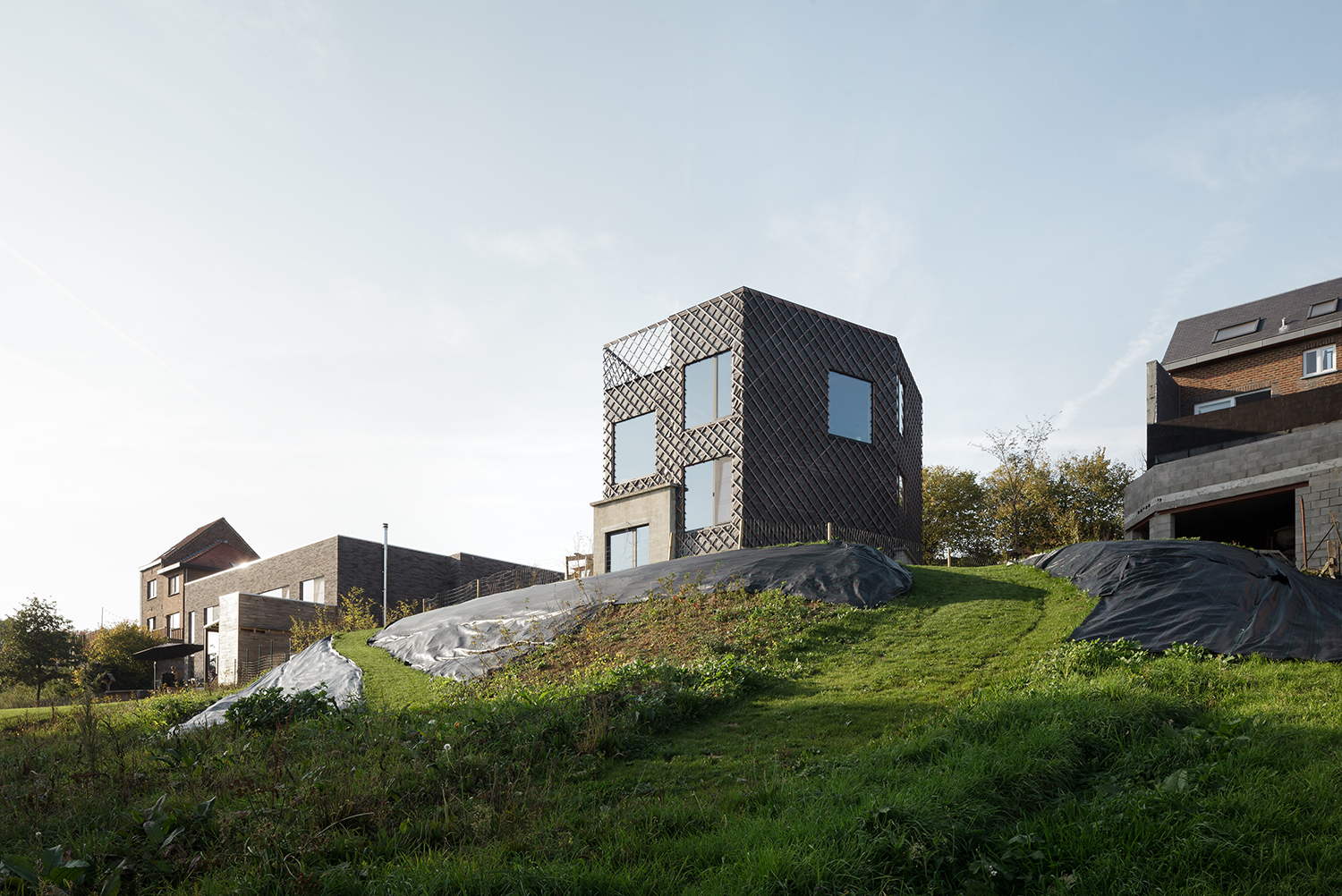
landscape, the undeveloped ground thus remains as close as possible to its relief.
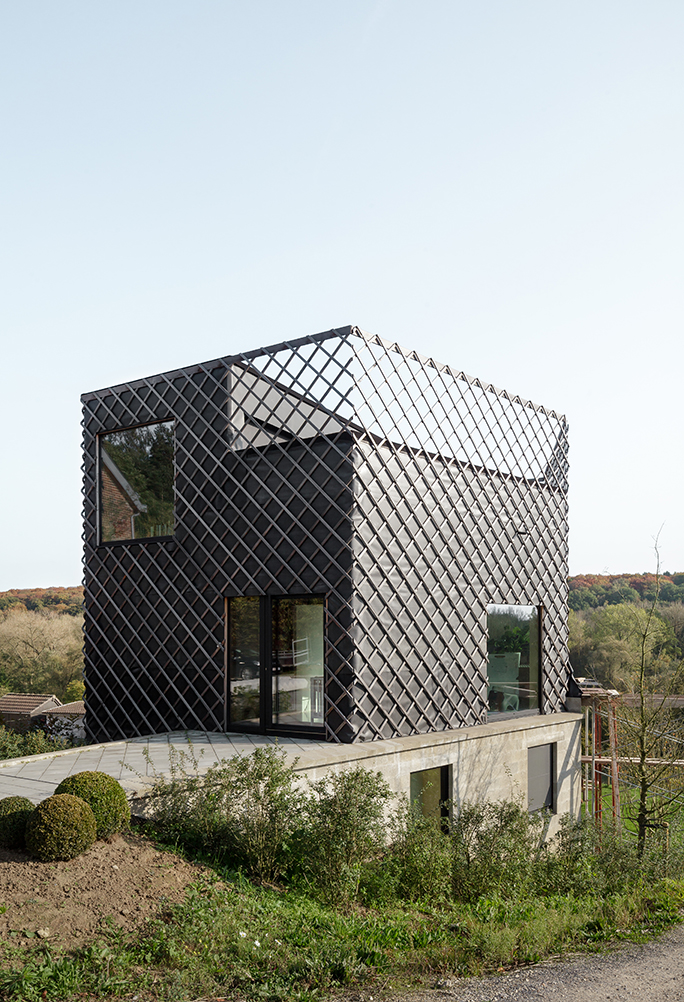
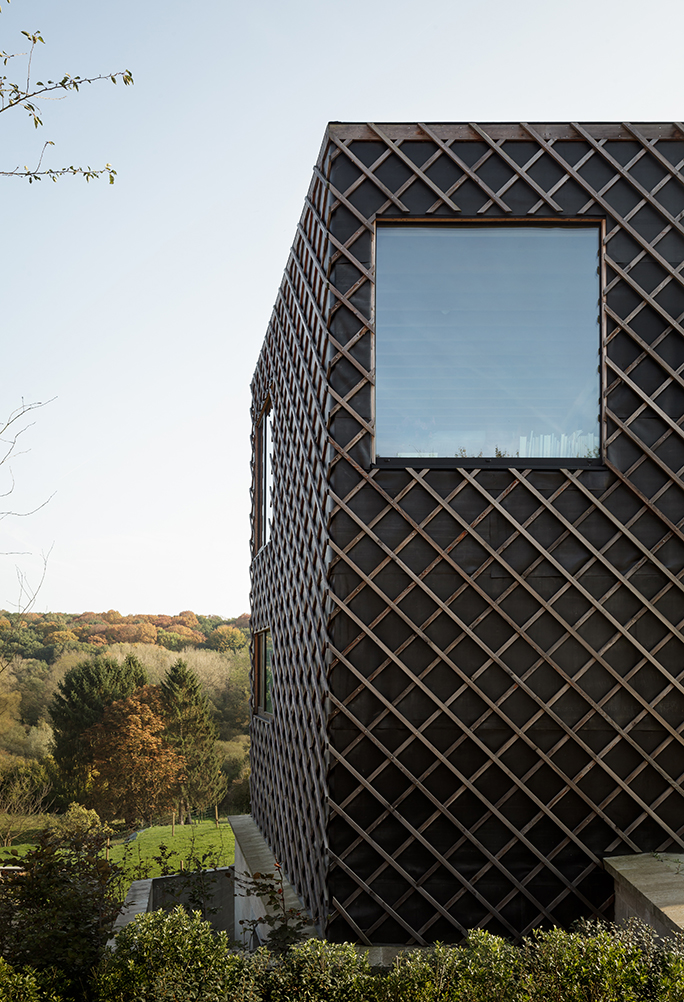
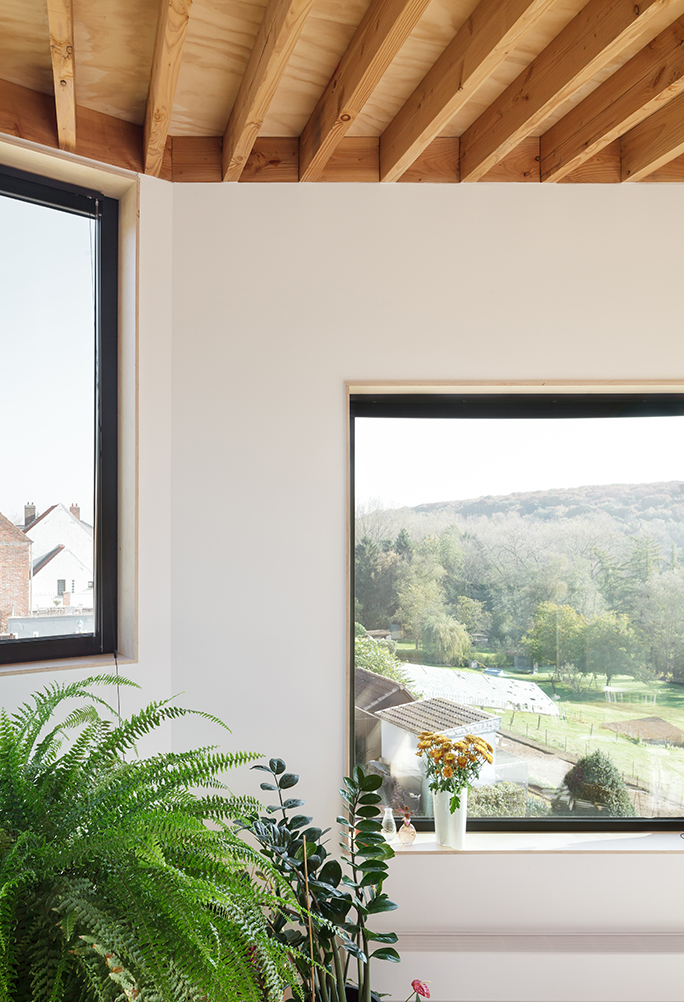
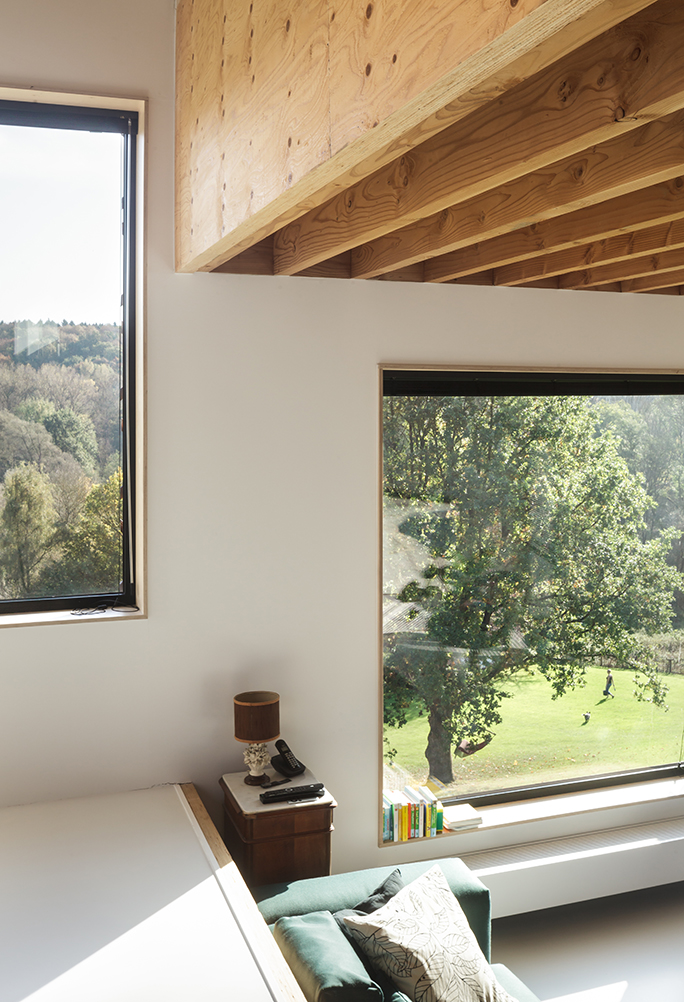
The shape with its chamfered sides creates a greater distance to the lateral plot boundaries, which limits the impact on the scene and provides privacy. On the sides, the window openings are also limited to ensure privacy from neighbors. Due to the design of the volume, no windows are directly oriented or perpendicular to the adjacent plots.
The historically grown variety of building peripheries, with a variety of differently retracted houses, is experienced as specific and qualitative, partly because it maintains a better visual relation to the valley behind.
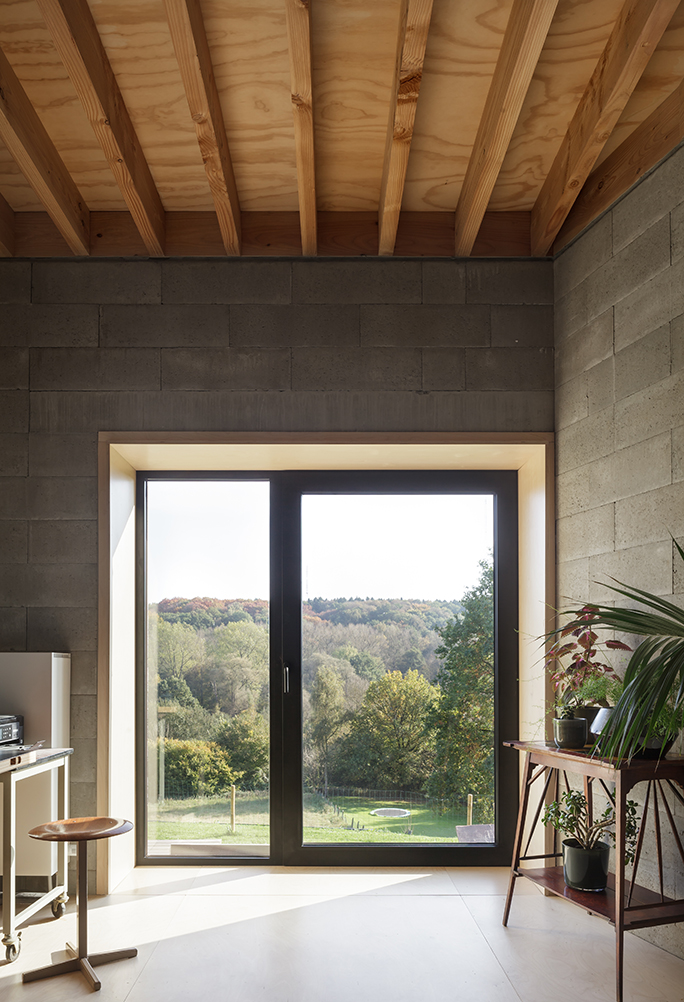
In order to discretely integrate the volume in the landscape and provide sufficient living space, the house is inserted in the hill. To ensure sufficient light reaches the partially embedded rooms, a sunken terrace was laid out on the left side of the house. The retaining walls for this terrace do not protrude from the existing relief. Further adjustments to the terrain are kept to a minimum to respect the natural relief.
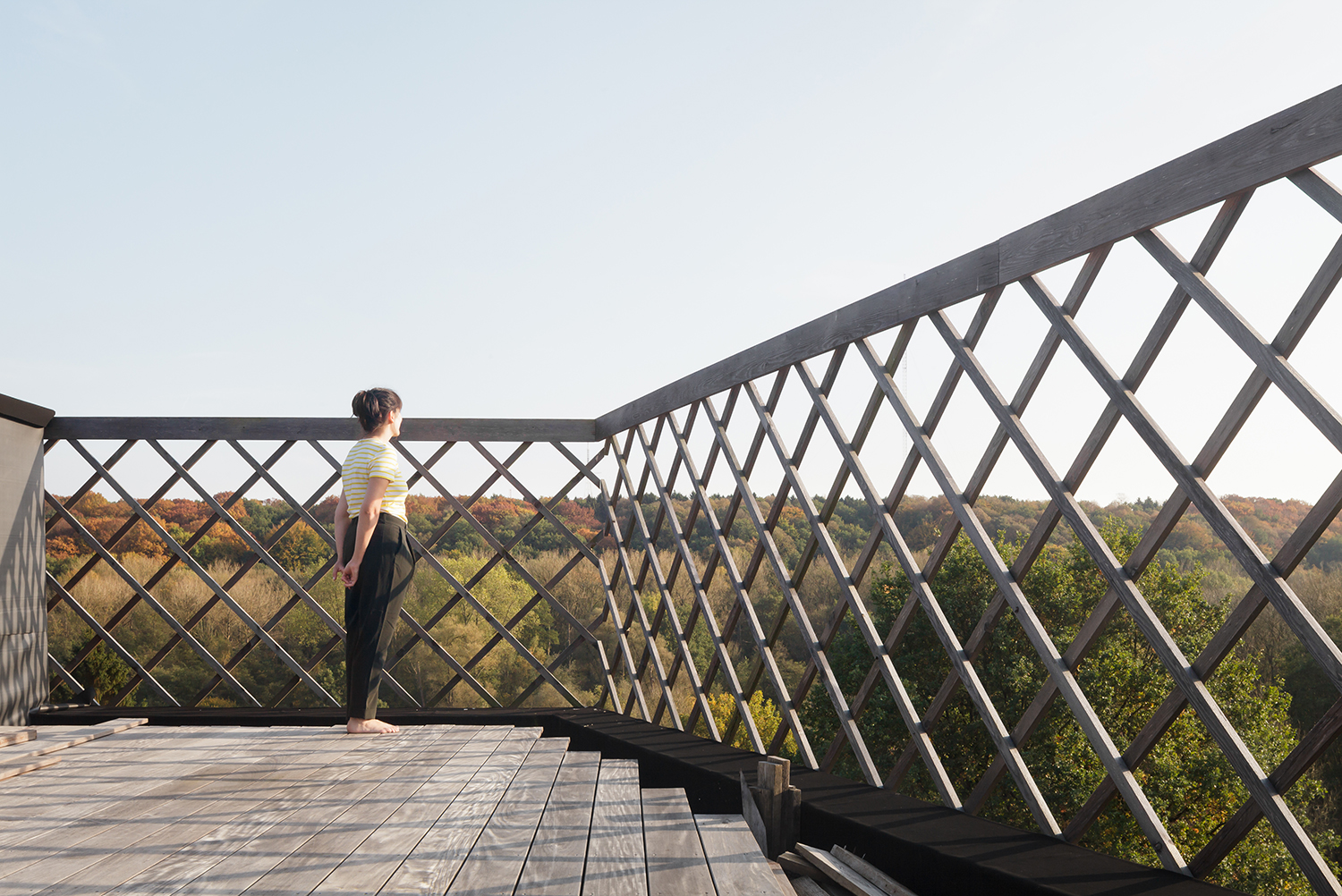
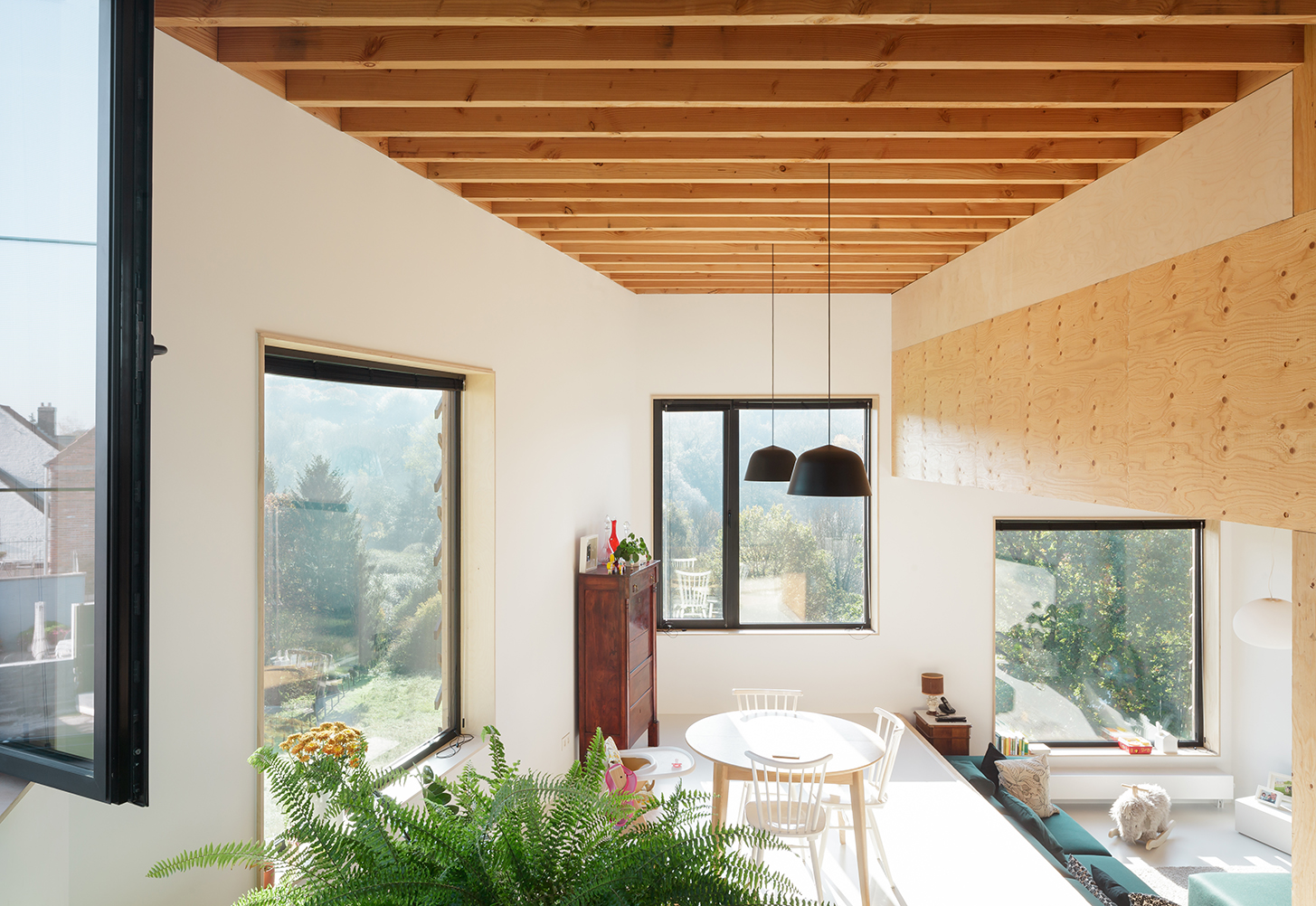
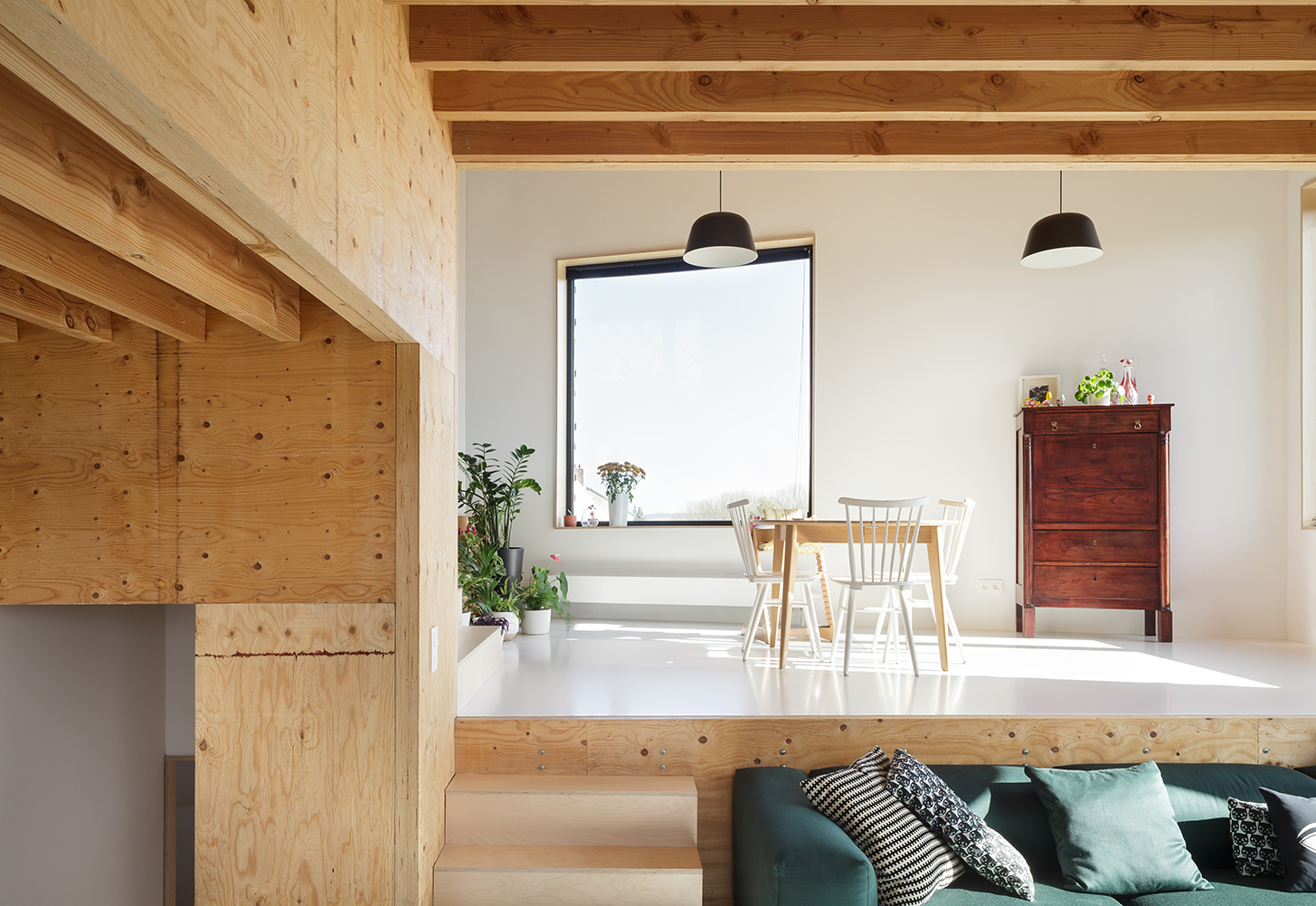
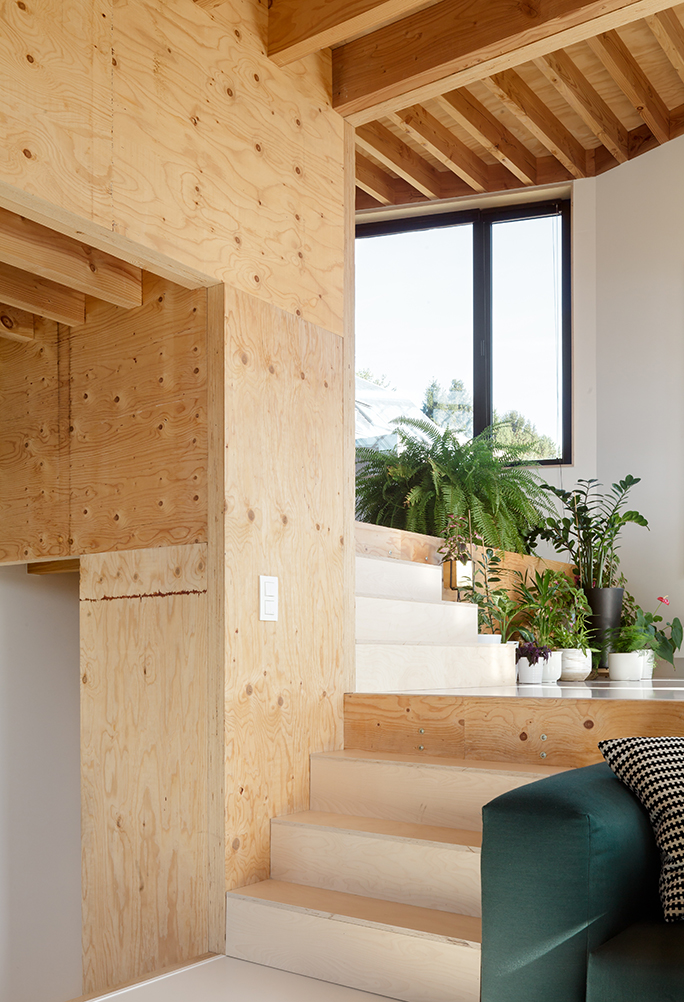
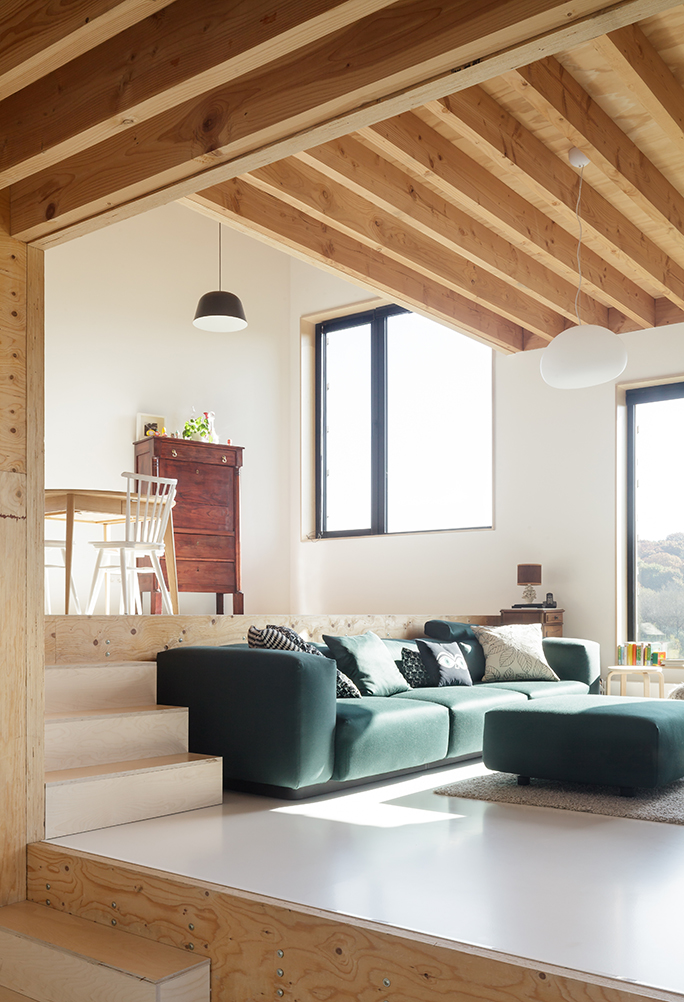
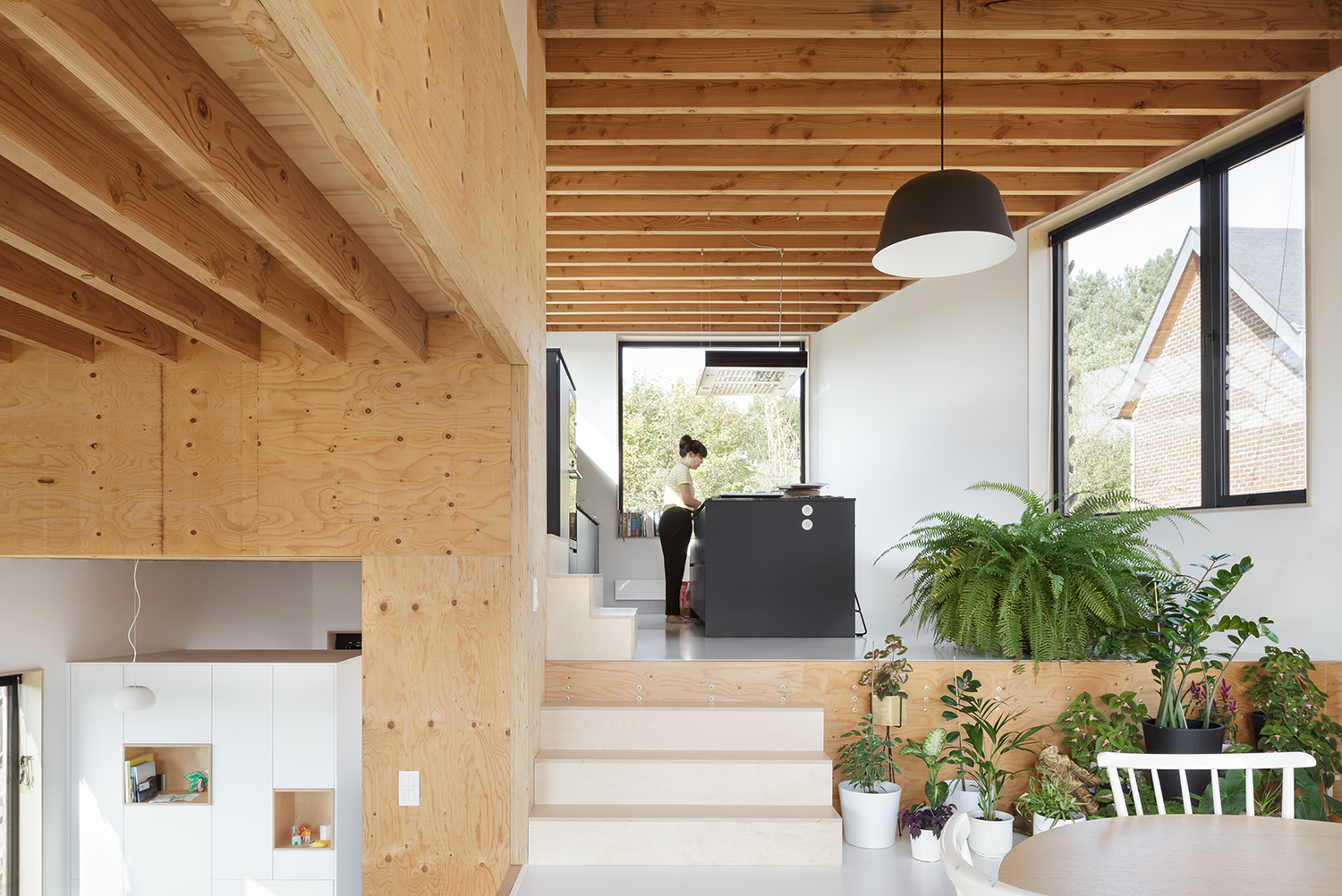
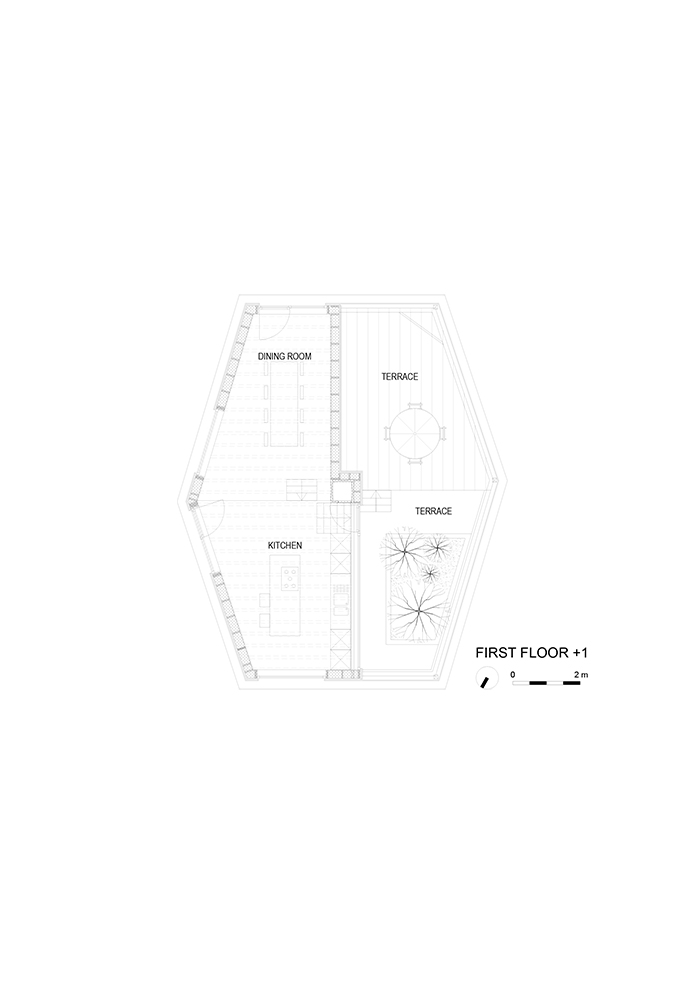
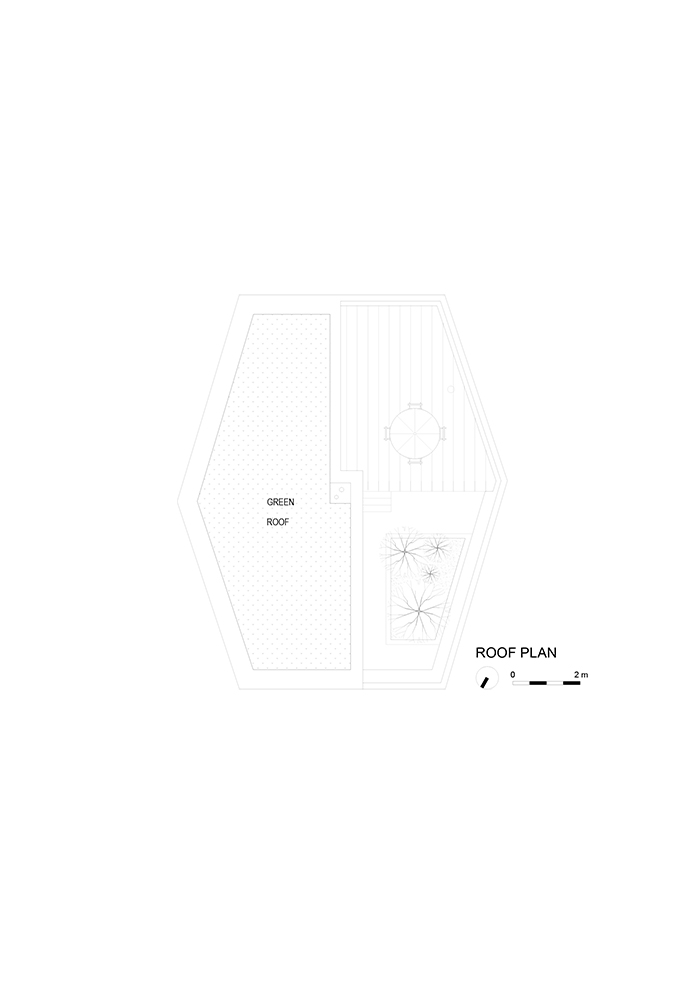
The proposed design consists of 3 floors, built up with split levels. The living areas are situated above the sleeping and functional areas, to make use of the 2 degrees Celcius gain in the indoor climate as a result of rising warm air. In the lower levels, the most deeply embedded in the terrain, a multipurpose room, a storage room, a cellar and a children’s bedroom are implemented. The upper floors contain a bathroom, an entrance hall, a master bedroom and a living area. The top floor contains the dining room and kitchen, connected to a terrace and green roof.

Credits
Place: Overijse, Belgie
Autor: BLAF architecten
Realization: 2018
Photo: Stijn Bollaert
Rate
How much do you like this?