Filter


80 %
rate
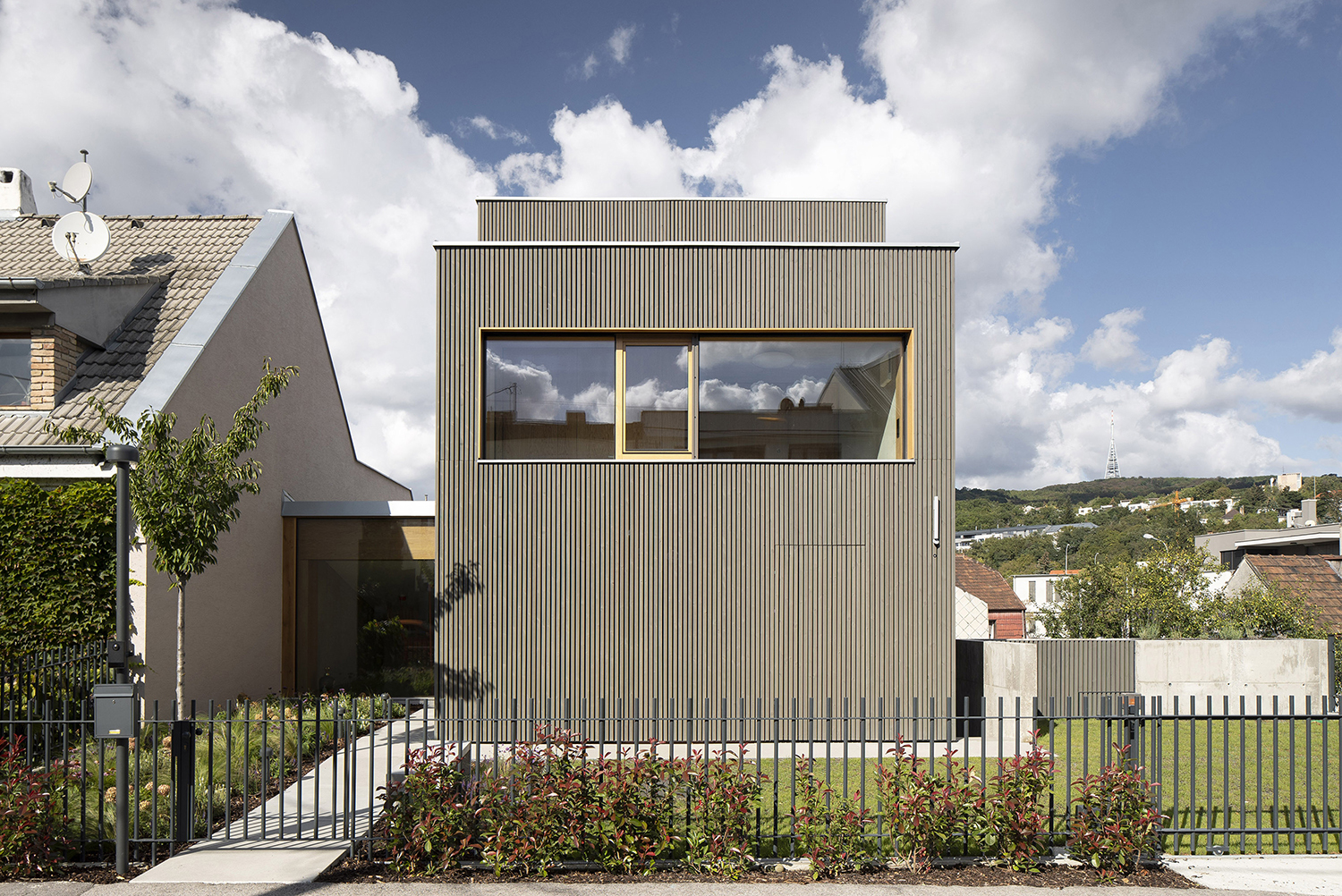
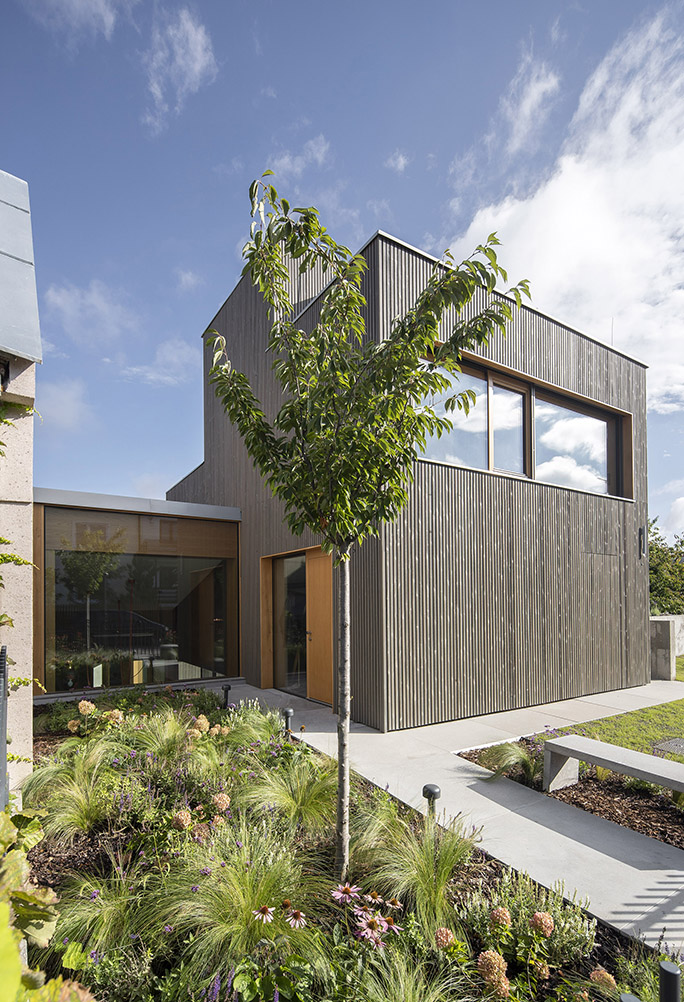
The housing project – a family house for a young family of four – had to be created on a relatively small plot of land in the Old Town of Bratislava near the locality Horský park. We tried to carry out this task, which was also a challenge, sensitively in the context of the location, the surrounding development and the existing development of the land. Originally, there were two buildings on site.
In the upper part of the plot there was a single-storey family house, which shared a common gable wall with a neighbouring building. In the lower part of the plot, behind the house, in the unpekt garden, there was a brick garden house, the perimeter walls of which defined the boundaries between two neighbouring plots.
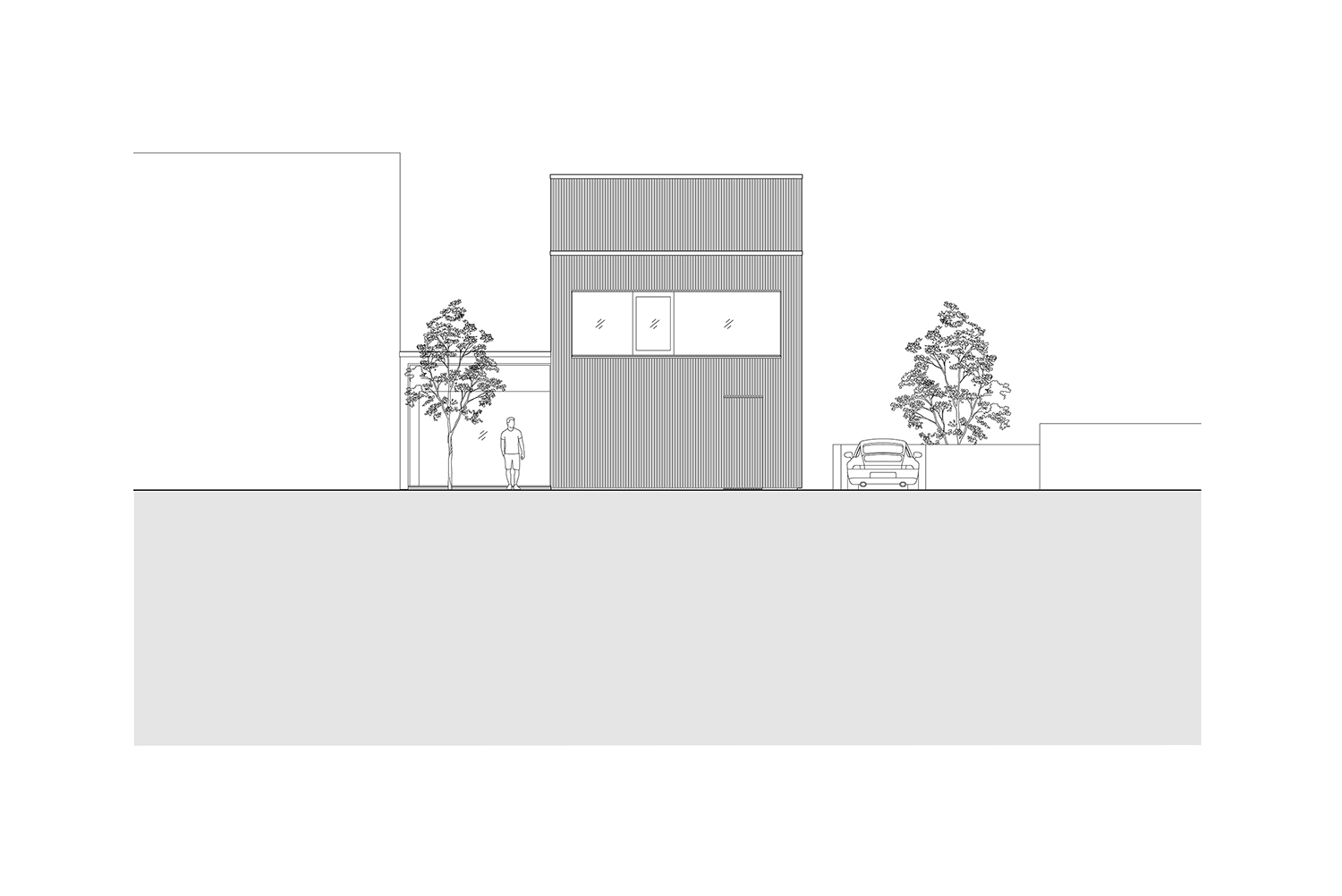
After the initial polemic about the preservation of the original buildings, after re-evaluating the facts - analysing the existing supporting structures and legislative possibilities, we decided to choose the path of new construction, but with a follow-up to the original solution. Thus, we were able to create an above-standard user value of housing for the investor on a small plot of land with a sensitive approach to the environment. The aim of the concept of the new building on the footprint of the original buildings was to try not to burden the plot and its surroundings in a stabilized area and to preserve the scale and character of the original development. After the analysis, we proceeded to two basic starting points. The first starting point of the solution represented the connection to the original mass of the objects, the second resulting from this was the creation of a new layout scheme on their original footprint.
The first step in the search for the form of the new matter was to find a way to connect separate objects at different height levels into a formally and programmatically coherent shape. Another important aspect was the creation of maximum usable area of the floor plan, which already at the beginning exceeded the limit of permitted development. In conclusion, it was necessary to evaluate the potential of the exterior areas near the house and physically and visually connect them with the living area of the proposed building.
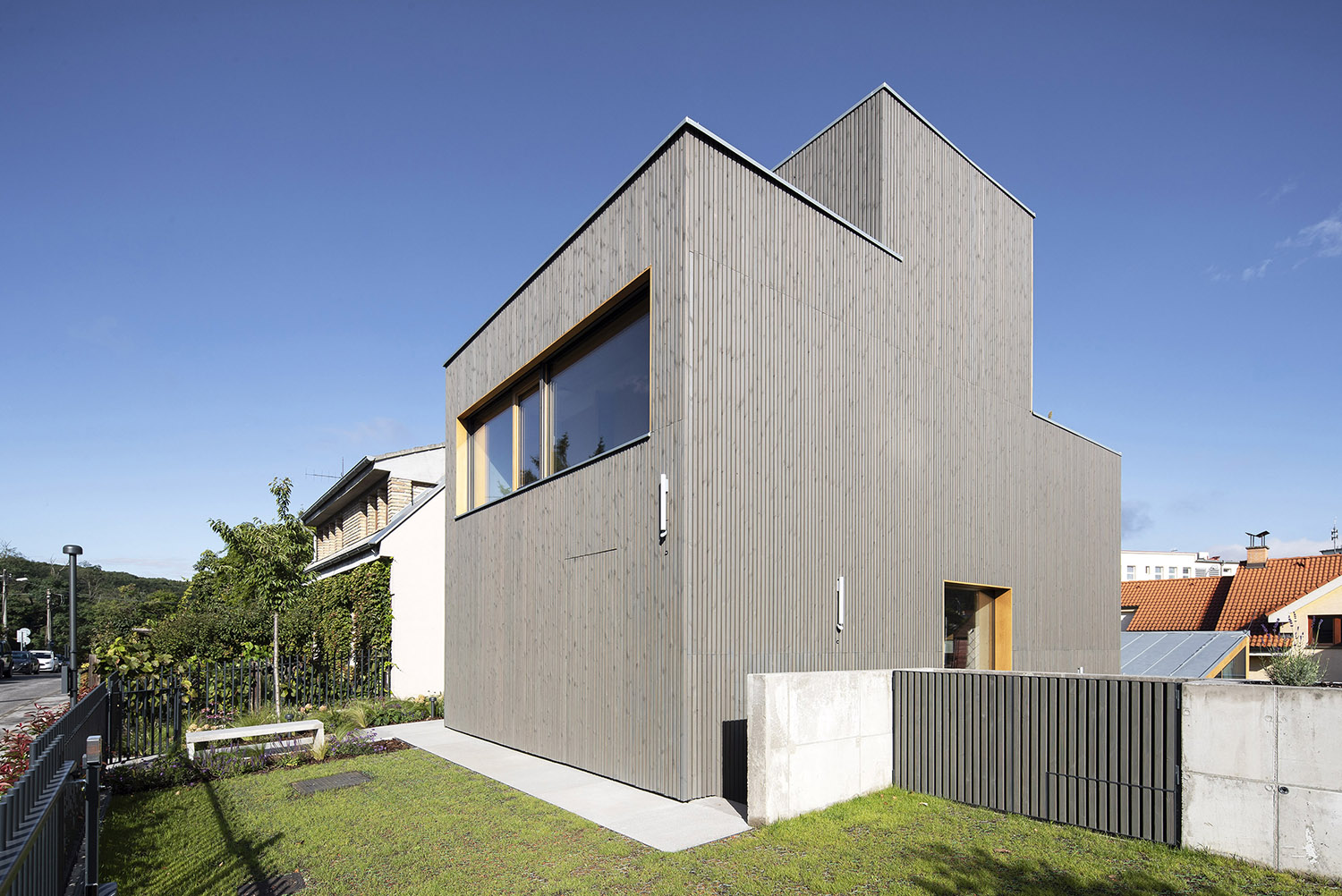
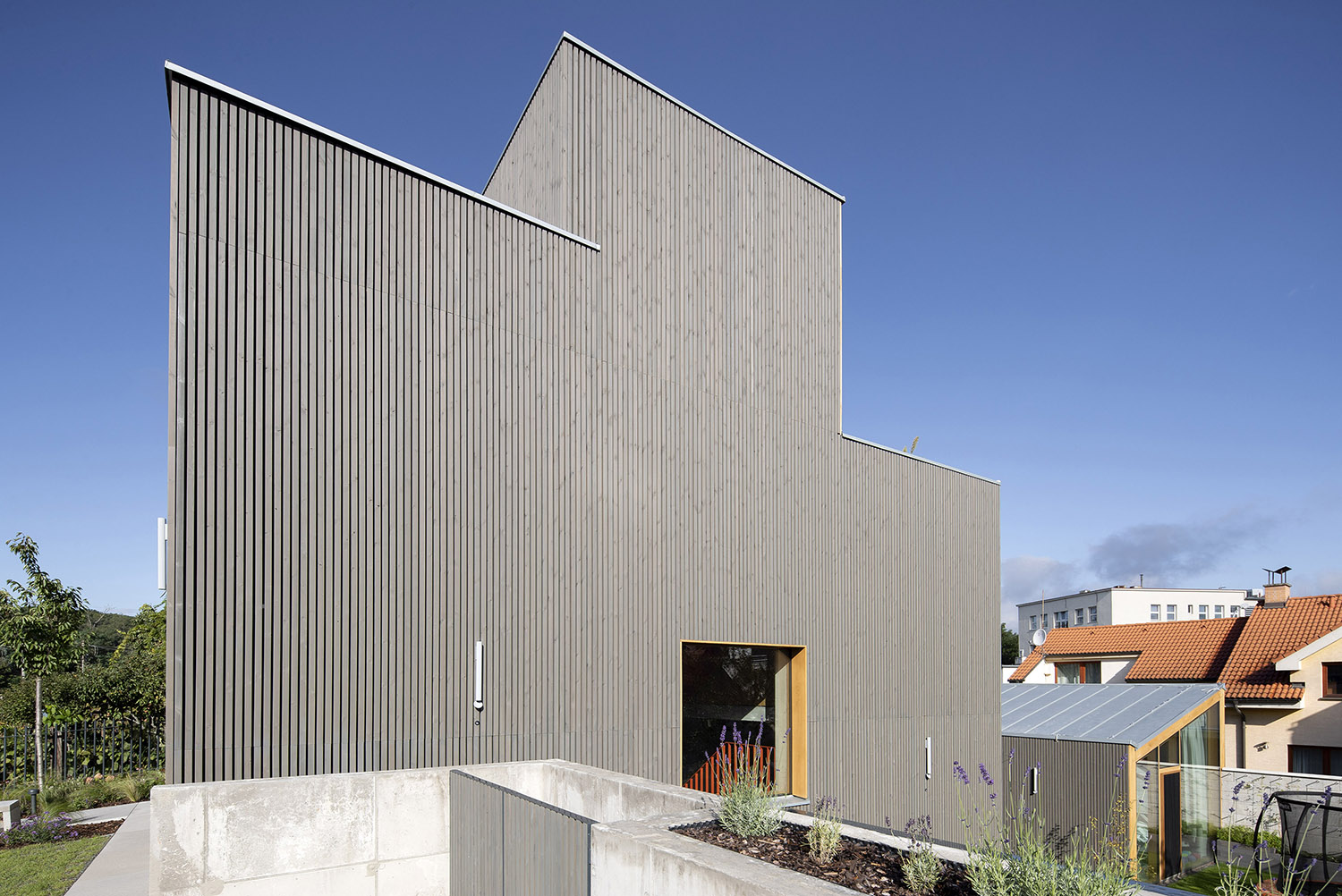
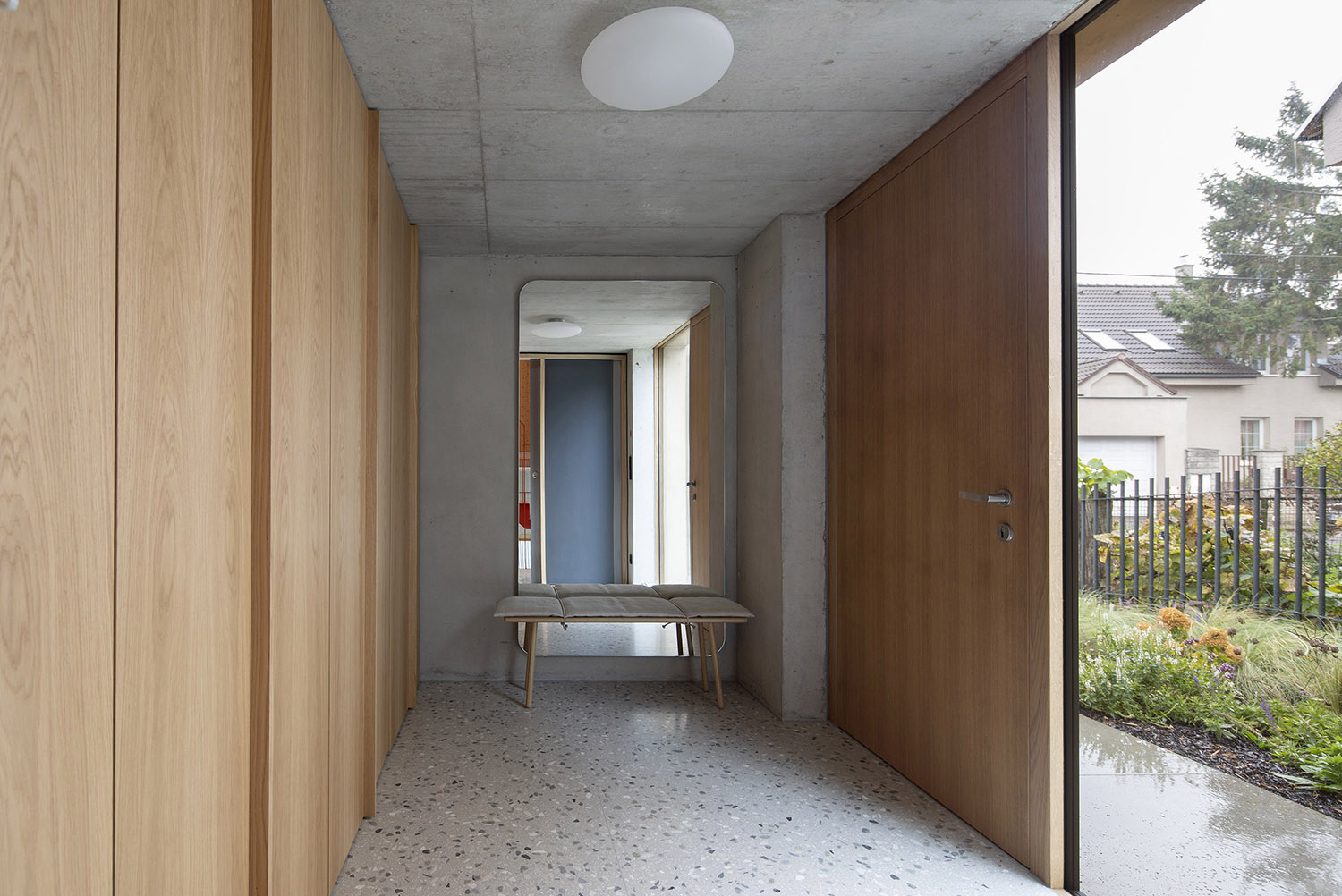
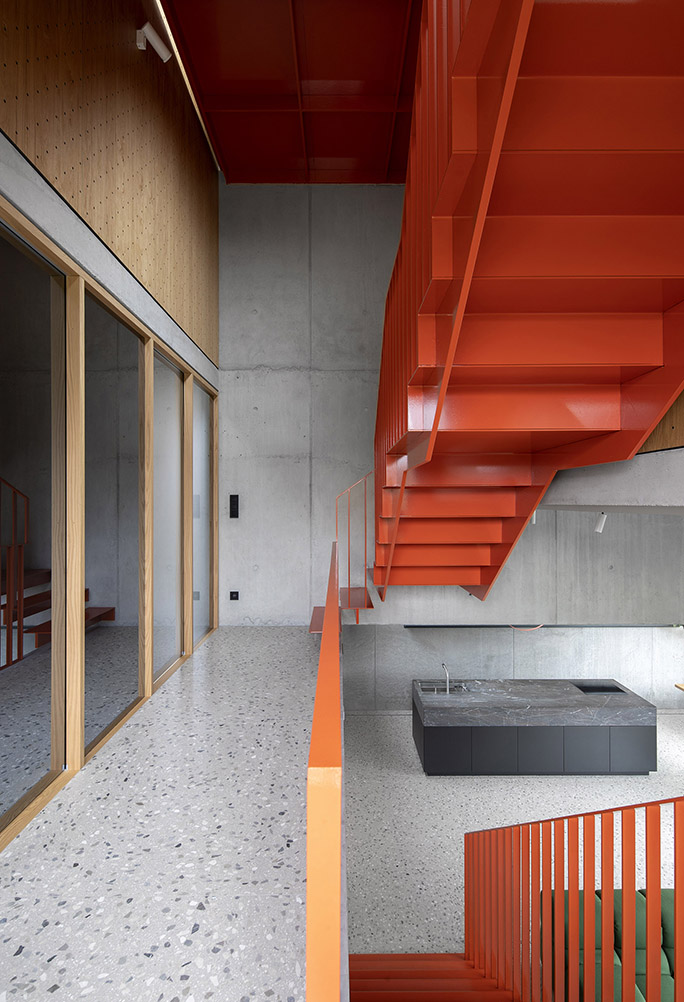
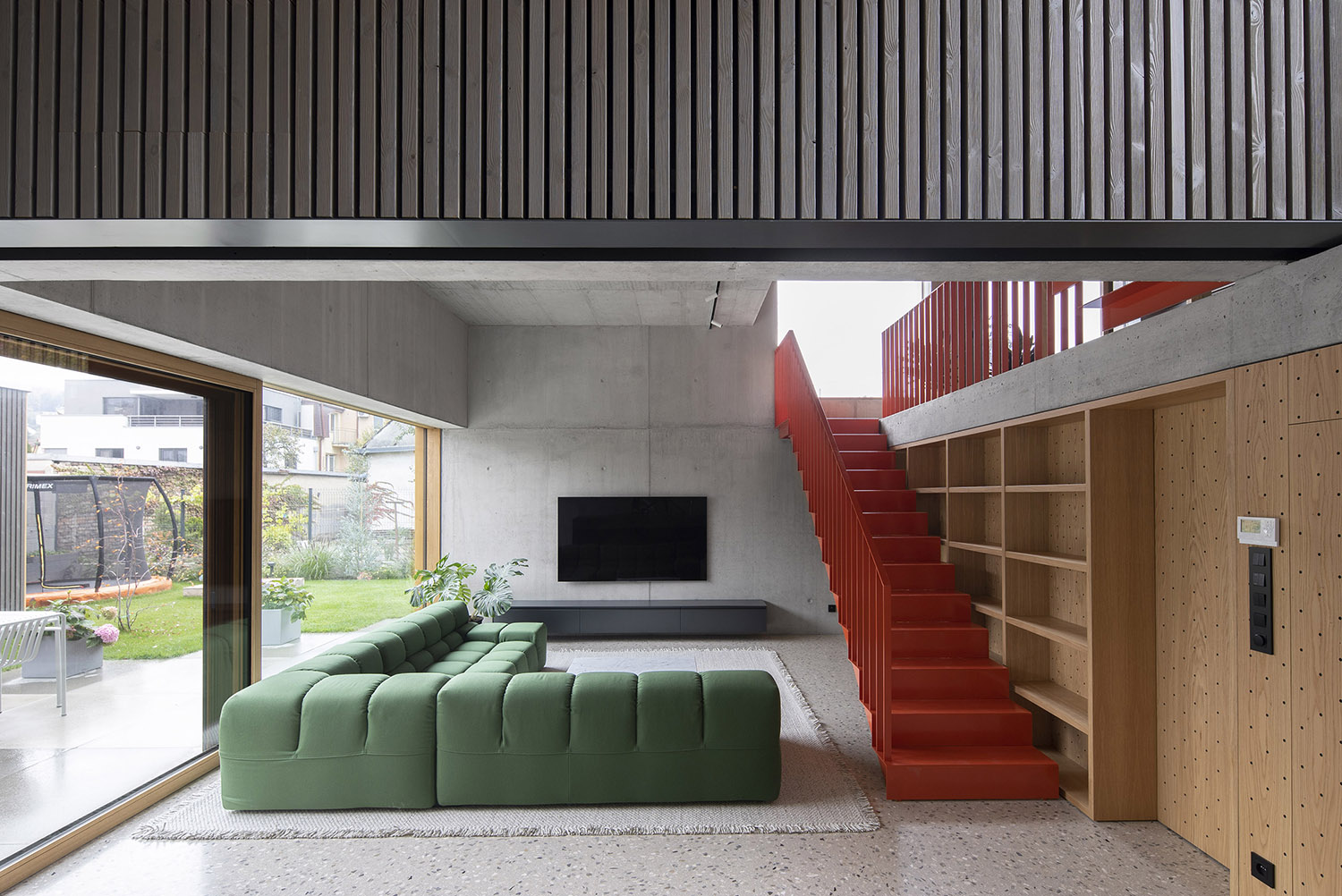
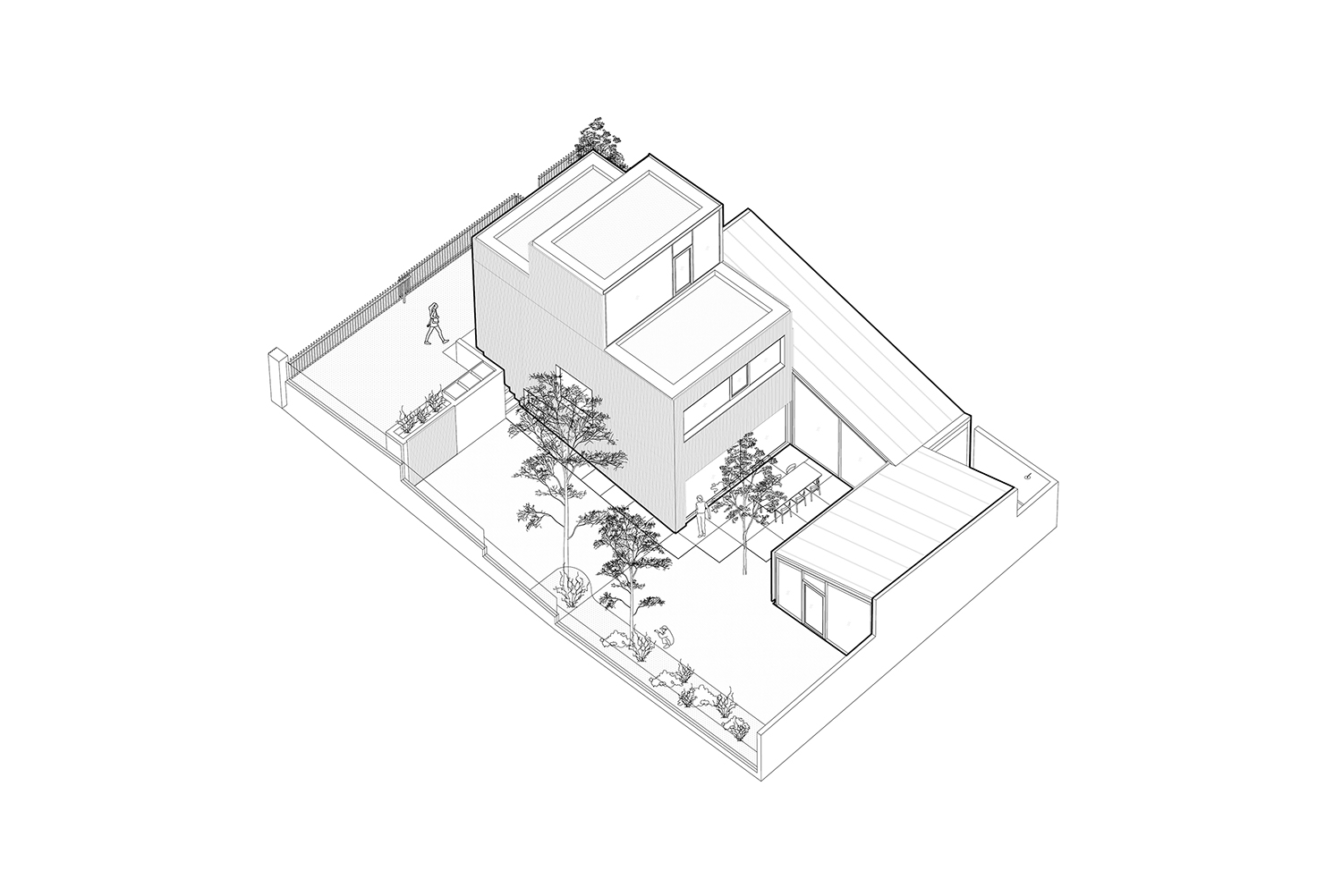
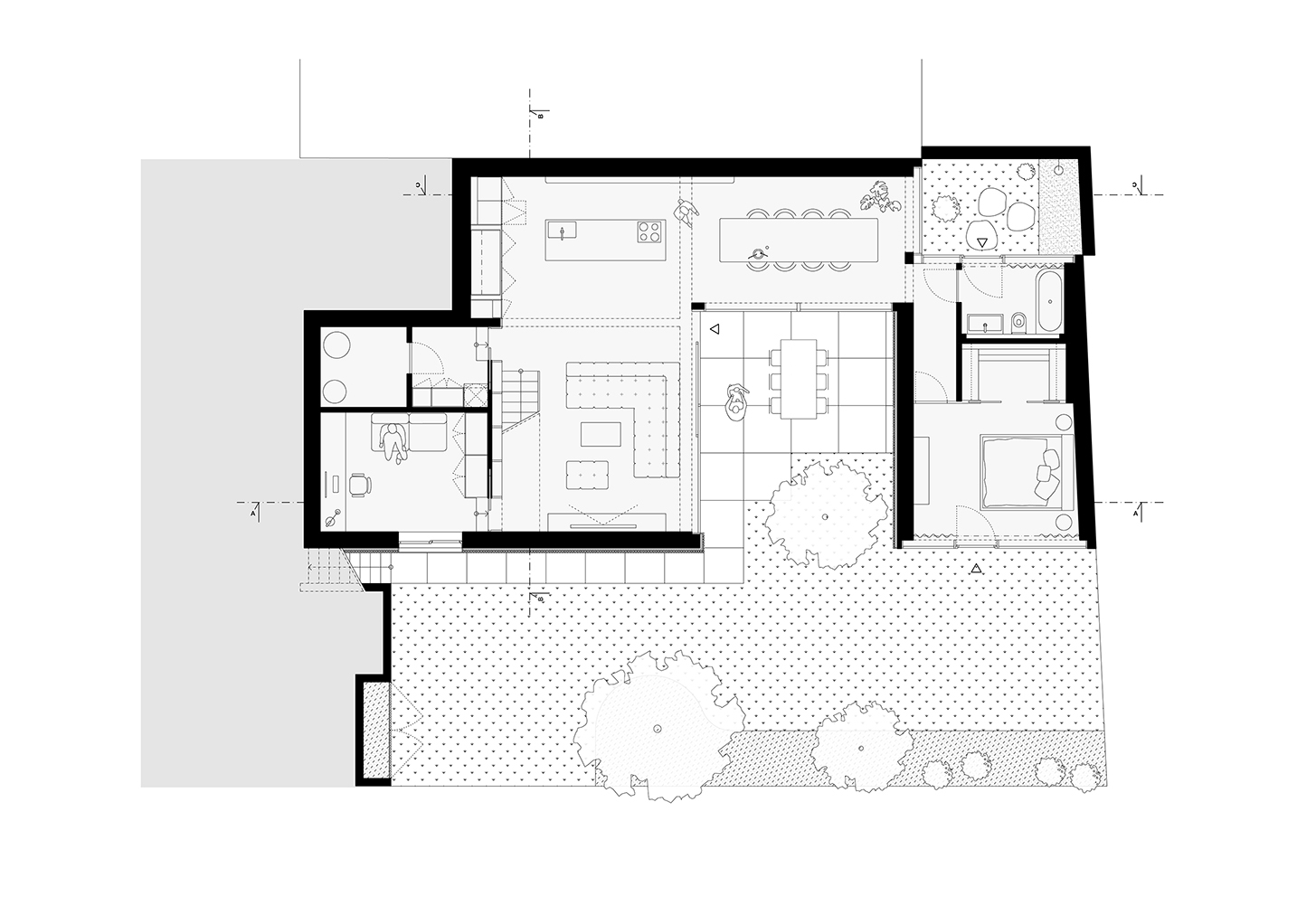
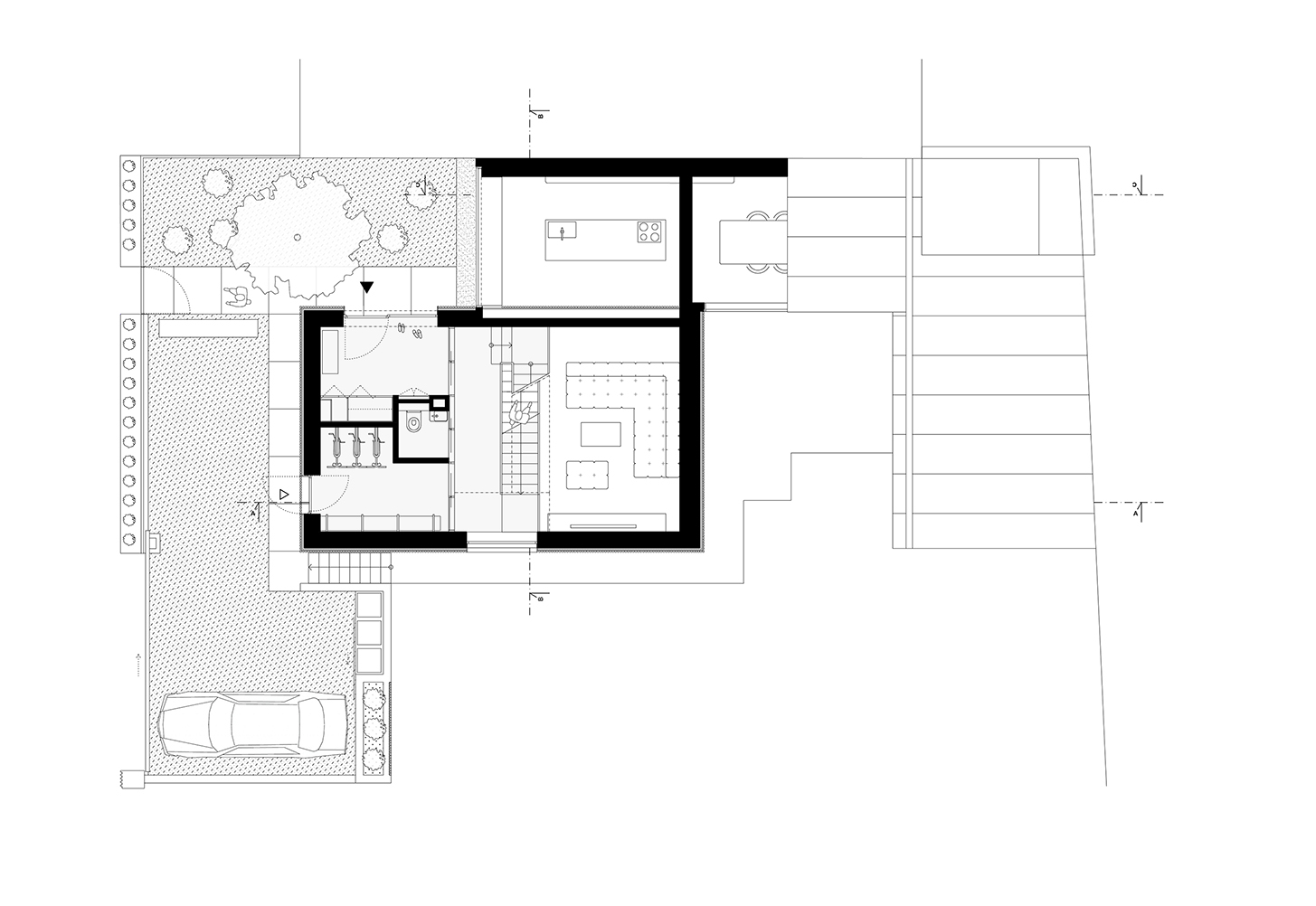
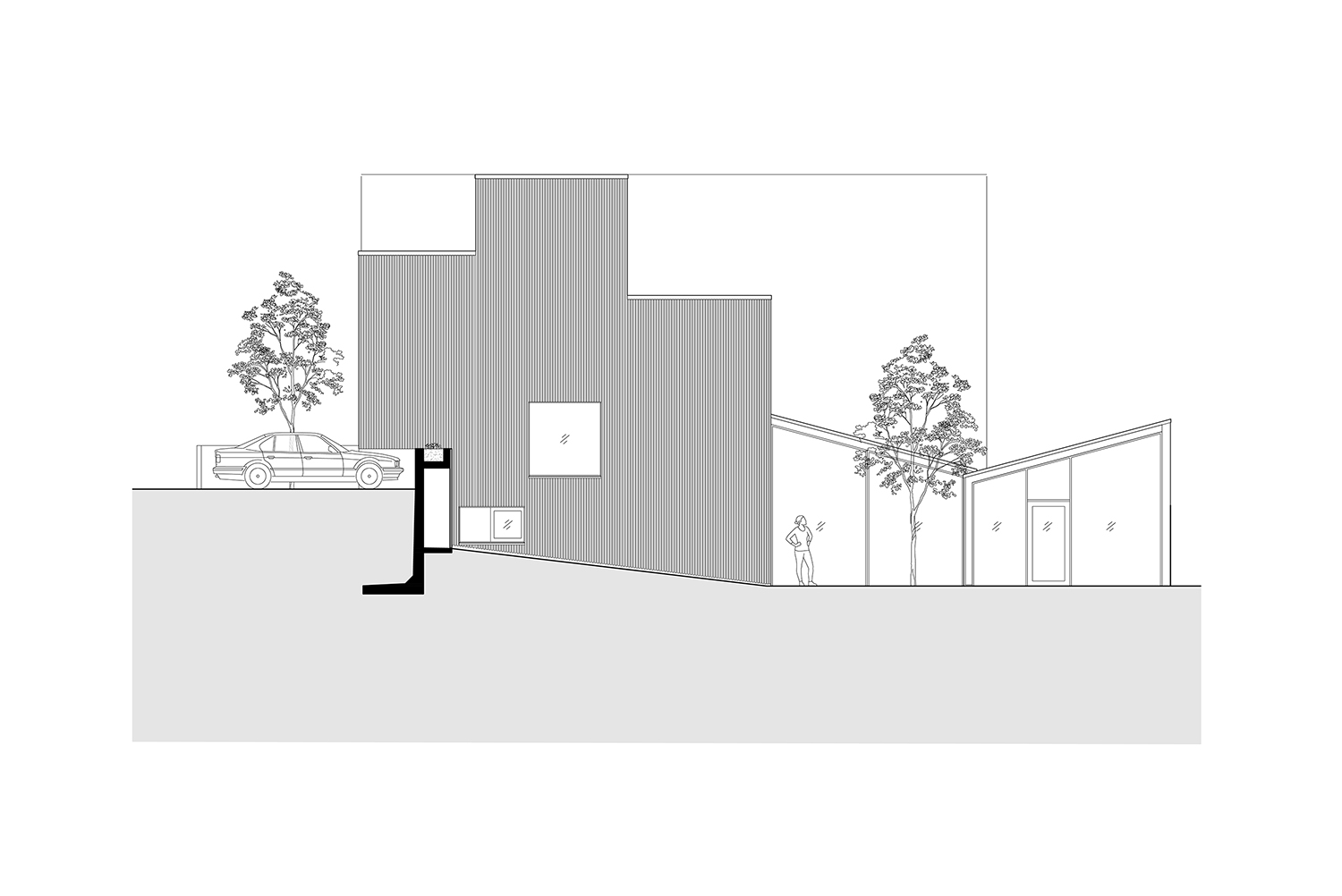
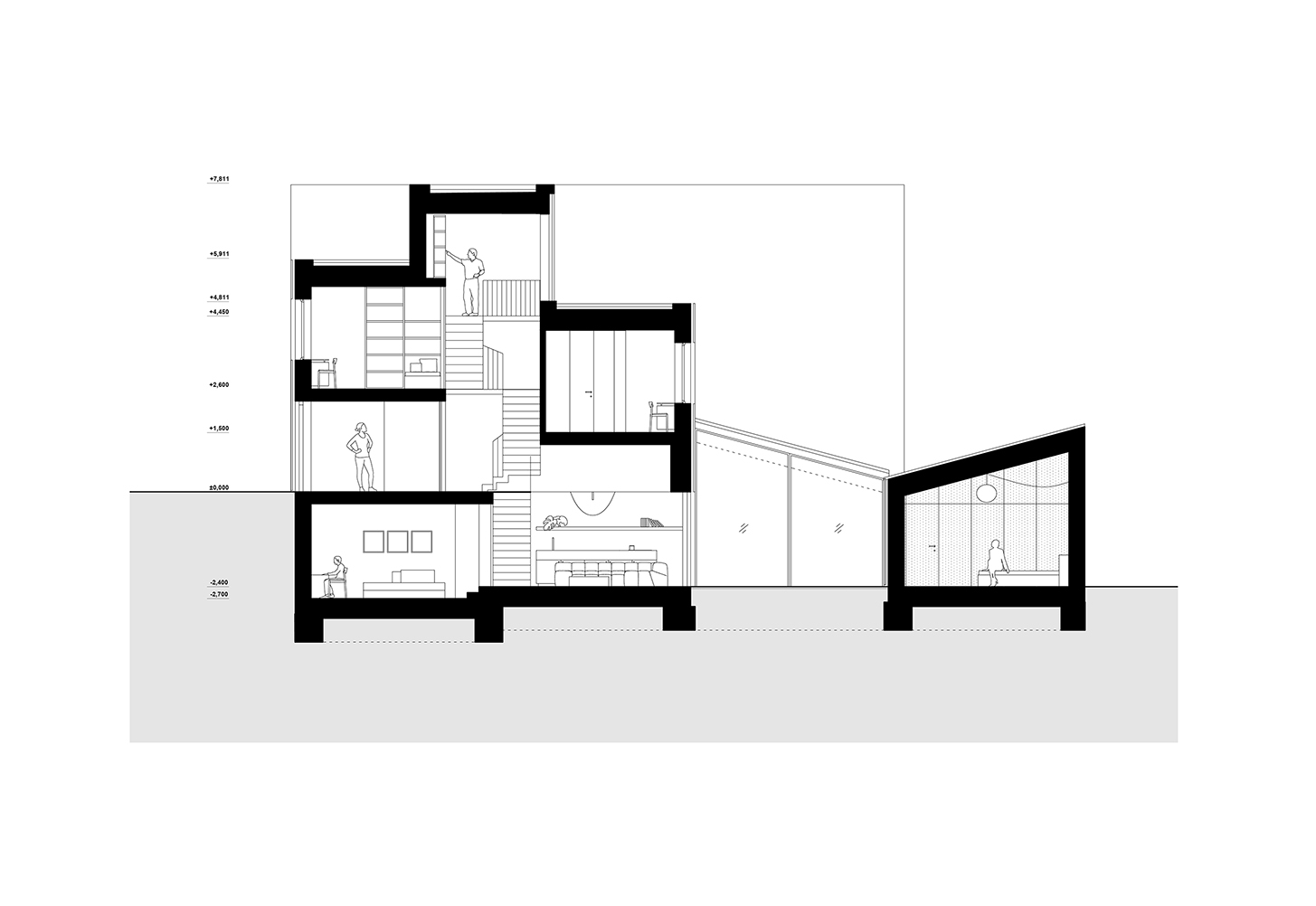
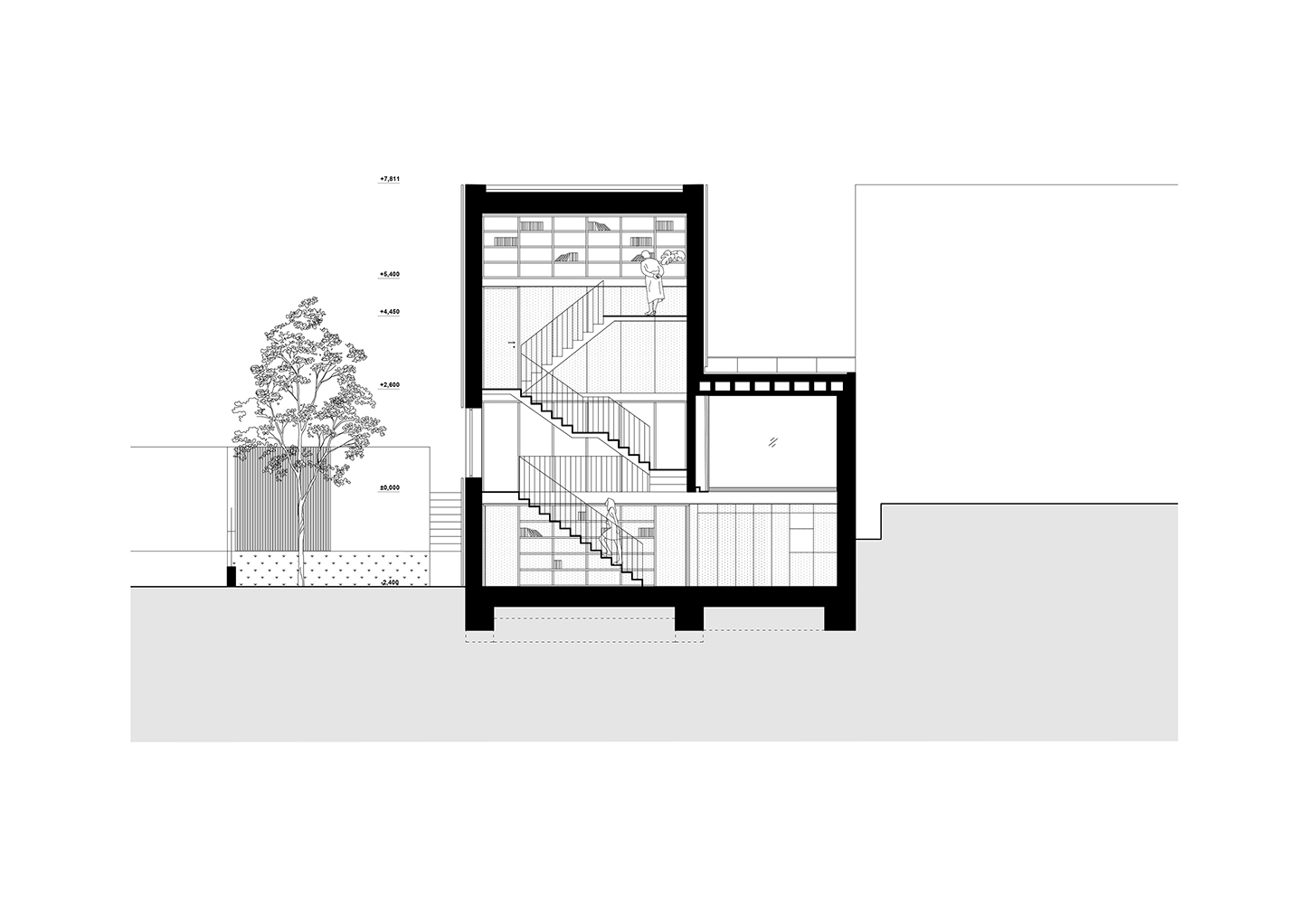
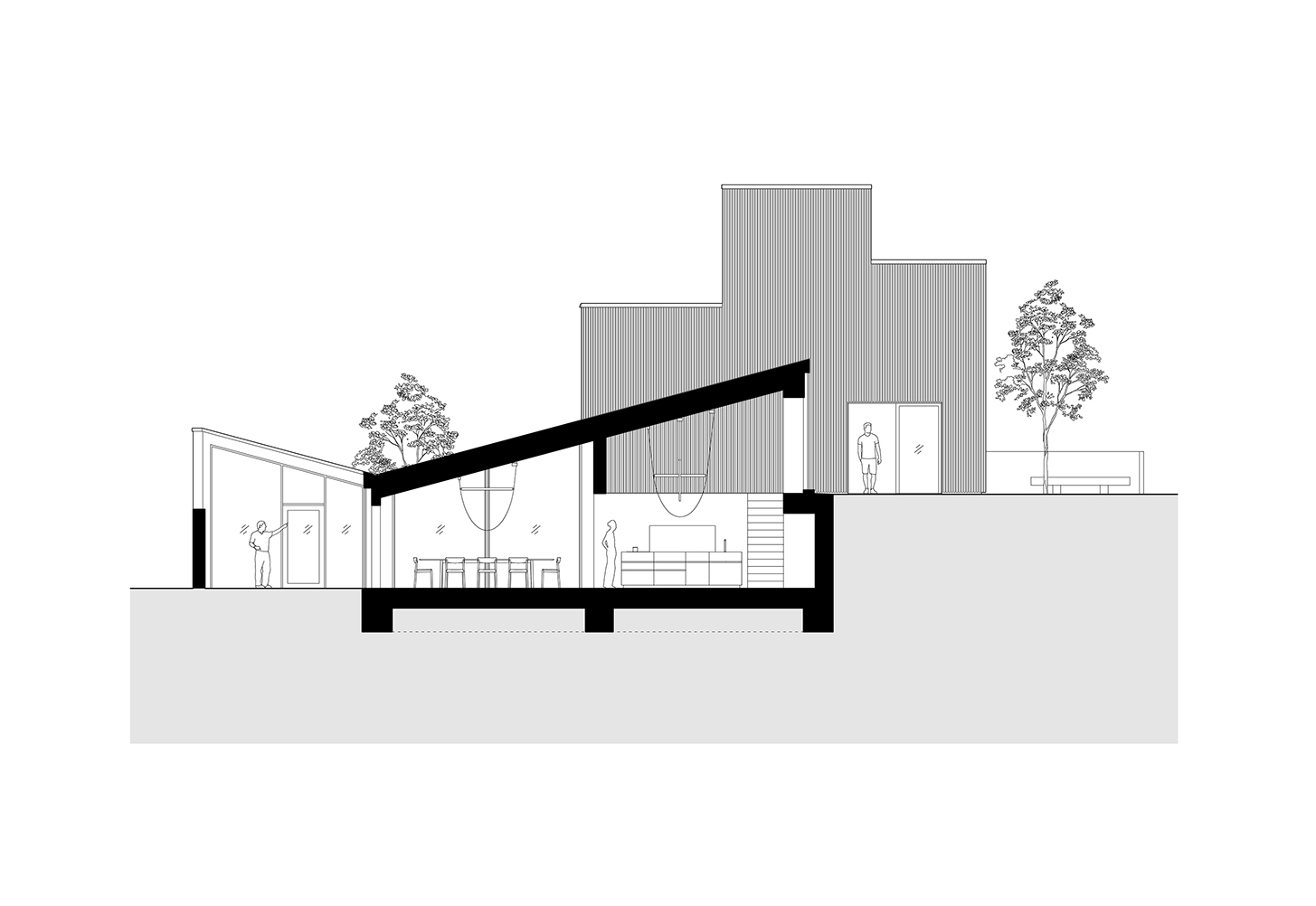
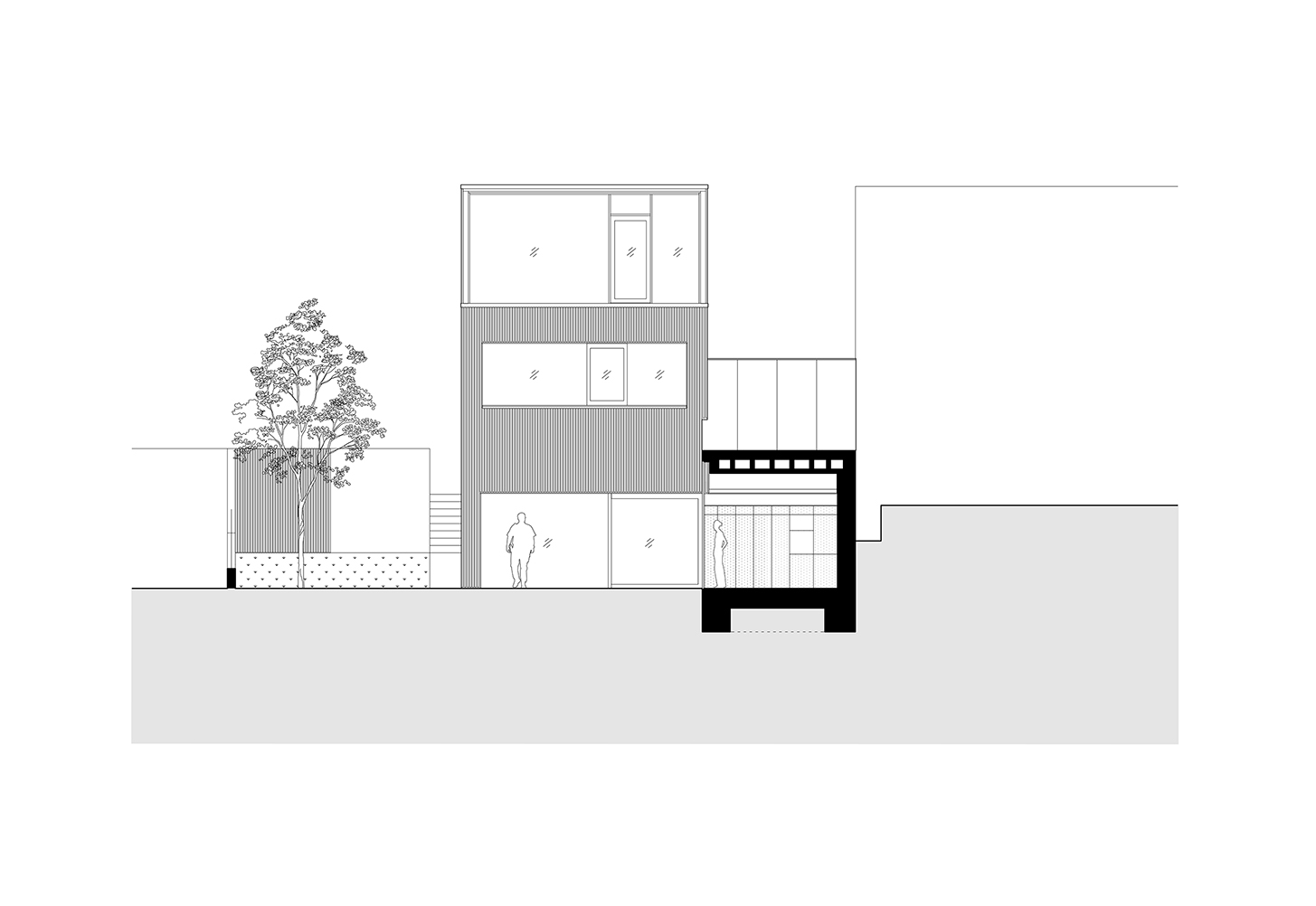
We arranged the mass of the family house in such a way that the living area came into contact with the land behind the building as much as possible. We kept part of the first floor at street level. It serves as the main entrance to the building and a storeroom. We moved the second part of the mass two and a half meters lower, to the level of the garden and a smaller building. This resulted in a space with double height, which remained visually and programmatically connected to the entrance part of the house, but lacked a connection with the object in the garden. In order to be able to combine all areas into one unit, it was necessary to reduce both masses – we were limited by the maximum built-up area of the plot.
The mass removed from the original volume was moved to the second object in the garden, thereby maximizing the area of the living floor connected to the garden. Space was created for placing the main functions of the house around an open atrium with a terrace, which is naturally protected from unwanted contact with the street and surrounding buildings. By retreating the mass from the street, space was created for a larger front garden with the main entrance to the house, which thus gained leeward and greater intimacy. This also made it possible to illuminate part of the sunken day floor with the western sun and visually connect it with the entrance to the land on the floor above.
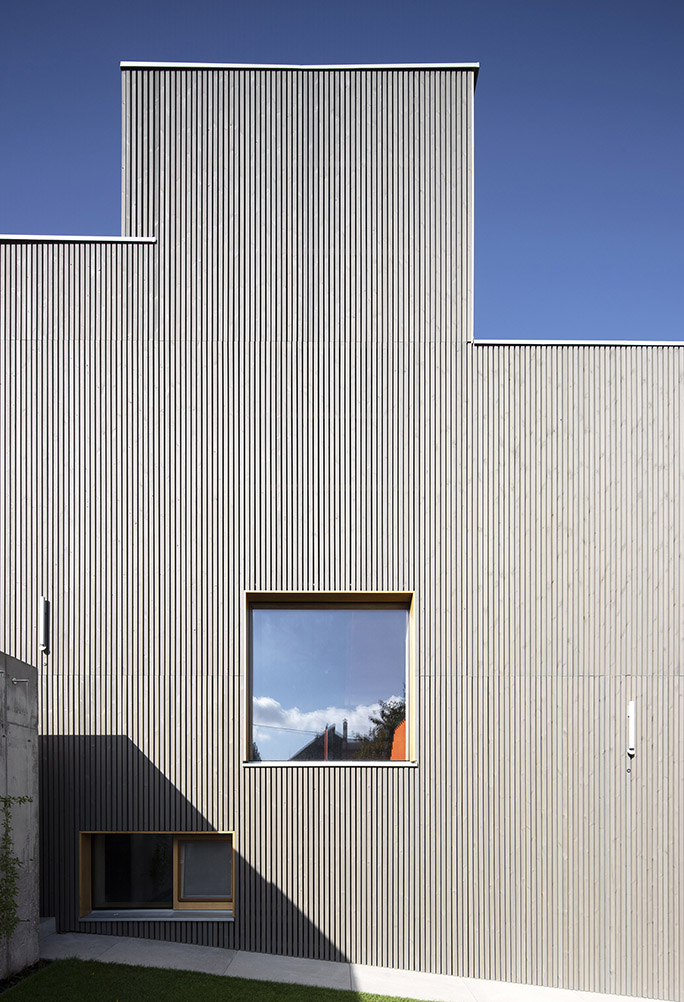
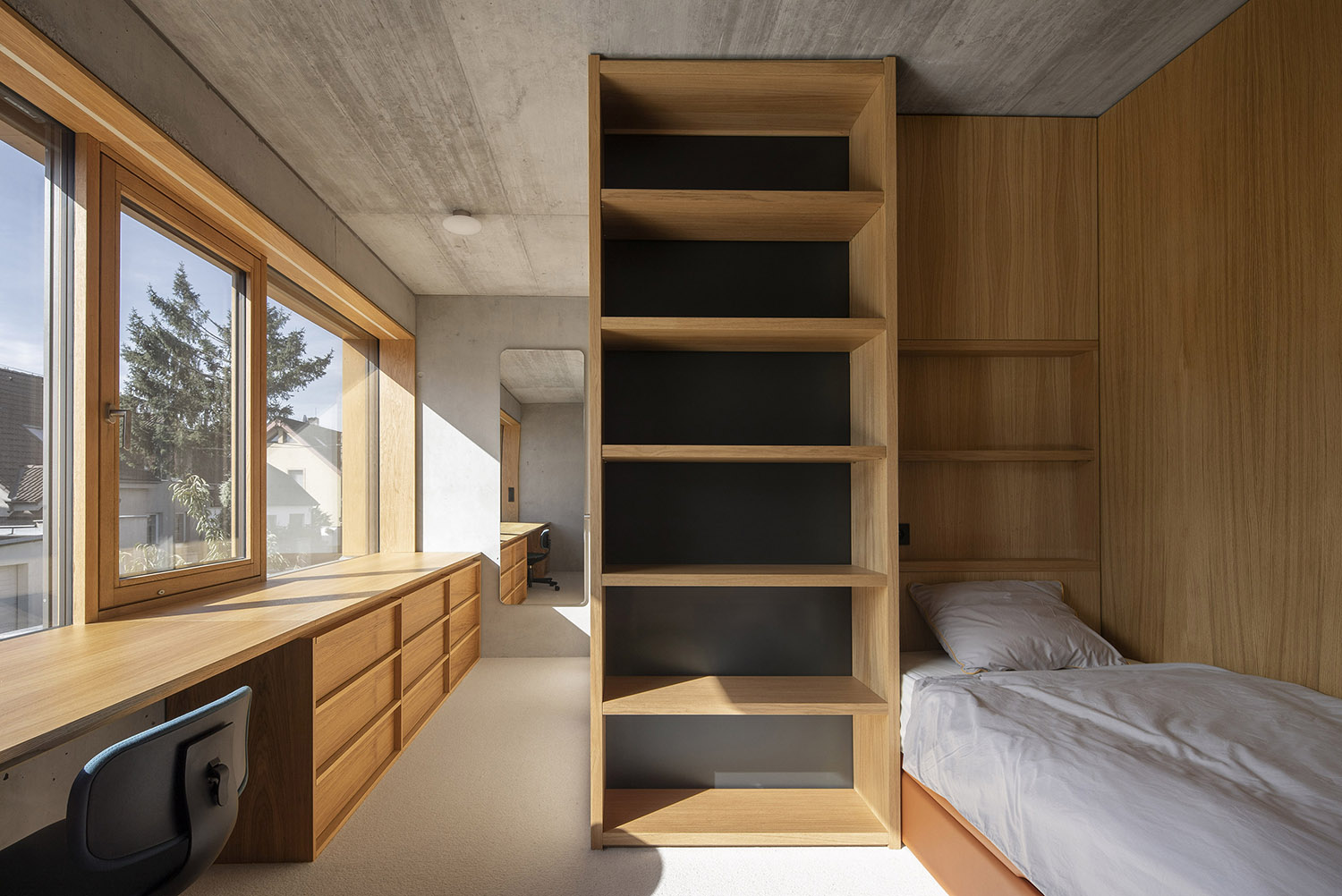
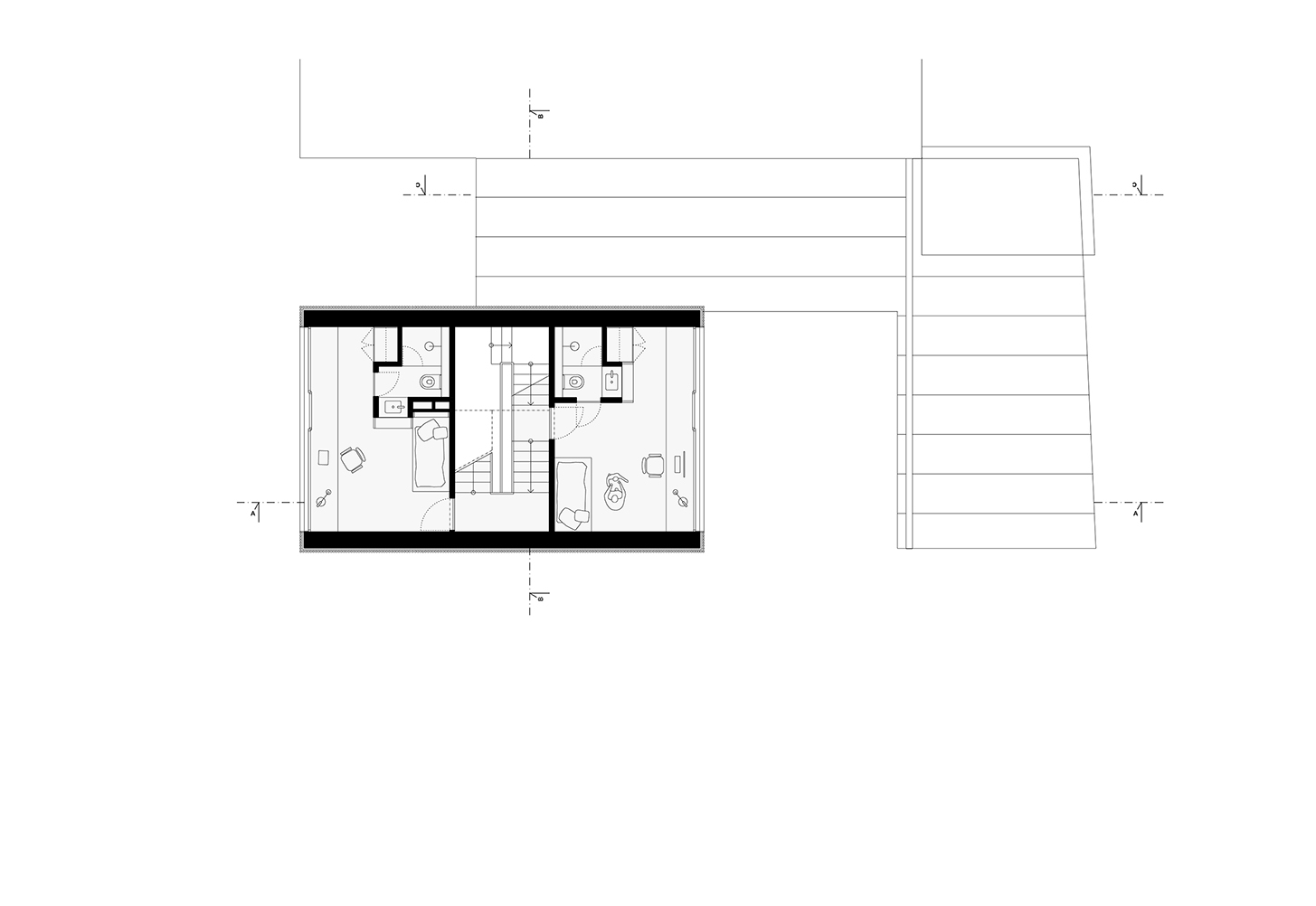
By vertically assigning the mass of the two children's bedrooms, we added the necessary floor area and also followed up on the height level of the surrounding buildings.
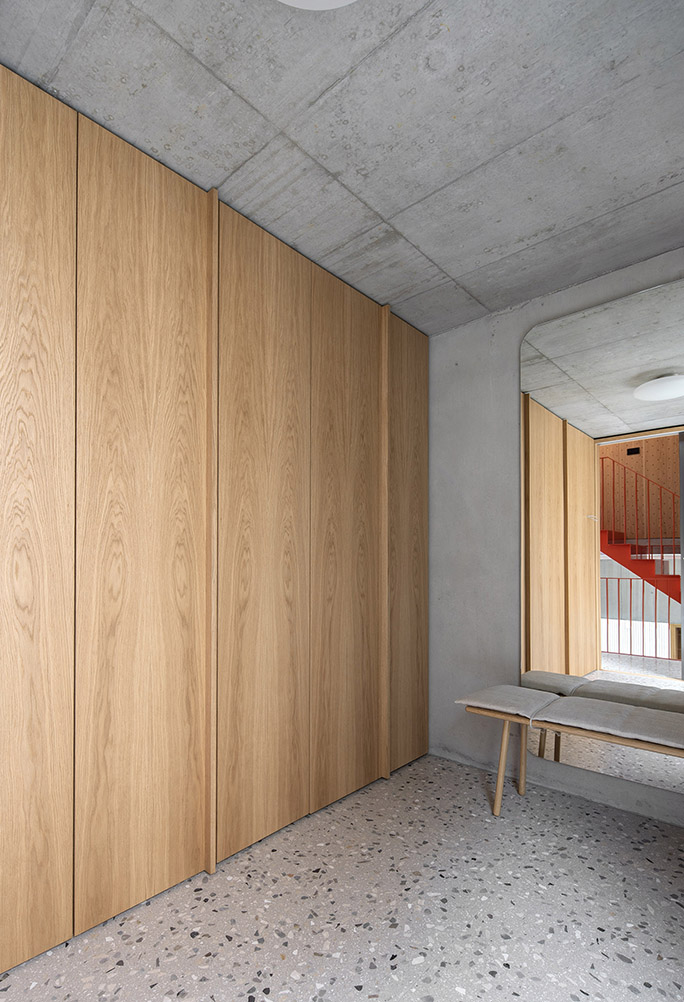
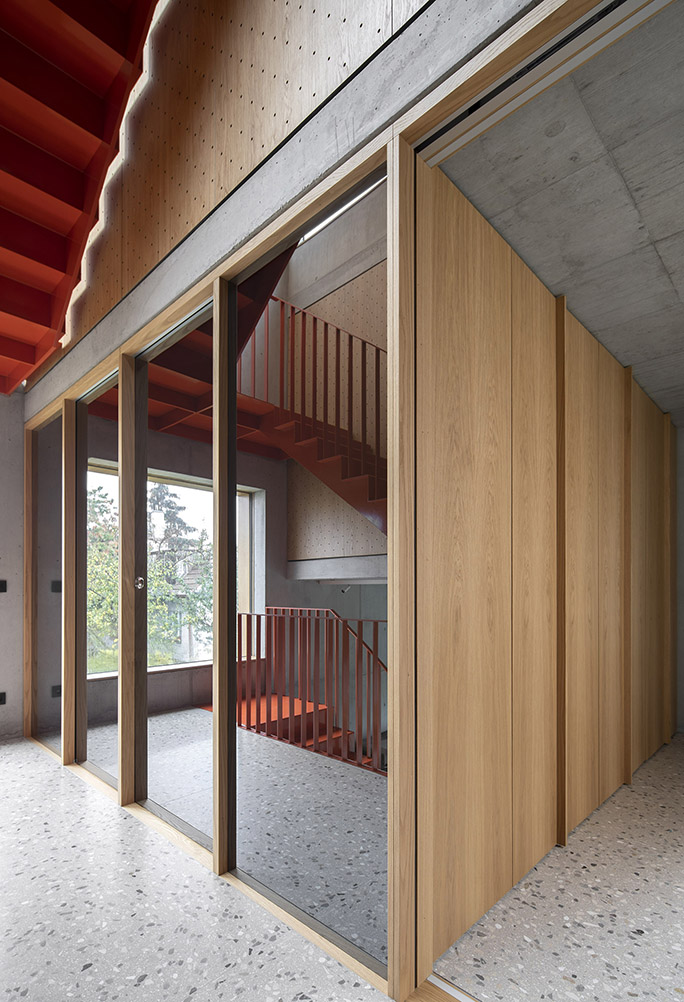
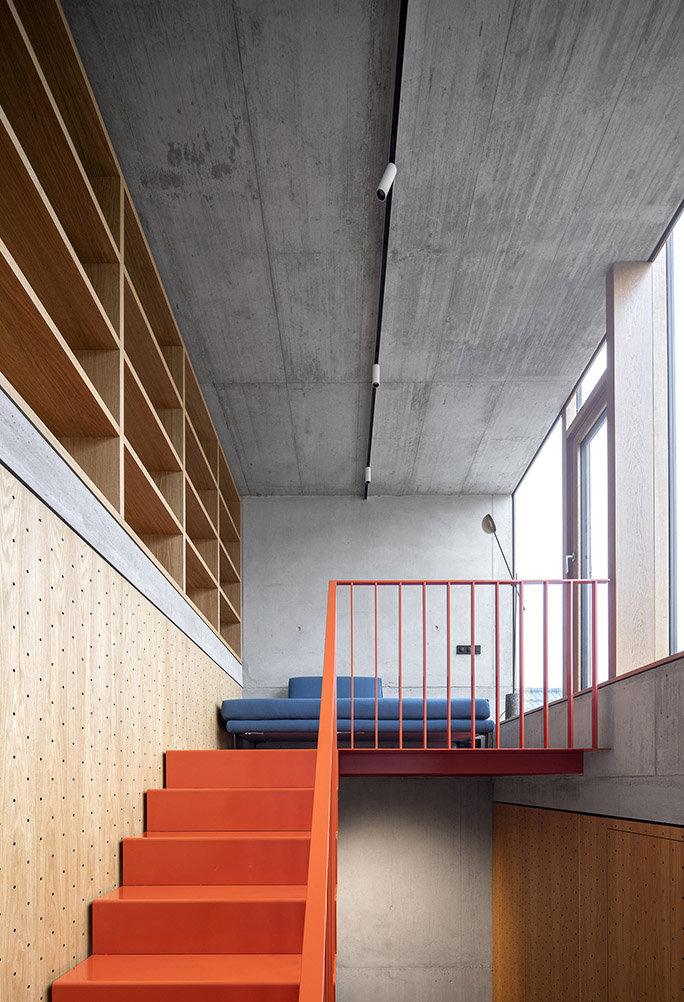
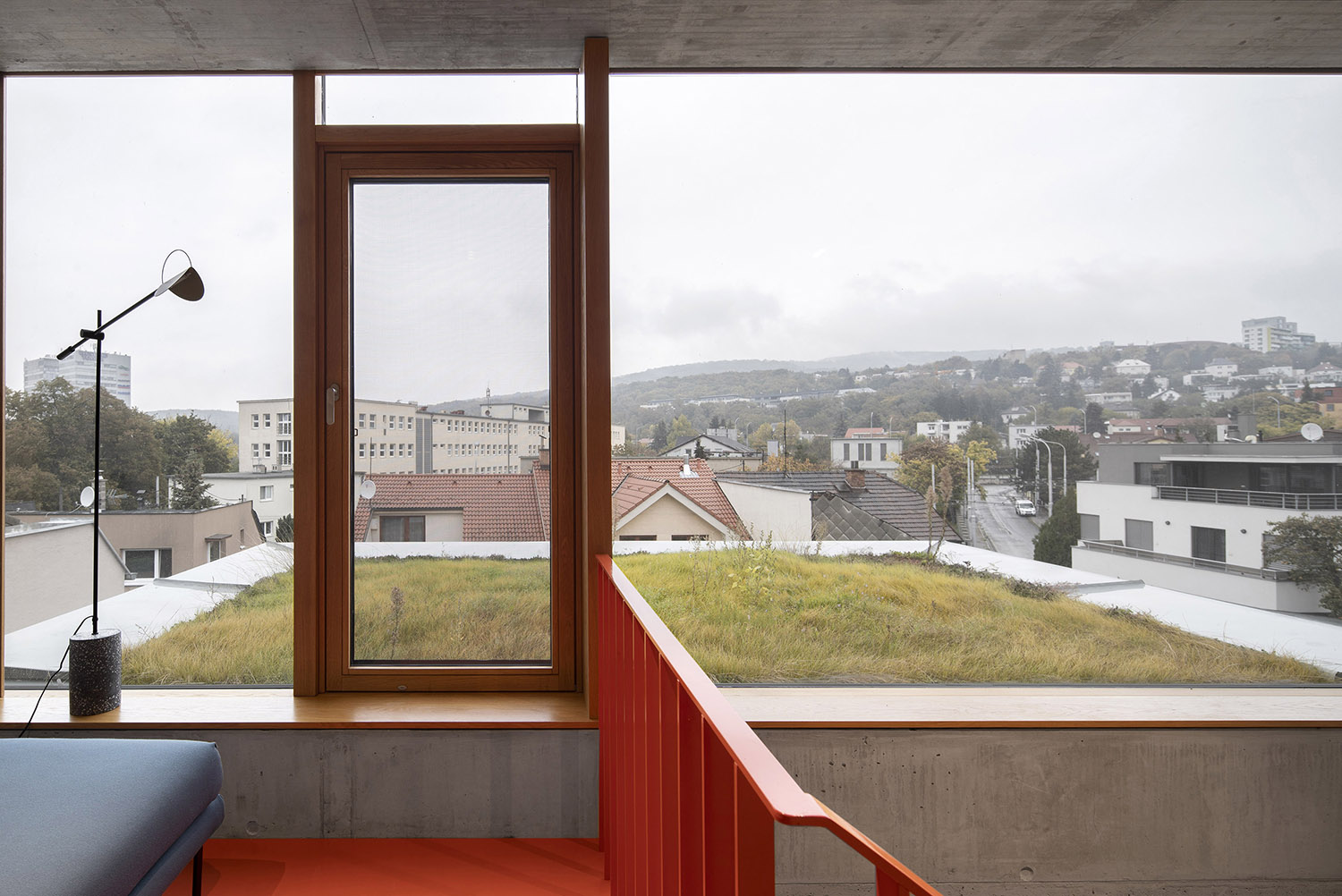
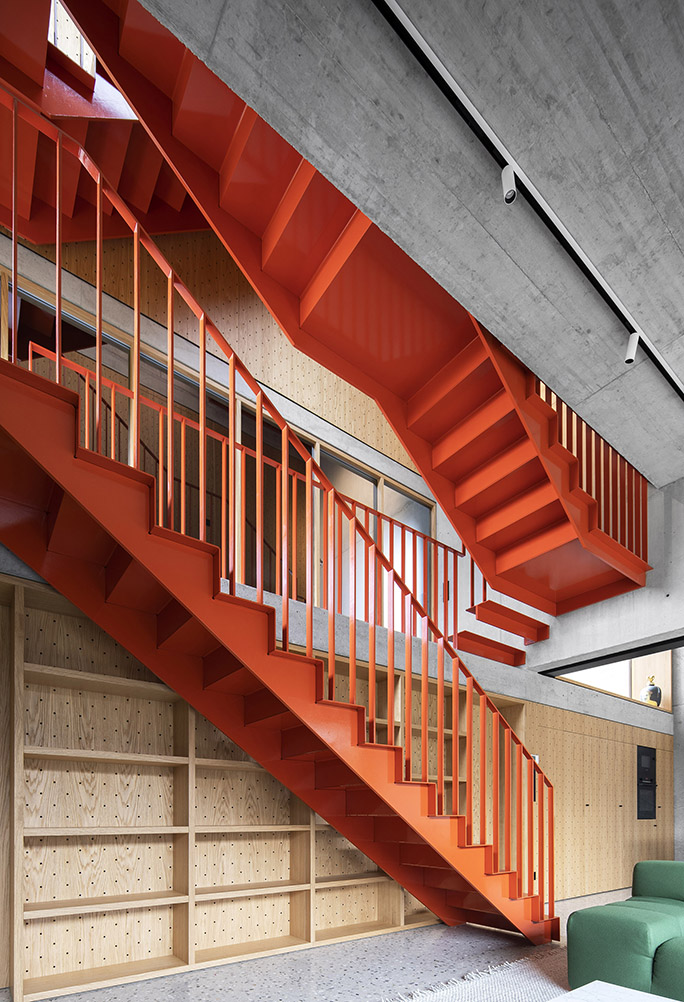
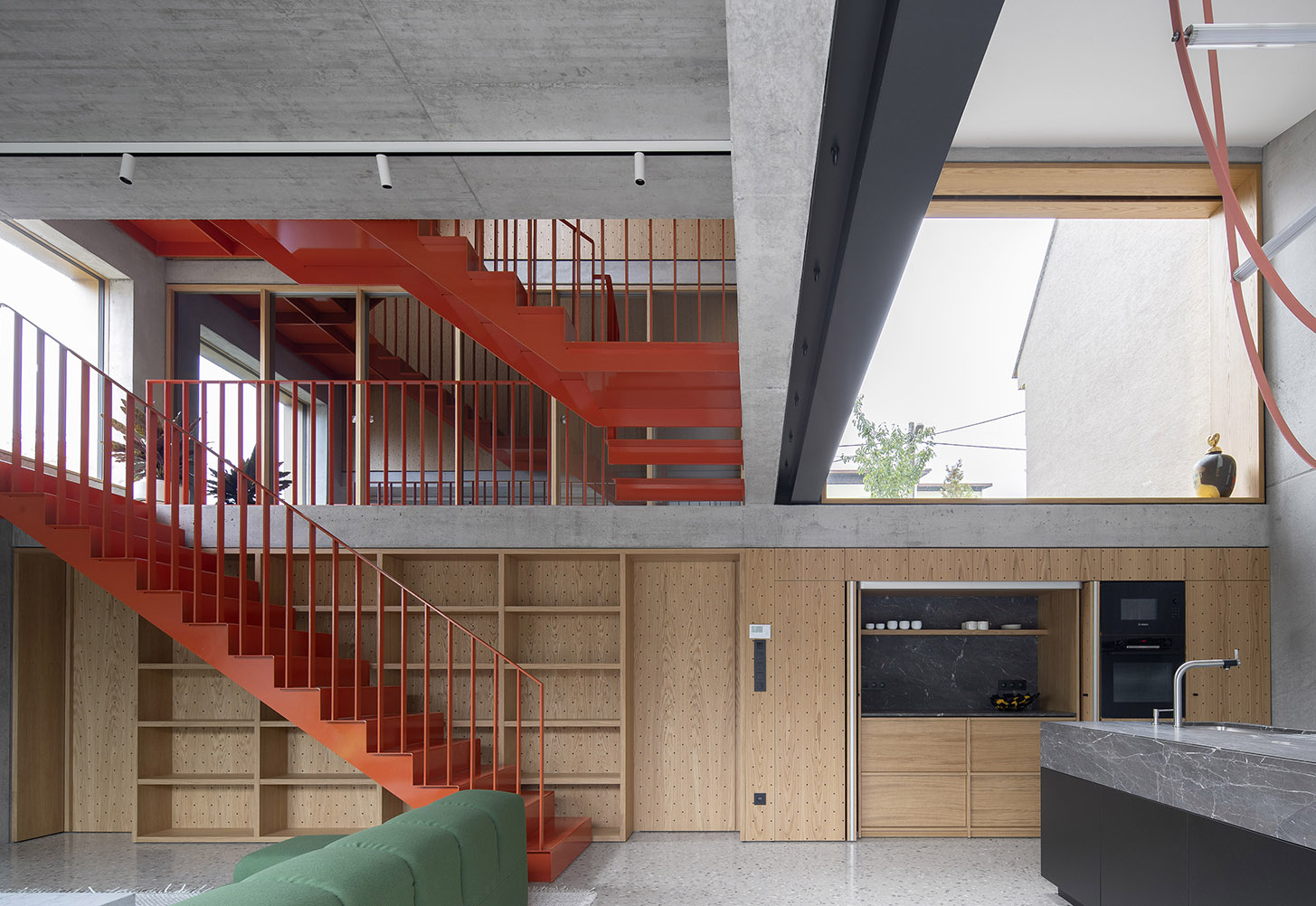
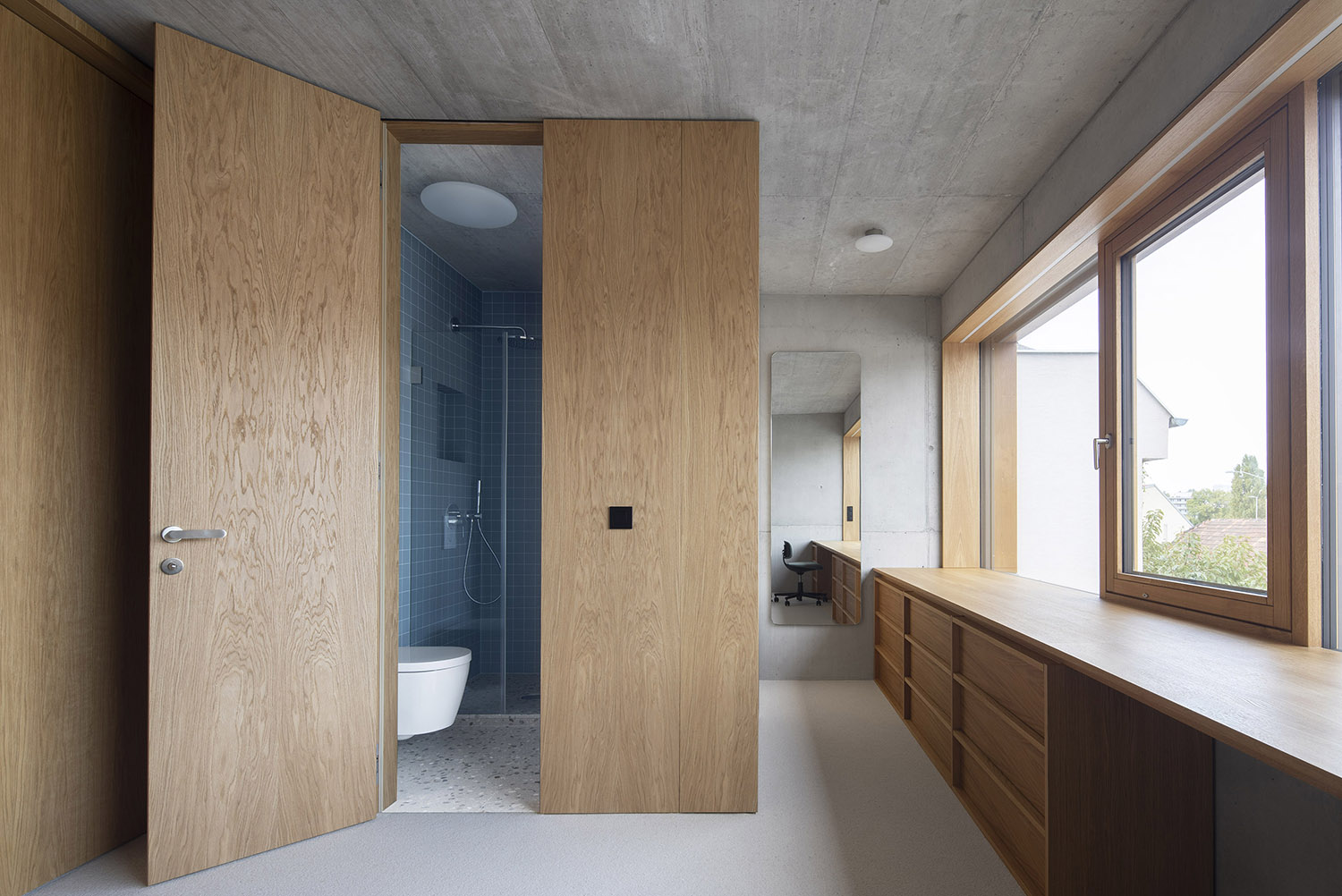
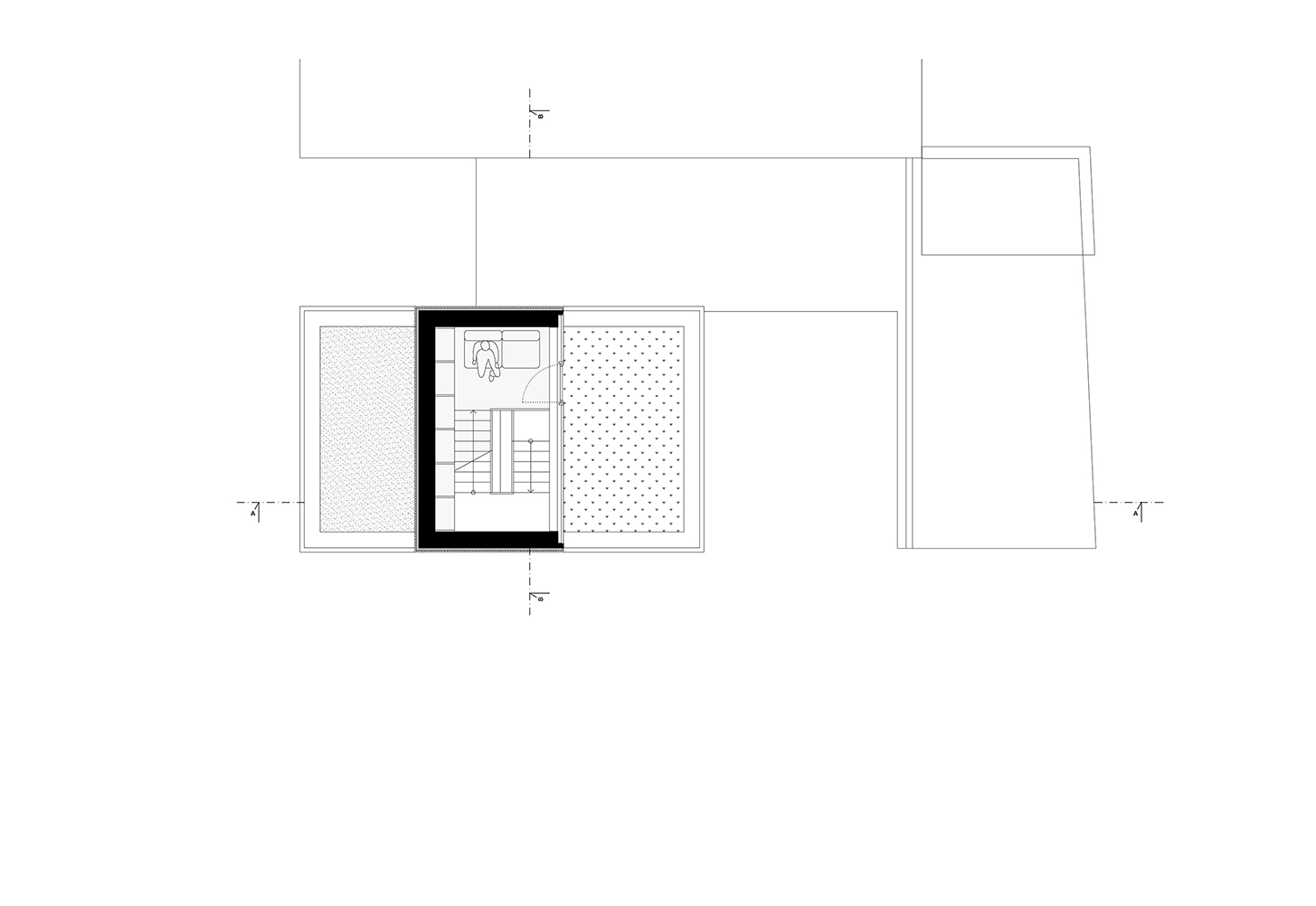
The functions of the object are located at different height levels based on the plot. The sectional diagram within the meaning of "raum plan" defined the shape of the staircase, which became the visual dominant of the object. On the top floor, it ends with a reading room with an exit to the terrace, through which the overhead light also comes directly into the centre of the disposition.

Credits
Place: Bratislava, Slovakia
rchitect: NOIZ architekti / Samuel Zeman, Andrej Šabo, Lukáš Kordík, Števo Polakovič
Built-up area: 140 m2
Floor area: 190 m2
Site area: 395 m2
Photo: Tomáš Manina
Rate
How much do you like this?